VoyaBear


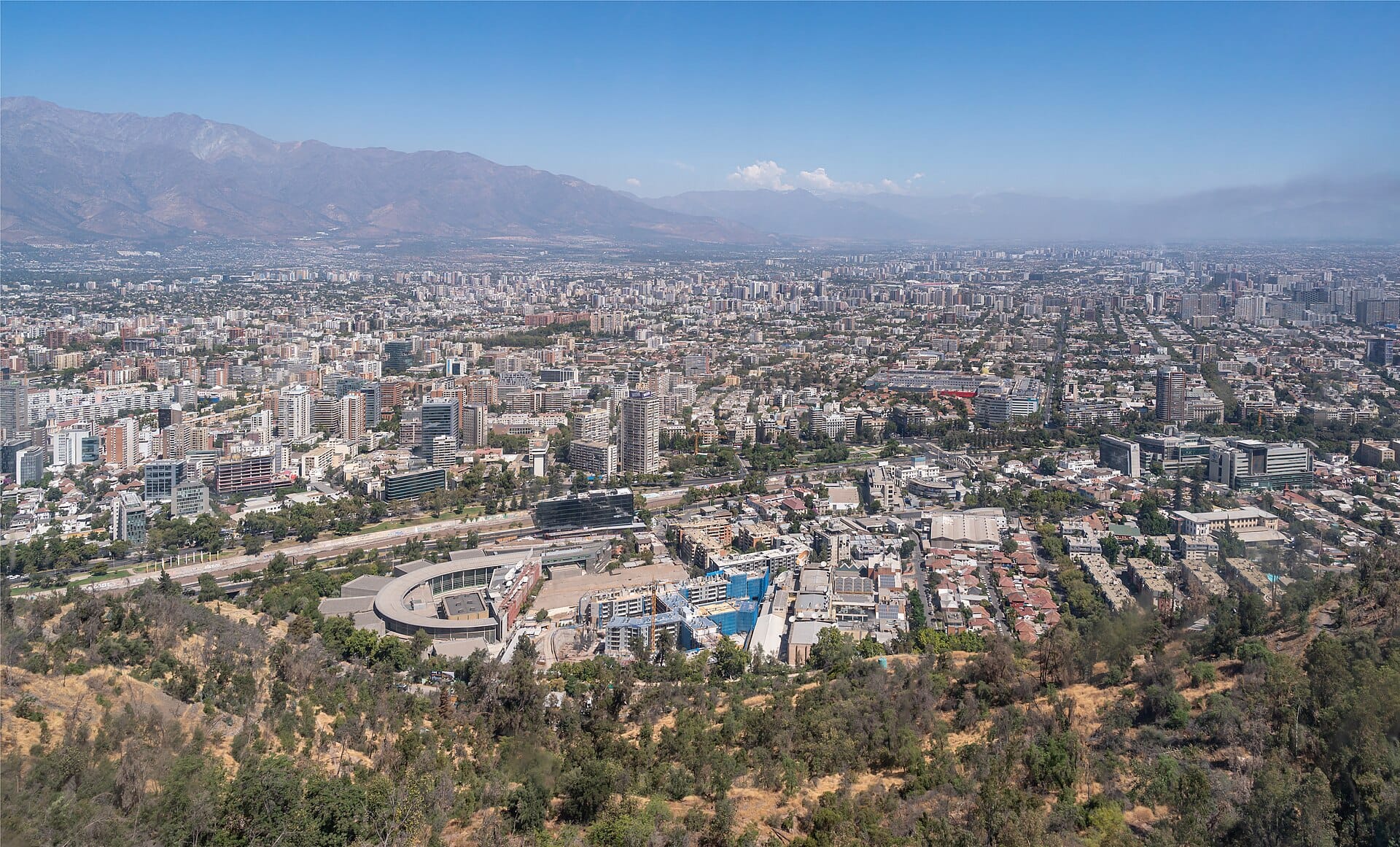
Santiago sits in a bowl. The Andes wall it in on the east, close enough that on a clear September morning you can watch a plane bank over snow-covered peaks while you drink coffee downtown, and close enough that in June the same mountains vanish behind a lid of trapped smog. That geography shapes everything: where you go for a view, when the air is clean, why the wine an hour south is so good. Most travelers treat Chile's capital as a one-night stopover before Patagonia or the Atacama. Give it three days instead and you get a walkable historic core, South America's tallest building, a poet's house stuffed with figureheads and secret passages, and some of the best-value fine dining on the continent. Here is exactly how to spend that time, what it costs in 2026, and where the locals actually eat.
🏙️ Essential Experiences
Cerro San Cristóbal and Parque Metropolitano
The 880-metre hill that rises out of Bellavista is the single best way to understand Santiago's layout. Ride the 1925 Funicular Bellavista from the Pío Nono station up to the summit, where a 22-metre white statue of the Virgin of the Immaculate Conception looks out over the whole valley. The funicular costs CLP 2,150 (about US$2.35 / €2.15) one way; a combined ticket that adds the teleférico cable car across the park runs CLP 8,450 (US$9.25 / €8.45). Insider tip: go before 11am. Santiago's valley traps pollution, and by midday in autumn and winter the Andes disappear into haze — the early hour is when the mountain backdrop is sharpest and the crowds at the summit railing are thinnest.
Sky Costanera at the Gran Torre Santiago
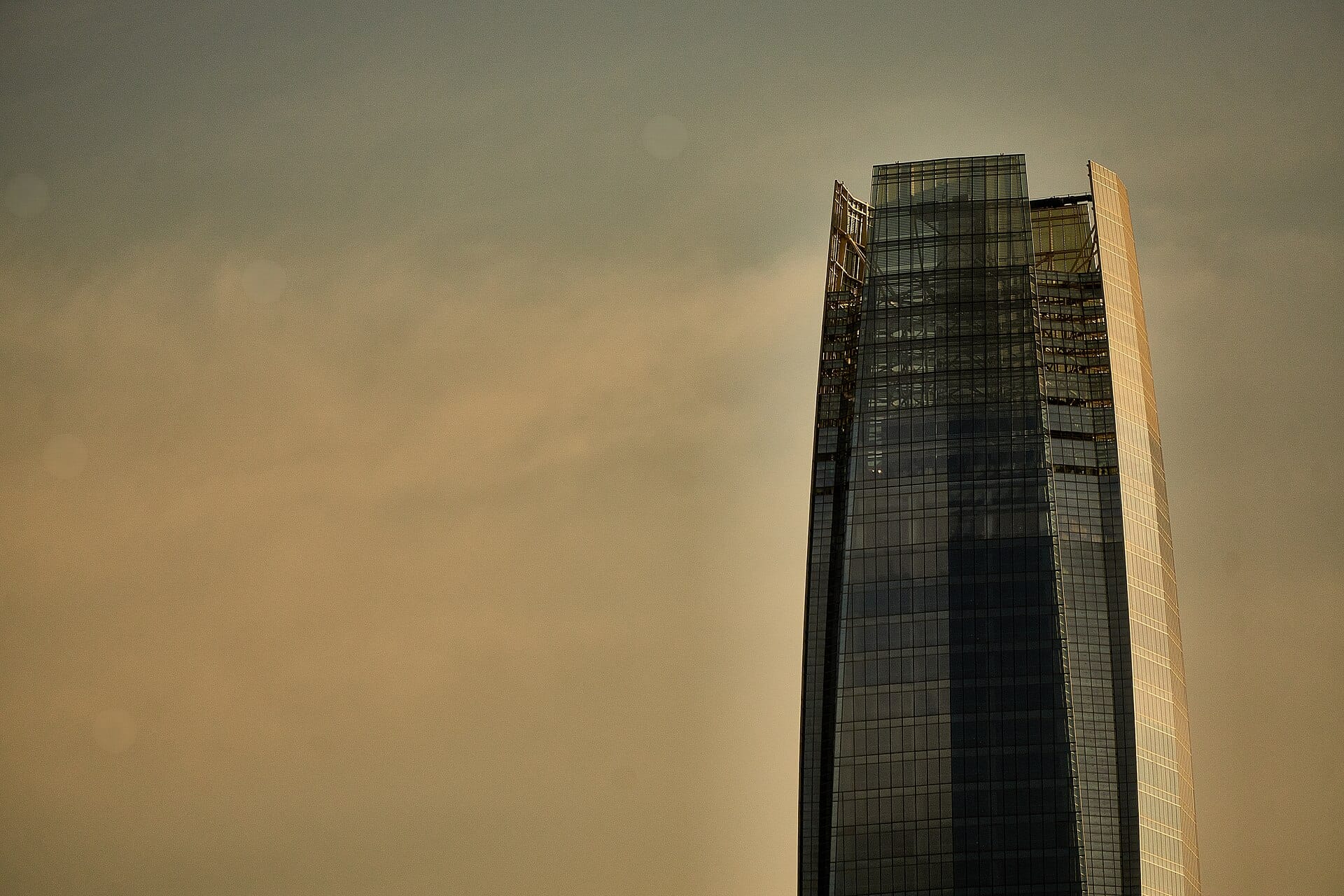
The Gran Torre Santiago is 300 metres tall and the tallest building in Latin America, and the Sky Costanera observation deck occupies its 61st and 62nd floors, sitting on top of the Costanera Center mall. The 360-degree view runs from the Andes to the coastal range, and on a clear day you can trace the entire city grid. Admission is CLP 5,000 (US$5.50 / €5); a Fast Pass that skips the queue is CLP 12,000 (US$13 / €12). It's open 10:00 to 22:00, last lift at 21:00. Insider tip: arrive about an hour before sunset. One ticket lets you watch the city go gold, then stay as the lights come on — you get the day view and the night view without paying twice.
Plaza de Armas and the historic centre
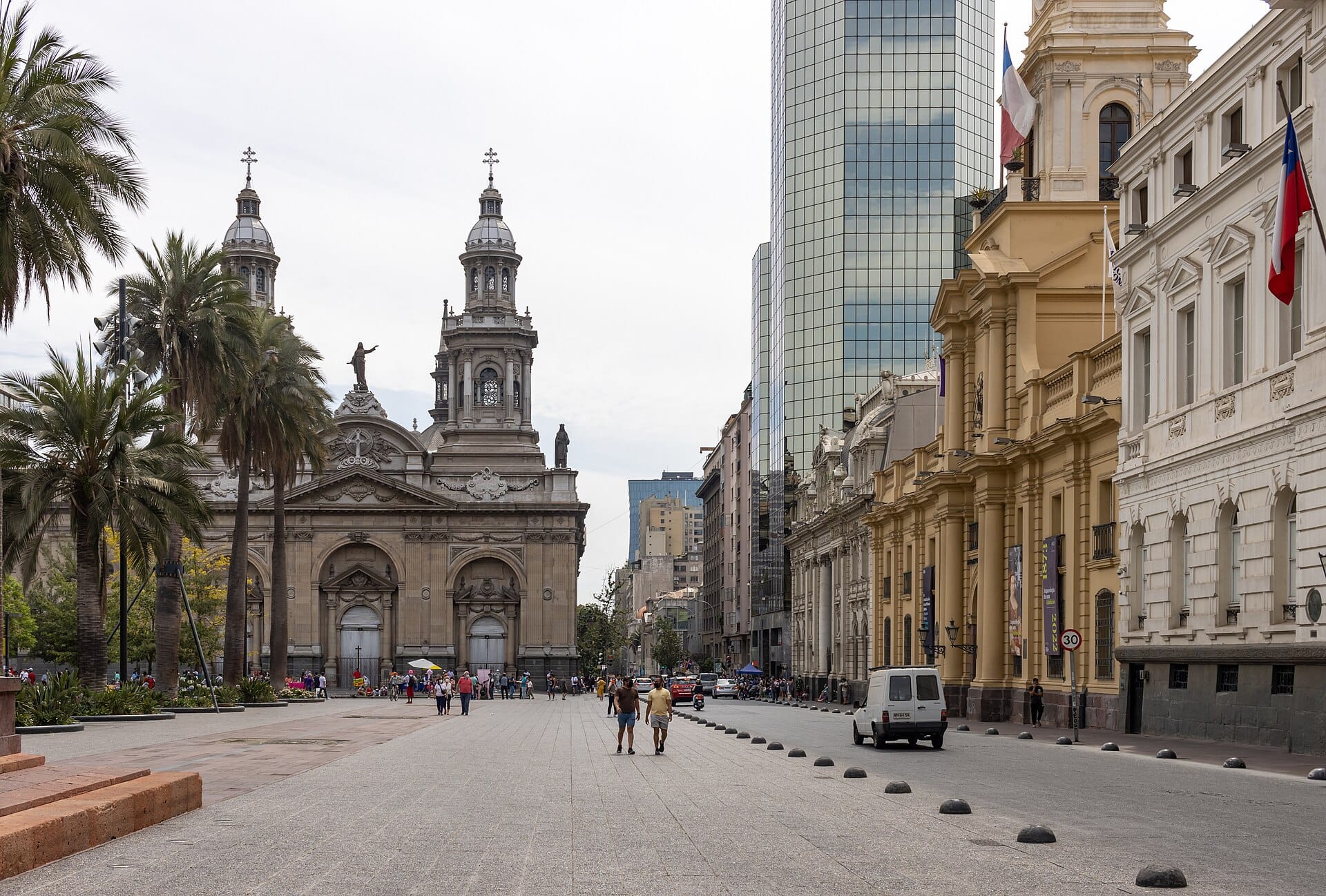
The main square has been the city's heart since Pedro de Valdivia laid out Santiago in 1541. On its north and west sides stand the neoclassical Catedral Metropolitana, the Correo Central (the old post office, built on the site of Valdivia's house), and the Museo Histórico Nacional. The square itself is free and always busy — chess players, portrait artists, evangelists, and Peruvian and Venezuelan food vendors who arrived with the last decade's migration. Insider tip: step inside the cathedral even if you skip the museums; the ornate interior is free and a genuine relief from the street noise. Take Metro Line 5 to the Plaza de Armas station, which lets you out directly onto the square.
Barrio Lastarria, Cerro Santa Lucía and Bellas Artes
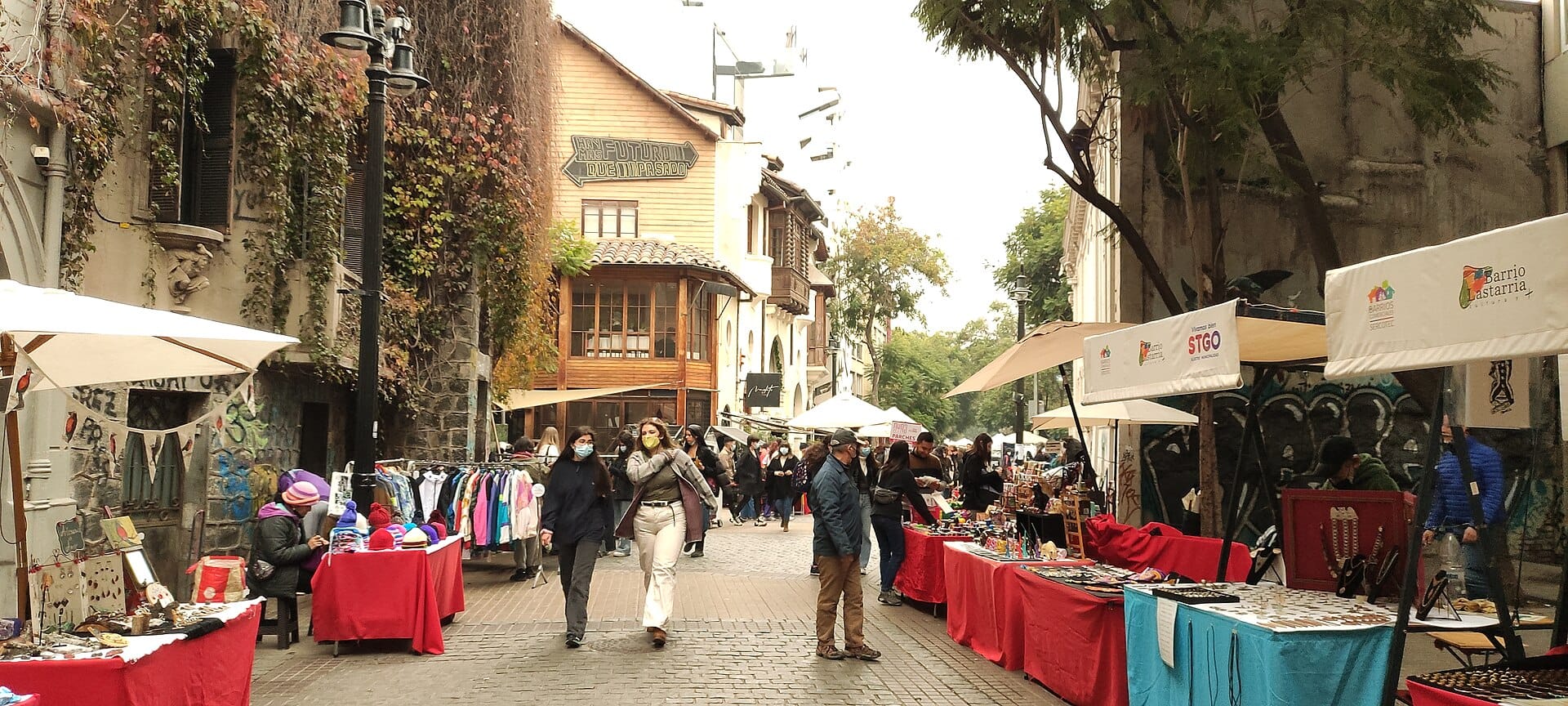
This is the neighbourhood where you'll want to eat and wander. José Victorino Lastarria street is a short cobbled run of bookshops, cafés and wine bars, and on weekends an antiques and secondhand-book fair fills the small plazas. A block away, the Museo Nacional de Bellas Artes is free and worth an hour for its Chilean collection, and the Centro Gabriela Mistral (GAM) hosts theatre and free exhibitions in a raw concrete complex. Right beside it rises Cerro Santa Lucía, the rocky outcrop where Santiago was founded; the climb up its ornate 19th-century terraces is free and takes about 20 minutes. Insider tip: enter Santa Lucía from the Neptune Fountain on Alameda for the grandest staircase, and go up in late afternoon when the stone glows and the downtown towers catch the light.
La Chascona, Pablo Neruda's house
Of the poet's three houses, La Chascona is the one in Santiago, tucked into the foot of Cerro San Cristóbal in Bellavista. Neruda built it in the 1950s for his secret lover and later wife, Matilde Urrutia, and named it for her wild red hair. It's designed like a ship run aground on the hillside — narrow stairs, low doorways, portholes, a dining room he called the captain's cabin — and it's crammed with his collections of coloured glass, seashells and figureheads. Admission includes an excellent audio guide in several languages and runs to under CLP 10,000 (roughly US$8–9 / €8). Insider tip: daily visitor numbers are capped and entry is first-come, first-served, so arrive close to the 10am opening, especially in high summer.
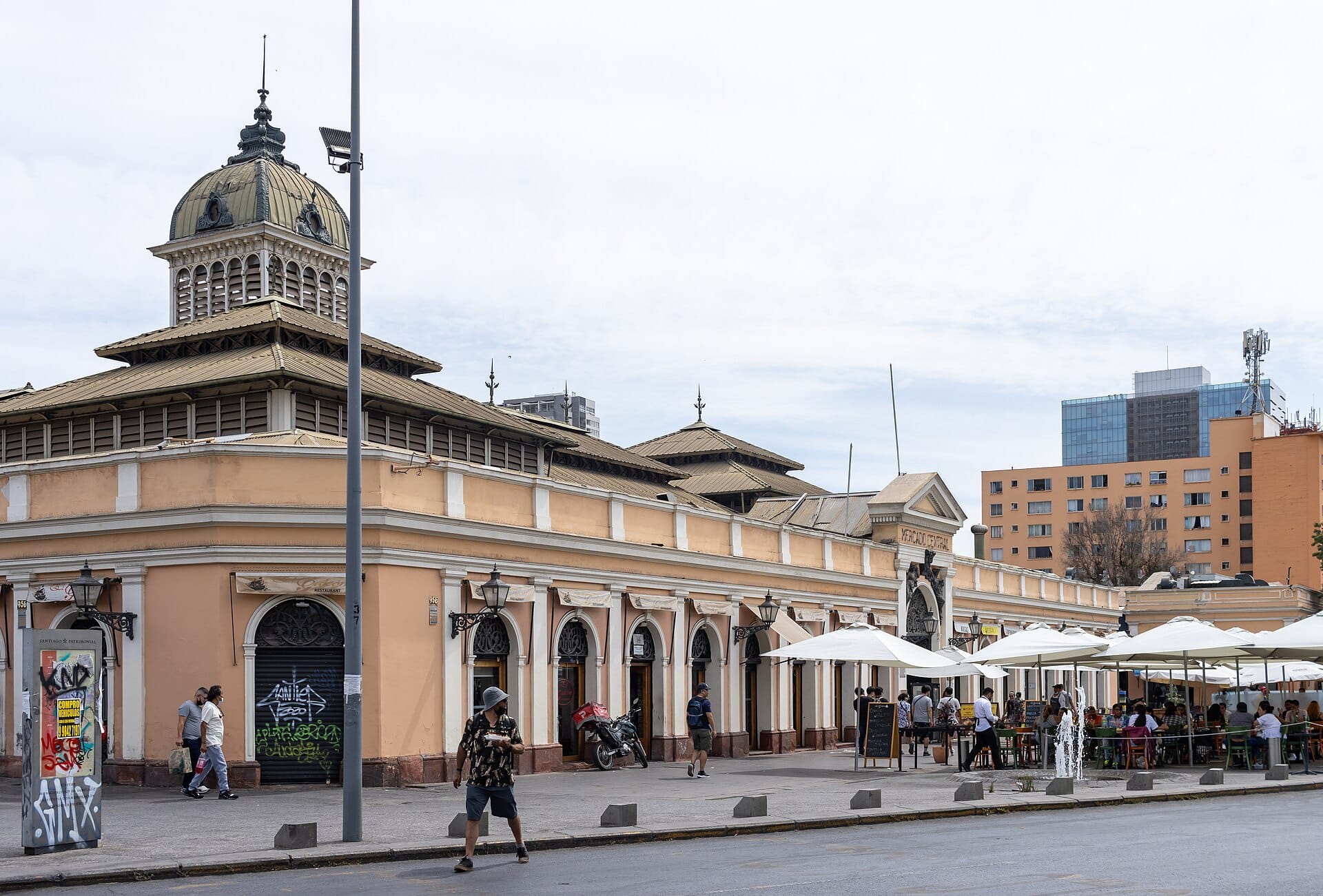
Mercado Central
Chile is 4,000 kilometres of coastline, and its seafood lands here under a wrought-iron hall shipped from England and assembled in 1872. You'll see conger eel (congrio), sea urchins, and razor clams (machas). This is the place to try machas a la parmesana — razor clams baked with parmesan and white wine — or caldillo de congrio, the conger-eel stew Neruda wrote an entire ode to. Insider tip: skip the grand restaurant in the middle of the hall, where waiters practically drag you to a table and the prices double. Eat at one of the small stalls around the perimeter instead, or cross the river to Mercado La Vega, the produce market where Santiaguinos actually shop and a full lunch costs a fraction of the tourist rate.
Museo de la Memoria y los Derechos Humanos
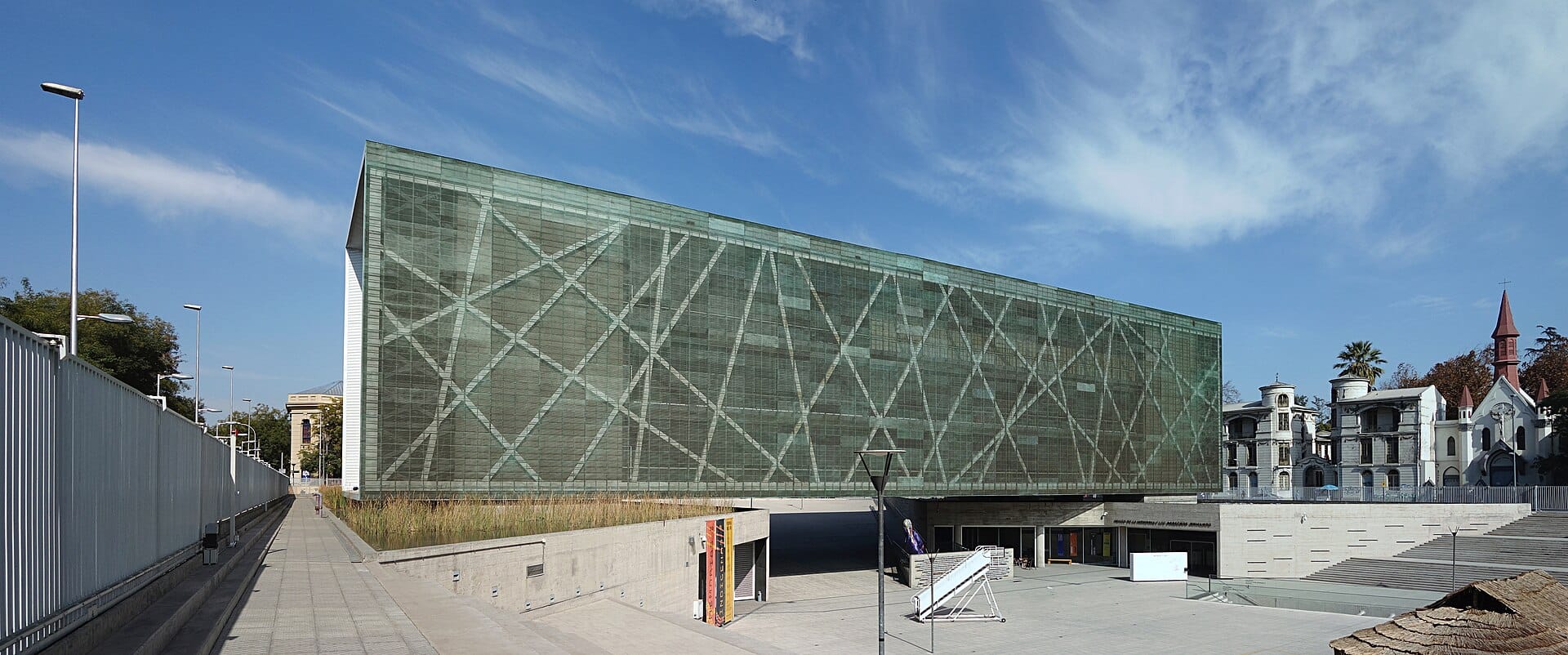
Chile's military dictatorship ran from 1973 to 1990, and this museum documents it without flinching — the coup against Salvador Allende, the arrests, the torture centres, the more than 3,000 killed or disappeared. The green copper-clad building in the Quinta Normal district is powerful before you even go in. Entry is free, and the audio guide costs CLP 2,000 (about US$2.20 / €2). Insider tip: it's closed on Mondays, and the top-floor exhibits are heavy going — give yourself at least 90 minutes and don't schedule anything cheerful for immediately after. Metro Line 5 to Quinta Normal drops you a two-minute walk away.
Cementerio General
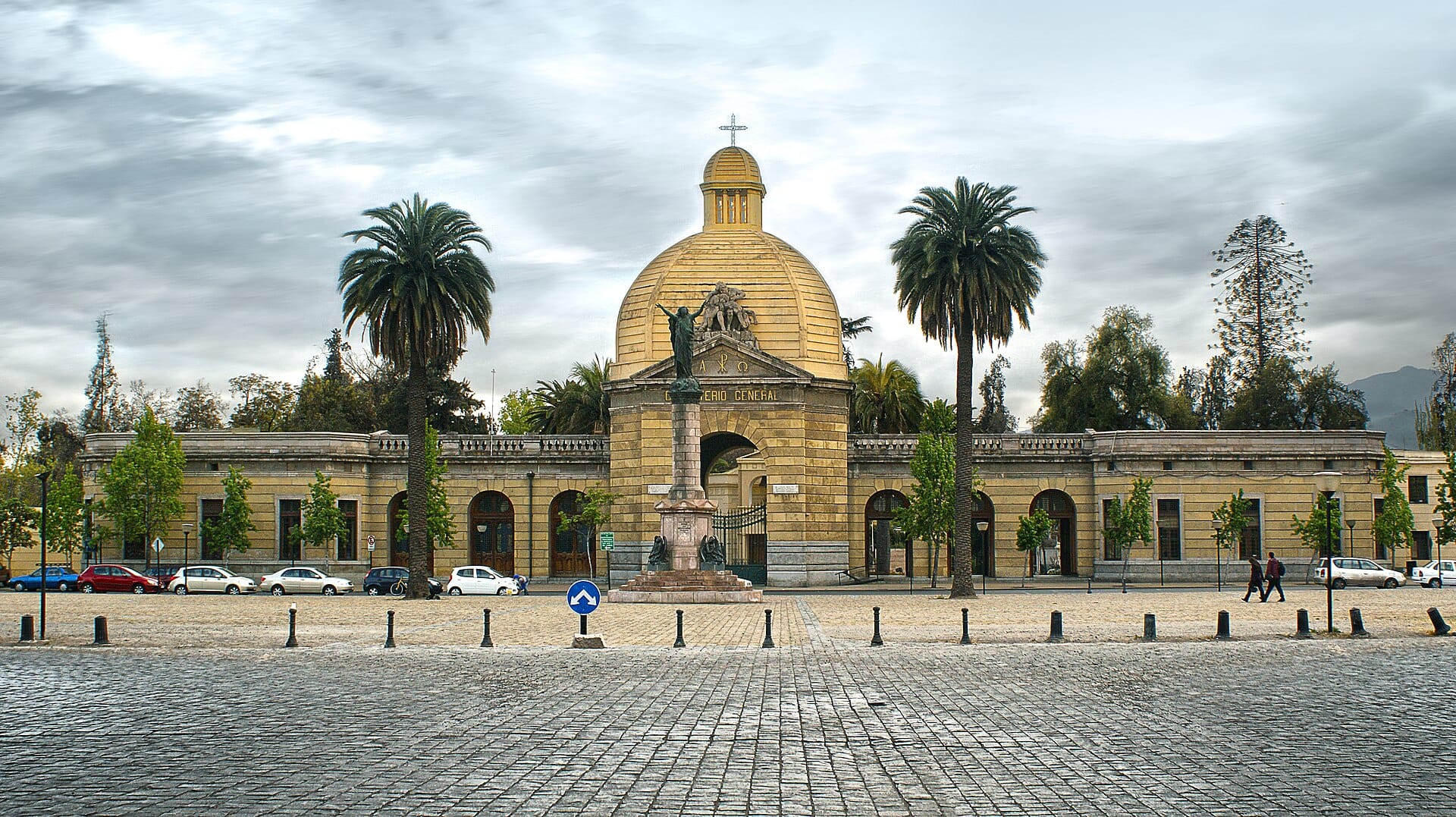
One of the largest cemeteries in Latin America is effectively an open-air history of Chile written in marble. Buried here are almost every Chilean president, the folk singer and Nueva Canción figure Violeta Parra, and Salvador Allende. Víctor Jara — the singer tortured and killed days after the 1973 coup — lies here too, and Patio 29 holds the anonymous graves and the memorial to the disappeared. Entry is free. Insider tip: the free map at the main gate on Avenida Profesor Alberto Zañartu marks the notable tombs; without it the scale is overwhelming. Metro Line 2 to the Cementerios station leaves you at the entrance.
🗓️ A 3-Day Itinerary
Day 1 — The historic centre on foot
Start at Plaza de Armas (Metro Line 5) around 9:30am while the square is calm. Look inside the Catedral Metropolitana, then walk 10 minutes north to Mercado Central for an early seafood lunch before the tour groups arrive — machas a la parmesana and a glass of Chilean sauvignon blanc will run about CLP 15,000–20,000 (US$16–22). Walk 15 minutes back south to Cerro Santa Lucía and climb its terraces (free, ~30 minutes), coming down into Barrio Lastarria. Spend the afternoon at the free Museo Nacional de Bellas Artes and browsing Lastarria's bookshops. For dinner, Chipe Libre on Lastarria does a loaded chorrillana to share and one of the city's best pisco sour lists. Budget for the day: roughly US$45–60 / €40–55 including food and entries.
Day 2 — Bellavista, the hill and the tower
Open the day at La Chascona (arrive near 10am to beat the cap), then walk five minutes to the Pío Nono funicular station and ride up Cerro San Cristóbal for the Virgin statue and the valley view. Come down for lunch at Galindo in Bellavista, a proper old-school spot for pastel de choclo (a corn-and-beef casserole baked with a sweet crust) or cazuela, the clear meat-and-vegetable broth. In the late afternoon, cross to Sky Costanera and time your ticket for an hour before sunset. Finish in Barrio Italia, a neighbourhood of converted Italian-immigrant houses now full of design shops and small restaurants, for a slow dinner. Day budget: about US$55–75 / €50–70 with the funicular and tower tickets.
Day 3 — Wine, mountains or the coast
Pick one day trip. Viña Concha y Toro in Pirque, 45 minutes south, runs a two-hour tour of its vineyards and the famous Casillero del Diablo cellar with four wine tastings for CLP 50,000 (US$55 / €50) without transport, or CLP 76,000 (US$83 / €76) with hotel pickup. Alternatively, Cajón del Maipo is a mountain canyon southeast of the city with the turquoise El Yeso reservoir and thermal baths, best done with a tour or rental car. Or take a bus from Terminal Alameda to Valparaíso (about 1 hour 45 minutes, roughly CLP 5,000–7,000 each way) for the hillside funiculars and street art. Back in the city, end with a terremoto at La Piojera — see below. Day budget: US$55–90 / €50–85 depending on the trip.
🧠 Essential Tips
Best time to visit
Aim for spring (September to November) or autumn (March to May). Both bring mild days, cool nights and the clearest Andes views. Autumn overlaps with the vendimia, the March–April wine harvest, when the valleys around Santiago run grape-stomping festivals. September is special for a different reason: Fiestas Patrias on the 18th and 19th, Chile's independence celebration, when the whole city throws fondas — food-and-dance fairs with cueca dancing, empanadas and terremotos, the biggest in Parque O'Higgins. Summer (December–February) is hot and dry, often above 30°C, and in February many restaurants close while locals head to the coast. Winter (June–August) is cool and, thanks to that valley geography, smoggy on still days — though it's peak ski season at Andes resorts like Valle Nevado and Portillo, an hour and a half away, and hotel prices drop.
Getting in and around
You'll land at Aeropuerto Arturo Merino Benítez (SCL), about 30 minutes northwest of downtown. The cheapest way in is the Centropuerto or Turbus airport bus, both CLP 1,900 (US$2.10 / €1.90) one way, running to Los Héroes and Alameda stations near the centre. An official airport taxi or transfer to the historic centre costs around CLP 20,000 (US$22 / €20). In the city, the Metro de Santiago is clean, fast and has seven lines; buy a rechargeable tarjeta bip! at any station and load it with pesos. A single Metro ride is CLP 710–870 (roughly US$0.80–0.95 / €0.70–0.85) depending on the time of day, with buses a flat CLP 770, and one payment covers transfers across Metro and bus for two hours. For door-to-door trips, Uber, Cabify and DiDi all operate and are what most locals and visitors use after dark rather than hailing a street cab.
Safety and scams
Santiago is one of the safer capitals in South America, but pickpocketing and phone-snatching are real, especially around Plaza de Armas, Estación Central and the Mercado Central. Keep your phone off the table at sidewalk cafés and out of your back pocket on the Metro at rush hour. The classic scam is the "mustard trick": someone squirts a substance on your jacket, a helpful stranger steps in to clean it off, and your wallet is gone by the time you notice. Barrio Brasil and Yungay are fine by day but thin out at night, so use a rideshare after dark. Las Condes, Vitacura, Providencia and Lastarria are comfortable to walk in the evening.
What and where to eat
Chilean food is hearty rather than spicy. Start with the completo, a hot dog buried under mashed avocado, tomato and mayonnaise, and the empanada de pino, baked and filled with beef, onion, a slice of hard-boiled egg, an olive and a raisin. For a sit-down meal, Bar Liguria (branches in Lastarria and Providencia) does the classic sandwiches — the Barros Luco (beef and melted cheese, named after a president who ordered it constantly) and the chacarero with green beans. El Hoyo, open since 1912, is the place for pernil, a slow-cooked pork leg. For a bargain, many restaurants offer a menú del día, a set three-course lunch — Salvador Cocina y Café does a good one for around CLP 9,000–10,000 (US$10–11). And the national drink is the pisco sour; Chipe Libre in Lastarria treats pisco as a cause.
🏨 Accommodation Guide
Budget (US$15–45 / €14–40 a night): Base yourself among the hostels of Barrio Brasil and Bellavista. Happy House Hostel in Barrio Brasil has dorm beds from around CLP 14,000 and private doubles, while Eco Hostal Tambo Verde in Bellavista runs roughly US$30 for a dorm and US$64 for a double. Both put you within walking distance of nightlife and a short Metro ride from downtown.
Mid-range (US$100–250 / €90–230 a night): Lastarria, Bellas Artes and Providencia are the sweet spot — central, safe and full of restaurants. Consider the boutique Hotel Magnolia in a restored Lastarria mansion, Hotel Boutique Le Rêve in Providencia, or Maison Italia 1029 in Barrio Italia for around US$188. Providencia has the best Metro connections of the three.
Luxury (US$350+ / €320+ a night): The Singular Santiago in Lastarria is the standout boutique address, around US$435 a night with a rooftop bar looking at Santa Lucía. For high-rise comfort and pools, the W Santiago, Ritz-Carlton and Mandarin Oriental cluster in the financial district of Las Condes, the safest and most polished part of the city, if less atmospheric than the old centre.
🎭 Beyond the Tourist Trail
Barrio Italia is the neighbourhood locals send you to when they want to keep something for themselves. Once a strip of Italian-immigrant workshops, it's now a low-rise maze of antique dealers, independent designers, cafés and jazz bars along Avenida Italia — best on a weekend afternoon, when the courtyards fill up. Nearby Barrio Yungay, the city's oldest neighbourhood, has heritage mansions, some of Santiago's best street murals, and Sunday plates of home cooking at the long-running Peluquería Francesa. For a genuine local ritual, join the queue at La Piojera at Aillavillú 1030, a scruffy, century-old dive across from the Mercado Central where a terremoto — cheap pipeño wine topped with pineapple ice cream and a shot of grenadine or fernet — costs a couple of dollars and hits exactly as hard as its name ("earthquake") warns. If your visit lands on 18 September, drop every other plan and find a fonda: the Fiestas Patrias celebrations are the most honest window into the country you'll get.
❤️ Plan your Santiago trip with VoyaBear
Three days is enough to fall for Santiago, but the city is also the launch pad for Chile's wine valleys, the Atacama, Valparaíso and Patagonia — and stitching those together takes real planning. That's where VoyaBear comes in. Tell us how you travel — early-rising hiker, slow-lunch wine drinker, museum obsessive — and we'll build a Santiago itinerary tuned to your pace, your budget and the exact weeks you're going, right down to which morning to climb San Cristóbal before the haze. Start planning your personalized trip with VoyaBear today.