VoyaBear


Medellín spent the first nine days of August 2026 buried in flowers. The Feria de las Flores wrapped its 69th edition on August 9 with the Desfile de Silleteros, where roughly 500 growers from the mountain village of Santa Elena hauled flower arrangements the size of dining tables down Avenida Guayabal on their backs. That is the version of Medellín worth flying for: a city at 1,495 meters that sits at a steady 22 °C every month of the year, earning the nickname La Ciudad de la Eterna Primavera (the City of Eternal Spring), with a cable-car metro strung over the hillsides and a reputation it has spent thirty years rebuilding.
You do not need a fixer or a tour package to do it well. The metro costs about a dollar, Uber and DiDi both work, and the food is honest and cheap once you know where to point. This guide is built on 2026 prices in both US dollars and euros (roughly 3,180 pesos to the dollar, 3,624 to the euro at the time of writing), real venue names, and the specific tips that save you an hour or a bad afternoon. Here is how to spend three days in Medellín and actually get it right.
🎭 Essential Experiences
Comuna 13: the neighborhood that turned its story into paint
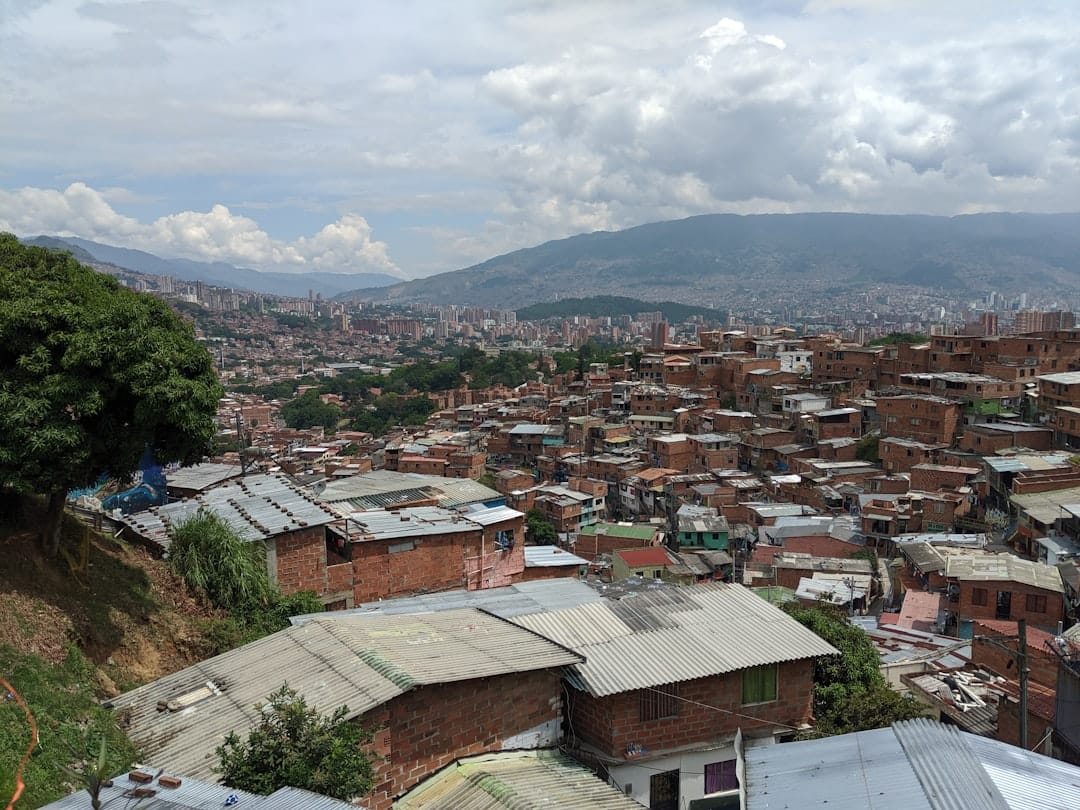
In the 1990s and early 2000s, Comuna 13 (officially San Javier) was one of the most dangerous districts in one of the most dangerous cities on earth. Today it is a working-class hillside covered in murals, with six sets of orange outdoor escalators — 384 meters of them, opened in 2011 — that replaced a brutal climb up concrete stairs. Local guides who grew up here explain what the graffiti actually means: the elephants, the birds, the faces that reference specific events. It is the single best half-day in the city.
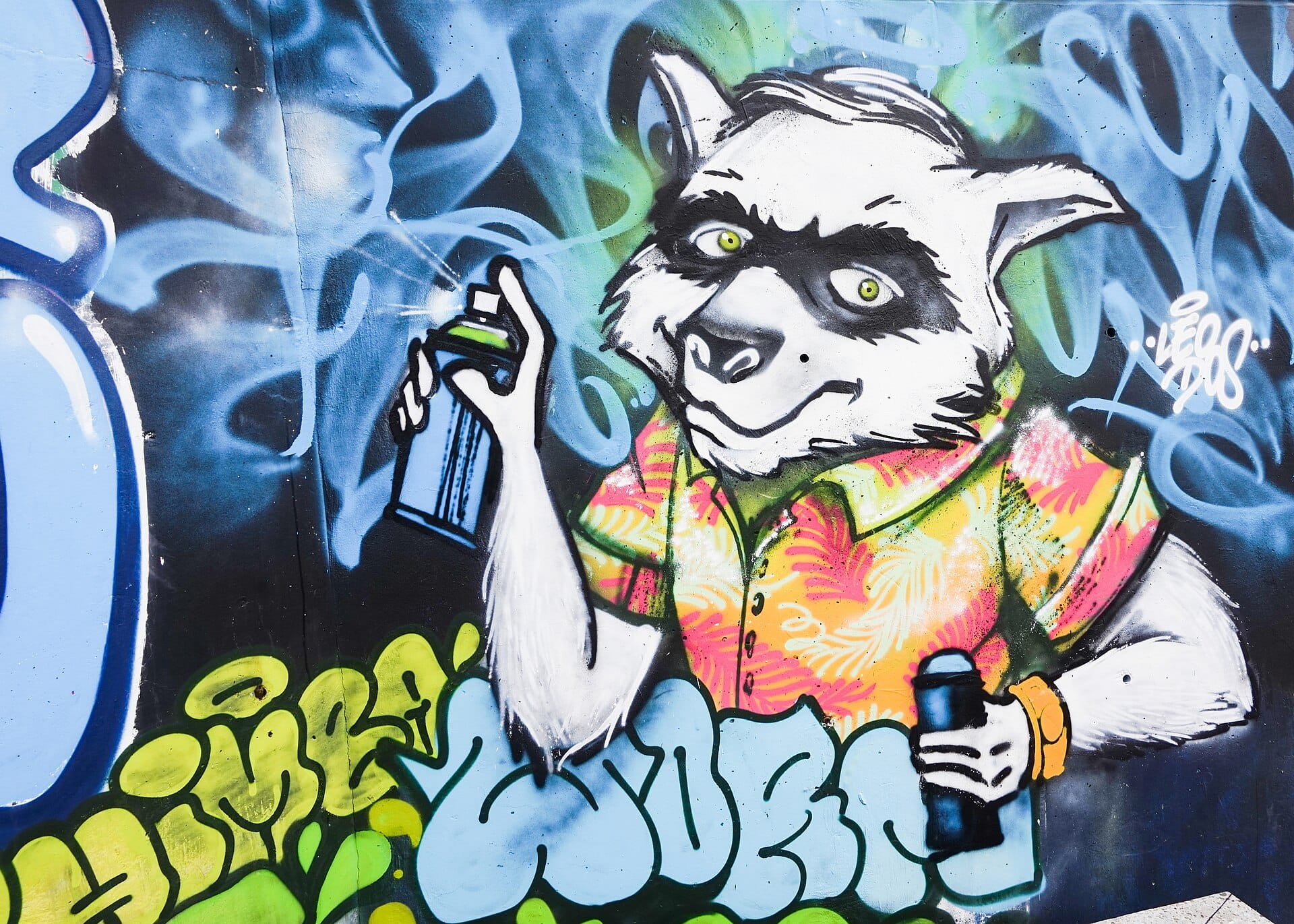
What to do: Ride Metro Line B to San Javier (the end of the line), then take a 6,000 COP ($1.90) taxi or the 20-minute uphill walk to the escalators. You can wander for free — the escalators cost nothing to ride and the art is public. Insider tip: arrive by 9:30 a.m. By noon the alleys fill with tour groups and the viewpoints turn into a queue for photos. A guided graffiti tour runs about 70,000 COP ($22 / €19) and is worth it for the context, but book a small-group one and skip the giant flag-following herds. Buy a mango biche or a paleta from a vendor on the way up; that is part of the point.
Plaza Botero and the Museo de Antioquia
Fernando Botero, Medellín's most famous son, gave the city 23 of his fat bronze sculptures — the plump horses, the reclining women, the serene cat — and they sit out in the open in Plaza Botero, downtown. It is free, it is always open, and it is one of the few reasons to spend real time in gritty El Centro. The Museo de Antioquia, right on the plaza, holds the largest collection of Botero's paintings and donated works from his personal collection, including pieces by Picasso and other names he admired.
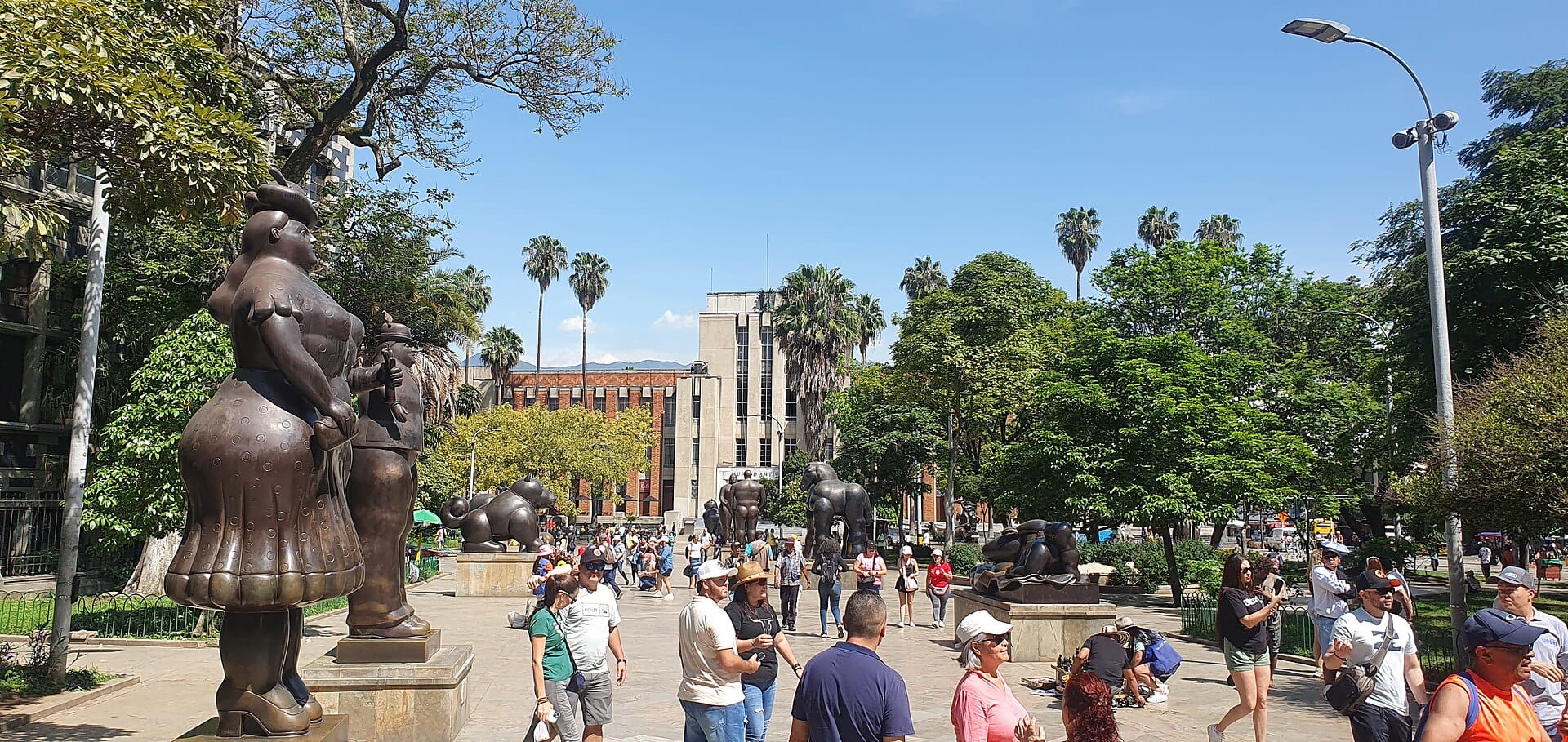
What to do: Rub the sculptures if you must (everyone does), then go inside the museum. Foreign-visitor admission is about 24,000 COP ($7.50 / €6.60); it is open Monday to Saturday 9:40 a.m.–5:30 p.m. and Sundays until 4:30 p.m. Insider tip: come on a weekday morning and take the metro to Parque Berrío station, which drops you a block away. El Centro is fine in daylight with normal caution but not a place to linger after dark or flash a phone — keep it in your pocket, not your hand.
Ride the Metrocable — the world's first cable car built as public transit
Medellín's Metrocable is not a tourist gimmick; it is part of the metro, built in 2004 to connect steep hillside barrios to the rest of the city. Riding it is the cheapest scenic flight you will ever take. Lines K, J, H, M and P are folded into a normal metro fare, so a gondola over the rooftops of the northern comunas costs the same as a train ride.
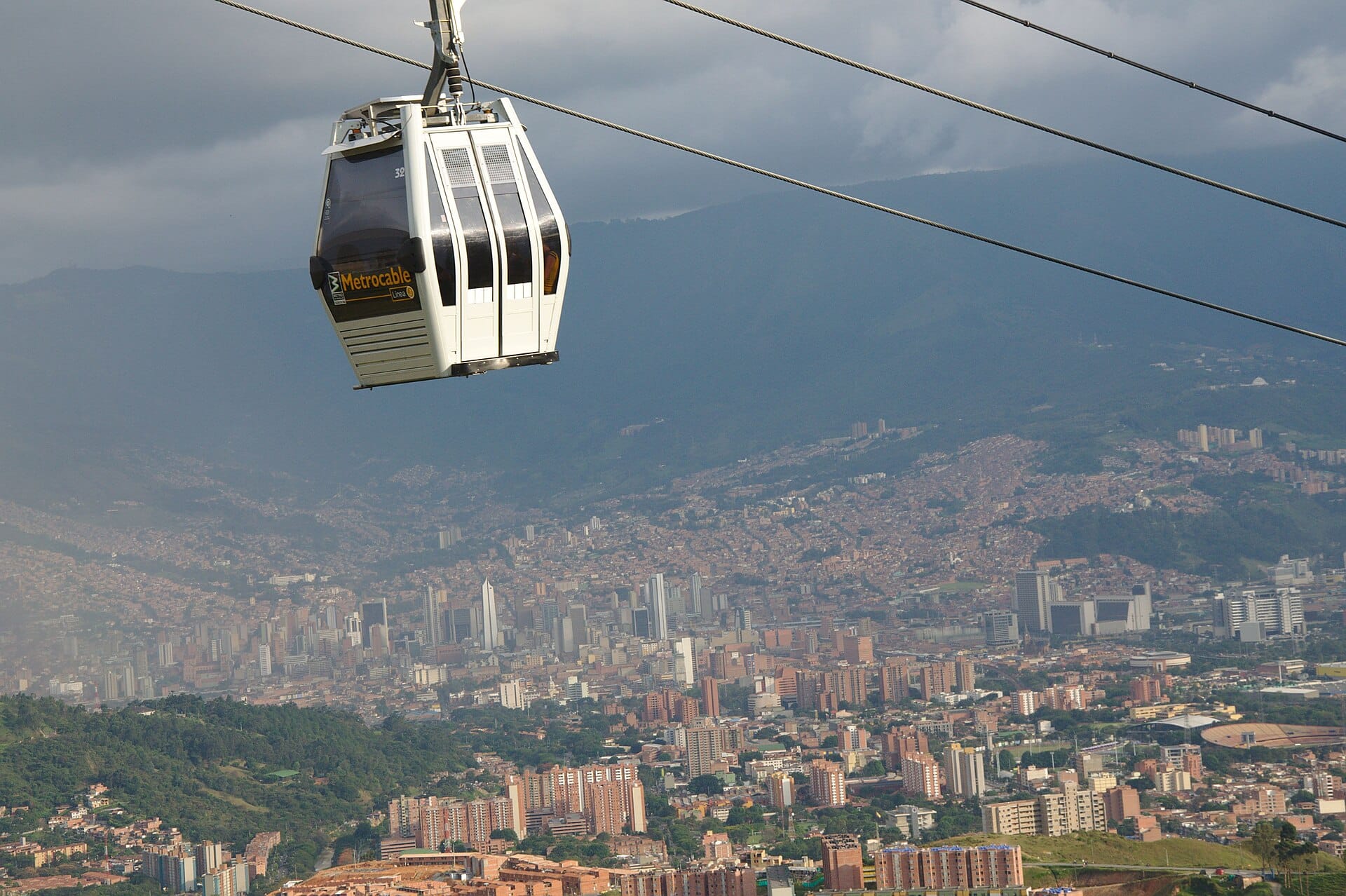
What to do: From the metro, transfer at Acevedo to Line K and float up to Santo Domingo for the classic view over the valley. Insider tip: keep going. At Santo Domingo, switch to Line L, which climbs out of the city entirely to Parque Arví, a 16,000-hectare nature reserve at 2,500 meters. Line L is the one exception to the flat fare — it costs about 13,700 COP ($4.30 / €3.80) round trip because it leaves the transit system. Go on a weekend when the Arví market is running, bring a light jacket (it is 10 degrees cooler up there), and ride down at golden hour.
Guatapé and La Piedra del Peñol
The best day trip in Colombia sits two hours east of Medellín. La Piedra del Peñol is a 220-meter granite monolith with a zigzag of 740 steps bolted to its side; the climb is a genuine thigh-burner, but the top looks out over a flooded reservoir that shattered into a thousand islands and fingers of water. Below it, the town of Guatapé is painted in the loudest palette in the country, every building trimmed with zócalos — molded relief panels along the base — showing sheep, fish, and family trades.
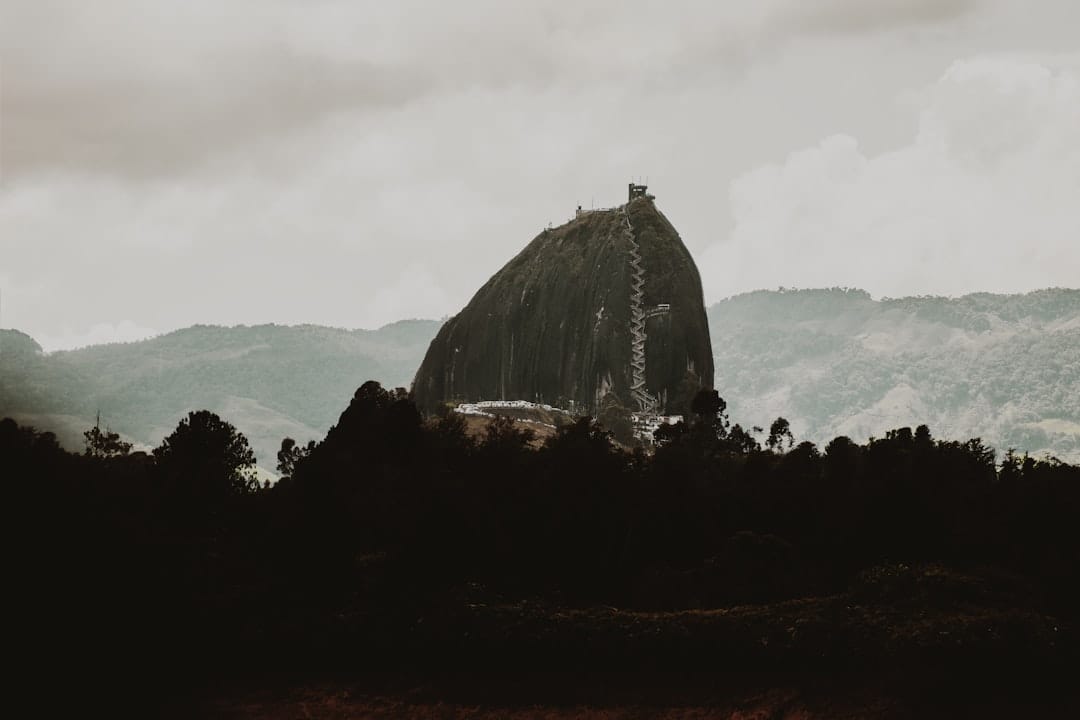
What to do: Climbing the rock costs 25,000 COP ($7.85 / €6.90). Insider tip: do this independently rather than on a packed bus tour. Take a direct bus from Medellín's Terminal del Norte to Guatapé (about 16,000–19,000 COP each way, roughly two hours), climb the rock first thing before the tour buses arrive around 11 a.m., then wander the town's Calle del Recuerdo and Plazoleta de los Zócalos for lunch. A trout (trucha) with patacones by the water is the local order.
Jardín Botánico and Parque Explora
Medellín does public space better than almost any city in Latin America, and the proof is a free 14-hectare botanical garden in the middle of it. The Jardín Botánico's centerpiece is the Orquideorama, a canopy of wooden "flower-tree" structures designed to shelter orchid and bird displays — an actual piece of award-winning architecture you can walk under for nothing. Iguanas laze in the trees and locals picnic on the lawns.
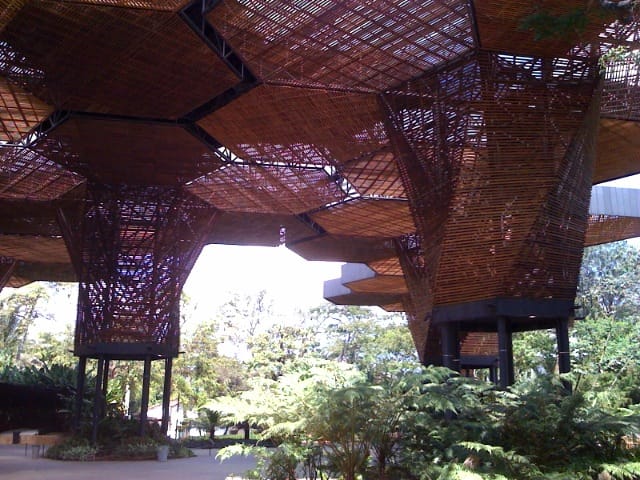
What to do: Take the metro to Universidad station; the garden entrance is right there and admission is free. Insider tip: you are standing in the city's science district. Next door is Parque Explora (an interactive science museum and one of South America's largest freshwater aquariums), the Planetario, and Parque de los Deseos, where people sprawl on the sloped plaza at night for open-air films. Do the garden free in the morning, then pay into Explora only if you have kids or a rainy afternoon to fill.
Pueblito Paisa on Cerro Nutibara
On a 80-meter hill smack in the center of the city sits a full-scale replica of a traditional Antioquian village from the early 1900s — whitewashed walls, a little church, a central fountain, a barber shop. It is unapologetically a tourist recreation, but the reason to climb Cerro Nutibara is the 360-degree view: the entire Aburrá Valley, the high-rises of El Poblado, and the green ridgelines that hem the city in.
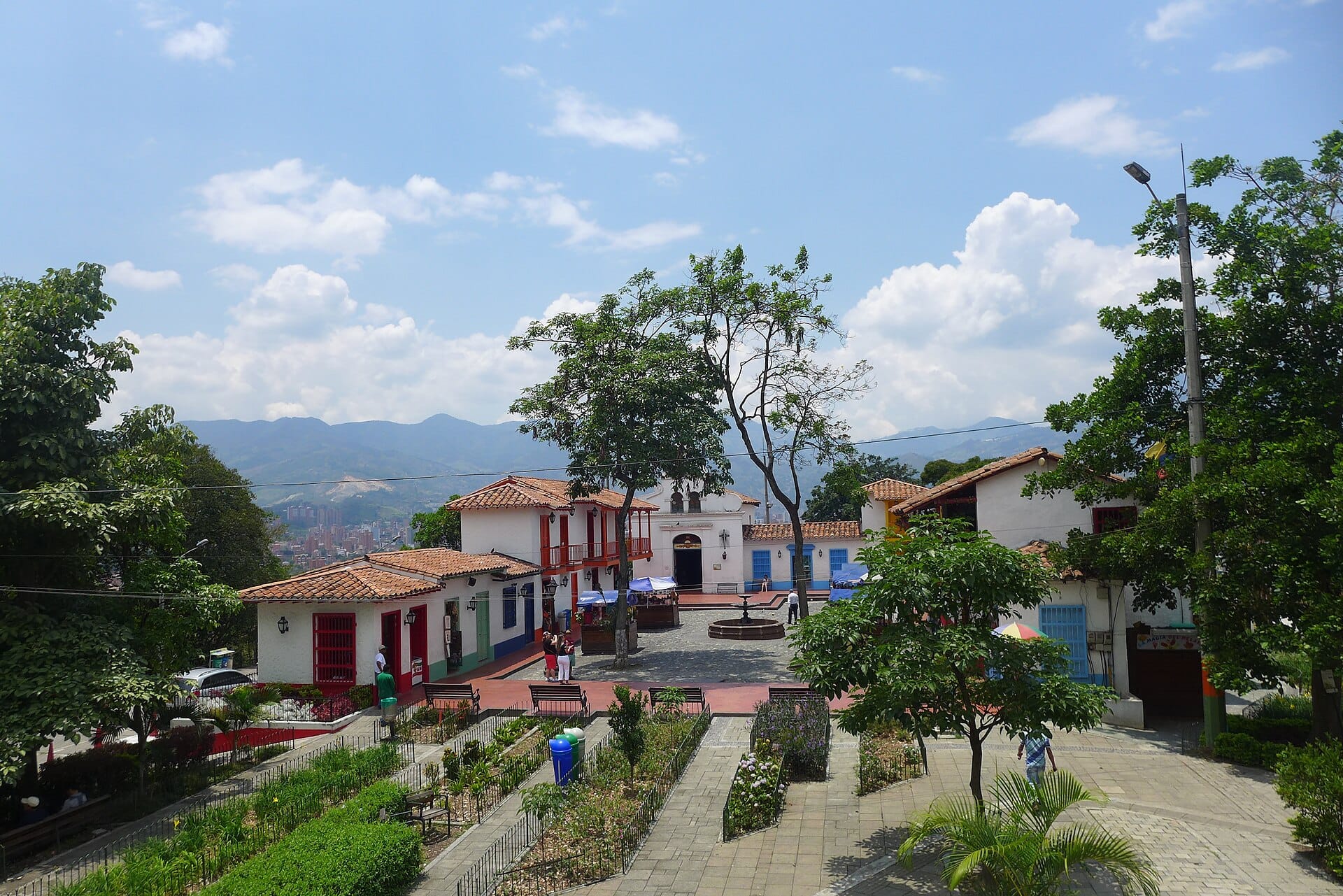
What to do: Entry to Pueblito Paisa is free. Insider tip: go late afternoon so the light is soft on the valley and stay for the lights coming on. Grab a coffee or an arepa de choclo (sweet corn arepa with cheese) at the top rather than a full meal — the restaurants up here are priced for the view, not the cooking. Skip a taxi if you are fit; the walk up from the Sculpture Park side takes 15 minutes.
Provenza, Parque Lleras and Mercado del Río
El Poblado is where most visitors sleep, eat, and drink, and its heart is Provenza — a grid of leafy streets packed with specialty coffee, tasting-menu restaurants, and rooftop bars. Two blocks over, Parque Lleras is the nightlife engine: loud, cheap, and busy every night of the week. For a less polished, more local feed, Mercado del Río in the Ciudad del Río district is a warehouse food hall with dozens of stalls under one roof.
What to do: Eat your way through Provenza — Carmen for a proper tasting menu, Alambique or OCI.Mde for modern Colombian, or a cheap menú del día for lunch. Insider tip: Parque Lleras is where the scopolamine and dating-app robbery scams concentrate (more on that below), so keep your wits after midnight, never leave a drink unattended, and use Uber or DiDi to get home. Mercado del Río is the better bet for dinner without the sales pressure — pick a stall, sit at a communal table, done.
🗓️ A 3-Day Itinerary
Day 1 — Downtown history and northern heights. Start at Plaza Botero and the Museo de Antioquia (24,000 COP / $7.50) when it opens at 9:40 a.m., before the heat and the crowds. Grab lunch at a downtown menú del día (12,000–18,000 COP / $4–6). In the afternoon, ride the metro north to Acevedo and take Metrocable Line K up to Santo Domingo, then Line L to Parque Arví (13,700 COP / $4.30 round trip) for mountain air and the valley view. Ride down at dusk. Dinner in Laureles at Mondongo's — a bandeja paisa runs about 35,000 COP ($11 / €9.70). Total transit for the day: under $8.
Day 2 — Comuna 13 and El Poblado. Be at San Javier station by 9:30 a.m. and spend the morning in Comuna 13, ideally with a small-group guide (70,000 COP / $22). Eat street food on the hill. Come back down mid-afternoon, rest, then spend the evening in Provenza: coffee at a specialty roaster, dinner at Alambique or Mercado del Río (25,000–45,000 COP per main), and a drink around Parque Lleras if you have the energy. Budget roughly $45–70 for the day depending on how hard you go at dinner.
Day 3 — Guatapé day trip. Take an early direct bus from Terminal del Norte to Guatapé (about 18,000 COP / $5.65 each way, two hours). Climb La Piedra del Peñol (25,000 COP / $7.85) before the tour buses land, then explore the painted streets and eat trucha by the reservoir. Bus back by late afternoon. If you would rather not deal with logistics, a guided tour with transport, breakfast, lunch, and a boat ride runs roughly 180,000–260,000 COP ($57–82). Spend your last evening at Pueblito Paisa watching the city light up, or back in Provenza.
🧠 Essential Tips
When to go
The "eternal spring" is real — daytime highs sit around 27 °C and nights around 17 °C every month — but rainfall is not evenly spread. The driest, most reliable stretches are December to March and July to August. April–May and September–November are the two rainy peaks, with afternoon downpours that rarely ruin a whole day but will soak an unplanned one. For atmosphere, aim for early August and the Feria de las Flores (July 31–August 9 in 2026), or December, when the Alumbrados Navideños light the Medellín River from December 1 into early January. Book accommodation weeks ahead for both.
Getting around
From José María Córdova International Airport (MDE), a regulated official taxi to El Poblado is a flat 110,000 COP ($34.50 / €30) with tolls included, taking 45–60 minutes; Uber runs 80,000–110,000 COP but tolls may not show in the estimate. The cheapest option is a shared white minivan (colectivo) from outside arrivals for around 25,000 COP. In the city, the Metro is spotless, safe, and the pride of Medellín — locals genuinely do not litter it. Buy a rechargeable Cívica card (free to register, or 10,900 COP for the tourist "eventual" version) and each ride costs about 3,430 COP ($1.08); without the card it is 3,900 COP. For anything off the rail lines, use Uber or DiDi — both are widely used, cheaper than in the US, and remove the haggling. If you take a street taxi, insist on the meter (taxímetro).
Staying safe
Medellín is far safer than its reputation, but the local mantra is "no dar papaya" — literally "don't give papaya," meaning don't hand thieves an easy opportunity. The single biggest risk to tourists is not violent crime but scopolamine (locally burundanga), a drug slipped into drinks that wipes memory and leaves victims robbed. It is overwhelmingly tied to dating apps and bar pickups: never accept a drink from a stranger, never leave a date's flat plans vague, and meet new people in public. Keep phones out of sight in El Centro, along Calle 10, and around Parque Lleras late at night, and wear a backpack across your chest in crowds. Use registered taxis or ride apps after dark rather than walking home. These are the same precautions any big city asks for — Medellín just earns the reminder.
What to eat
The regional plate is the bandeja paisa: red beans, rice, ground beef, chicharrón, chorizo, a fried egg, an arepa, avocado, and sweet plantain, all on one platter meant for a farmhand's day. Mondongo's in Laureles is the beloved institution for it (about 35,000 COP). Beyond that: arepa de choclo with quesito, buñuelos (fried cheese-dough balls, best in December), fresh trucha in Guatapé, and an absurd variety of tropical fruit — try lulo, guanábana, and mangostino at the Minorista or Placita de Flórez markets. For a splurge, Carmen and El Cielo bring modern technique to Colombian ingredients. Coffee is everywhere and excellent; skip the international chains and drink Colombian.
🏨 Accommodation Guide
Budget (roughly $12–35 / €10–31 a night): Laureles is the sweet spot — walkable, residential, full of local restaurants along La 70, and noticeably cheaper than El Poblado. Hostel dorm beds start around $12–18 and private rooms $30–50. It has the density of Poblado's nightlife without the markup or the sales pressure.
Mid-range (roughly $55–130 / €48–115 a night): El Poblado, and specifically Provenza or the quieter Manila sub-district, is where boutique hotels and serviced apartments cluster. You pay for walkable access to the best dining and nightlife in the city, plus reliable Wi-Fi if you are among the many people working remotely from here. Envigado, just south, is a calmer, family-oriented alternative with a strong safety reputation and lower prices.
Luxury (roughly $150–320+ / €130–280+ a night): The top end also sits in El Poblado — properties like The Charlee and the design-led Click Clack Hotel offer rooftop pools, valley views, and the polish international travelers expect. Rates climb hard during the Feria de las Flores in August and the December holidays, so book those windows well ahead.
❤️ Beyond the Tourist Trail
When you have done the highlights, go where the guides do not. Laureles-Estadio is the neighborhood that Medellín's own residents will tell you is the real city: a flat, tree-lined grid built for walking, with Primer Parque and Segundo Parque anchoring an evening scene of unpretentious bars and tiendas. It is where you feel the rhythm of daily paisa life rather than the visitor version.
For a hard, necessary counterpoint to the mural tours, visit the Casa de la Memoria museum near Parque Bicentenario (free admission). It documents the decades of violence the city endured without sanding off the edges — the honest bookend to Comuna 13's optimism, and the context that makes the transformation land.
And if your timing is right, chase the seasonal calendar. Beyond August's Feria de las Flores, the Alumbrados Navideños turn the riverbanks and hillsides into millions of lights from December 1 through early January — an enormous free display that draws families from across the country. Ride the metro along the river at night to see it properly.
Plan your Medellín trip with VoyaBear
Three days barely scratches a city that reinvents itself every few years. Whether you want a Comuna 13 morning with the right guide, a Guatapé day trip without the cattle-bus, or a Feria de las Flores itinerary timed to the Desfile de Silleteros, VoyaBear builds personalized trip plans around exactly how you like to travel — your pace, your budget, your food obsessions. Tell us when you are going and we will handle the where, the how much, and the small decisions that make the difference. Start planning your Medellín trip with VoyaBear today.