VoyaBear


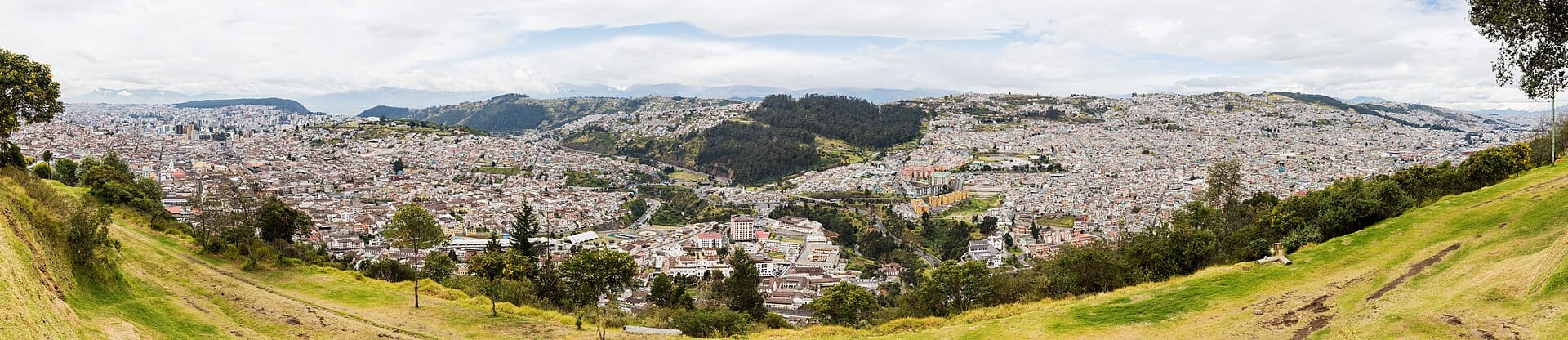
Quito sits at 2,850 metres, which means your first morning here will involve climbing a colonial staircase and quietly wondering why your lungs have filed a complaint. It is the highest official capital in the world after La Paz, and the altitude is the first thing that tells you this is not a generic Latin American city break. The second is the Centro Histórico itself: 320 hectares of 16th and 17th-century churches, monasteries and plazas that UNESCO named one of its very first World Heritage Sites in 1978, alongside the Galápagos. Little of it has been demolished or Disneyfied. You walk the same narrow streets the Spanish laid out in the 1530s, past churches so heavy with gold leaf that Ecuadorians half-joke the Vatican should be jealous.
The pitch for 2026 is simple. Ecuador uses the US dollar, so there is no currency to change and no exchange-rate maths to do at dinner. A three-course set lunch still costs $3. The equator runs through the northern suburbs, close enough to straddle before lunch. And unlike the crowds funnelling through Cusco or Cartagena, Quito's Old Town stays walkable and unhurried. This guide is built on what you actually do here, what it costs in 2026, and the specifics that keep you out of trouble.
🏙️ Essential Experiences
1. Basílica del Voto Nacional — climb the clock towers
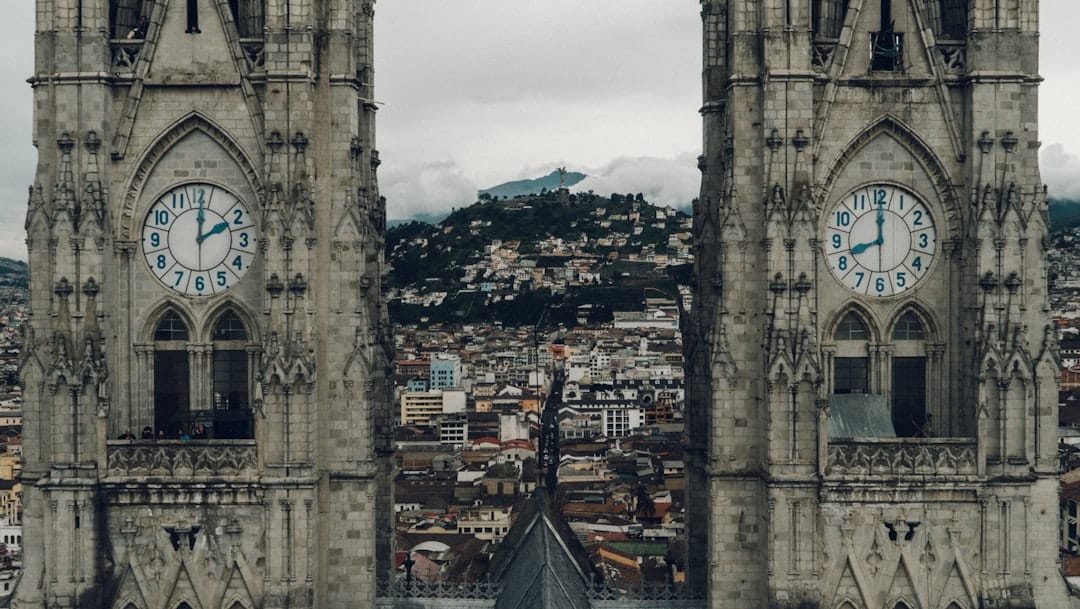
This is the neo-Gothic giant on the northern edge of the Old Town, begun in 1887 and technically still unfinished — local legend says the world ends when it's completed, which is one way to justify a slow construction schedule. Instead of gargoyles it has carved Ecuadorian animals — iguanas, tortoises, armadillos and condors — running along the exterior in place of the usual grotesques. The real reason to come is the climb. You take a lift partway, cross a wooden plank walkway directly above the nave, then haul yourself up a series of steep, near-vertical ladders to the clock towers for the best rooftop view in the city.
What it costs: $2 to enter the church, plus $4 for foreigners to access the towers — $6 total (about €5.50). Church open 9:00–17:30; towers 9:00–17:00. Insider tip: go on a clear morning right at opening, before the haze builds and before tour groups clog the ladders — there's barely room for two people to pass on the way down. Vertigo-prone visitors should know the final ladders are genuinely exposed.
2. Iglesia de la Compañía de Jesús — the gold church
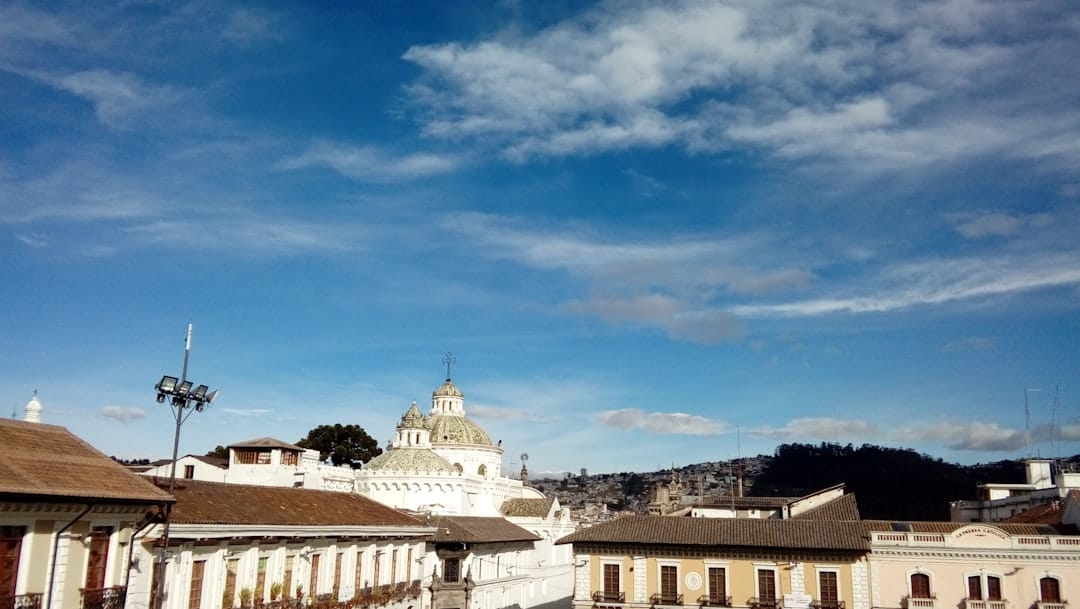
La Compañía took 160 years to build and it shows. The interior is smothered in gold leaf — roughly 50 kilos of 23-karat gold across the walls, columns and Mudéjar ceiling — making it the single most opulent church in Ecuador and arguably the finest Baroque building on the continent. Stand under the central cupola and look up: the whole thing was carved in wood, gilded, and assembled to a symmetry that took generations of Quito School artisans to finish.
What it costs: $5 (about €4.60) to enter. Photography is allowed but no flash. Insider tip: the gold reads completely differently depending on light — come mid-morning when sun angles through the upper windows and the ceiling genuinely glows. It's two blocks from Plaza Grande, so pair it with the plaza and San Francisco in one Old Town loop rather than making a special trip.
3. Plaza and Iglesia de San Francisco — the oldest church in Quito
Construction on San Francisco started around 1536, just weeks after the Spanish founded the city, making it the oldest and largest colonial religious complex in the Americas. The vast cobbled plaza in front is where Quiteños actually gather — kids chasing pigeons, vendors, the occasional protest — rather than a roped-off monument. Inside, the church mixes Moorish-influenced woodwork with a gilded main altar; the adjoining convent houses the Museo Fray Pedro Gocial and its collection of Quito School painting and sculpture.
What it costs: The church is free to enter; the convent museum (open roughly 9:00–17:00) charges a small admission. Insider tip: skip the tourist cafés on the plaza and duck into the Tianguez café-shop tucked under the church's stone arches on the plaza's south side — fair-trade Ecuadorian coffee and a courtyard that most day-trippers walk straight past.
4. Plaza Grande and the changing of the guard
Plaza de la Independencia — everyone calls it Plaza Grande — is the civic heart of the Old Town, ringed by the Presidential Palace (Palacio de Carondelet), the cathedral, the archbishop's palace and city hall. It's free, it's the natural place to start any walking day, and on Monday mornings at 11:00 the presidential guard performs a full changing ceremony out front, occasionally with the president appearing on the palace balcony.
What it costs: Free. The cathedral itself is free to enter. Insider tip: the palace interior can be visited on free guided tours, but they book out — reserve ahead rather than turning up. If you only have one Old Town morning, time it for Monday to catch the guard change, then walk straight to La Compañía a block away.
5. El Panecillo and the Virgen de Quito
The hill rising south of the Old Town is El Panecillo ("the little bread loaf"), topped by a 45-metre aluminium statue of the winged Virgin of Quito — assembled from 7,000 numbered pieces and one of the tallest statues in South America. It's the city's best 360-degree viewpoint: the colonial grid below, the new city stretching north, and the volcano Cotopaxi on the horizon when the clouds cooperate. You can climb inside the monument's base and up to a small viewing platform.
What it costs: Around $1 (roughly €0.90) to enter the monument; the hill and views are otherwise free. Insider tip: take a taxi or ride-hail app to the top — do not walk up. The residential streets on the slope have a real robbery history and packs of territorial stray dogs. A registered taxi from the Old Town runs about $3–4 each way; ask it to wait, or book the return.
6. TelefériQo — cable car up Pichincha
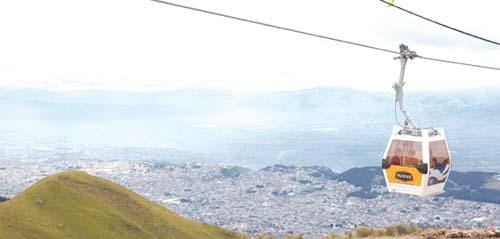
The TelefériQo hauls you from the western edge of the city up the flank of Pichincha volcano to Cruz Loma at about 3,945 metres — one of the highest aerial tramways in the world. The ride takes roughly 18 minutes and the payoff is a ridgeline view over the whole Andean basin. Fit, acclimatised visitors can hike on from the top toward the Rucu Pichincha summit (4,696 m), a serious 4–5 hour round trip that should only be attempted after a few days at altitude.
What it costs: $9 (about €8.30) standard adult round trip; $5.25 with an Ecuadorian ID. Open Monday–Thursday 09:00–19:00, Friday–Sunday 08:00–19:00, last tickets around 17:30. Insider tip: go early — clouds roll in and swallow the view most afternoons. It's a good 15°C colder at the top than in the city, so bring a real jacket, and give yourself a day or two in Quito first so 3,945 metres doesn't flatten you.
7. Mitad del Mundo — straddle the equator
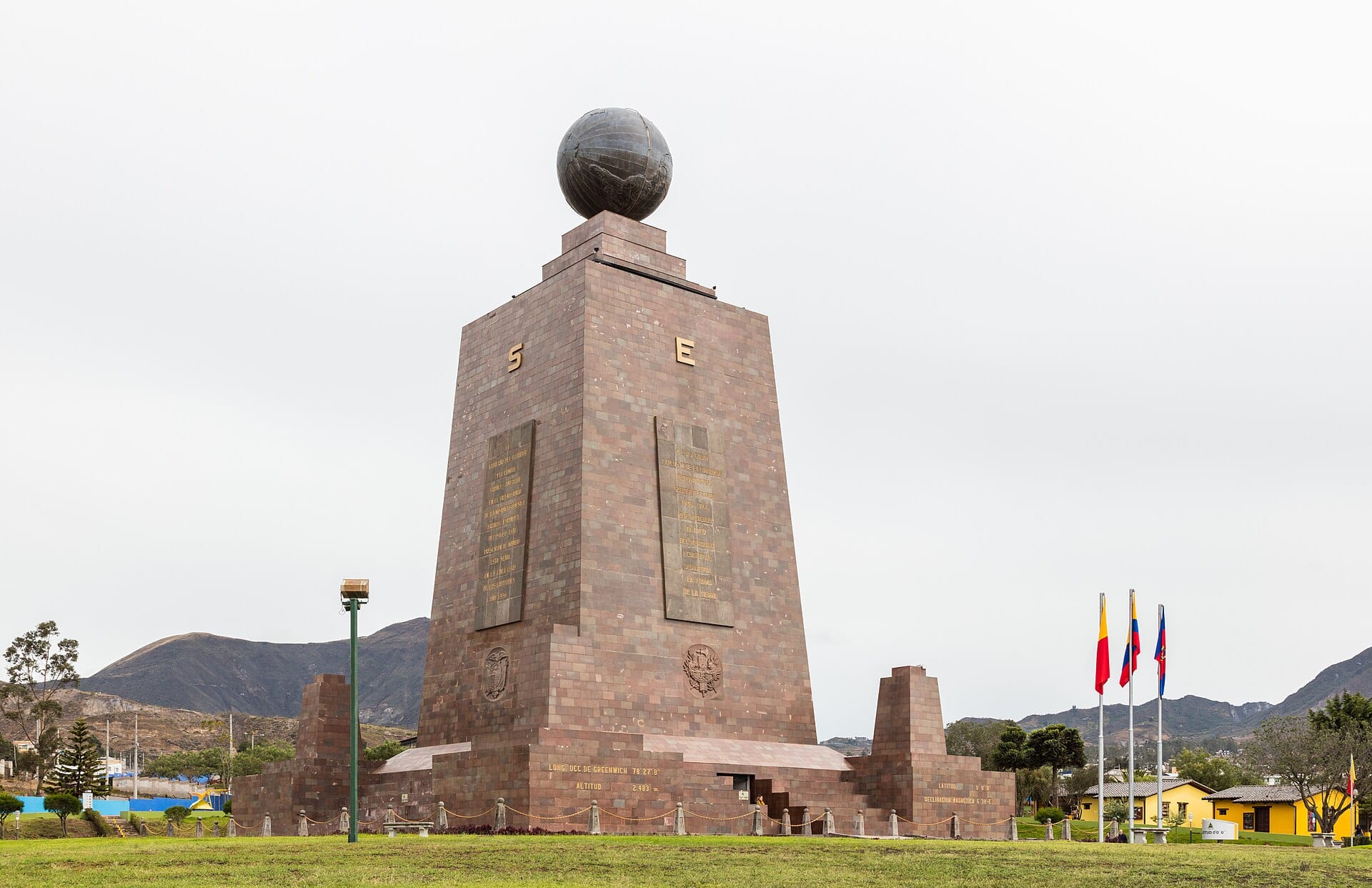
Twenty-six kilometres north of the centre, the Ciudad Mitad del Mundo is a 30-metre monument marking the equatorial line the French Geodesic Mission surveyed here in the 1730s. The GPS-measured line actually sits a couple of hundred metres away at the neighbouring Intiñan museum, which leans into the gimmick with egg-balancing and draining-water demonstrations. It's touristy, it's fun, and the photo of your feet in two hemispheres is basically obligatory.
What it costs: $5 (about €4.60) general admission to the monument complex; the Intiñan museum charges separately. Insider tip: get there cheaply by taking the Metro to the northern terminal and connecting to a "Mitad del Mundo" bus, rather than paying $25+ for a taxi each way. Watch for unofficial "guides" in the car park quoting inflated prices — buy tickets only at the official booth.
8. La Ronda — the colonial lane after dark
Calle La Ronda is a narrow, restored 17th-century street of whitewashed walls and flower-hung balconies. By day it's quiet artisan workshops; by night it fills with live música, hole-in-the-wall bars and vendors ladling out canelazo — a hot cinnamon, naranjilla and aguardiente drink that doubles as altitude central heating. It's the one part of the Old Town that stays lively into the evening.
What it costs: Free to wander; a canelazo runs $2–3, empanadas de viento a dollar or two. Insider tip: come Thursday to Saturday evening when the street is at full tilt and the traditional-games workshops are open. Duck into Hasta la Vuelta Señor nearby for a bowl of proper locro de papa. Keep the wandering to the lit main lane and take a ride-hail app back to your hotel.
🗓️ A Three-Day Itinerary
Day 1 — Centro Histórico on foot
Start at Plaza Grande (free) around 9:00 while it's calm. Walk two blocks to La Compañía ($5) for the gold interior, then to Plaza and Iglesia de San Francisco (church free) for coffee at Tianguez under the arches. Break for an almuerzo at Mercado Central — a full set lunch of soup, hornado or seco de chivo, juice and dessert runs $2.50–3.50 (about €2.30–3.20). In the afternoon walk north to the Basílica del Voto Nacional and climb the towers ($6 total). Everything here is within a 15-minute walk; the whole day is under $15 (about €14) in entries. As evening comes, head to La Ronda for canelazo and music.
Day 2 — Panecillo, the equator and the new city
Taxi up to El Panecillo early ($3–4 each way, $1 entry) for the clear-morning view before haze sets in. Come back down and make the trip north to Mitad del Mundo ($5) via Metro plus connecting bus — budget half a day for the round trip and balance an egg on the line. Back in town, spend the late afternoon in the new city: Parque La Carolina, or the cafés and galleries of La Floresta. Dinner at Los Cebiches de la Rumiñahui for encebollado and ceviche de camarón ($8–15 a plate, roughly €7–14).
Day 3 — Altitude and views
Ride the TelefériQo ($9) up Pichincha first thing, before the clouds. If you're well acclimatised and fit, hike toward Rucu Pichincha (allow 4–5 hours round trip and turn back if the weather closes in); if not, enjoy the ridge views and come back down. Spend the afternoon on the bohemian side of town — La Floresta's cafés, the independent Ochoymedio cinema, or the steep walk down to the Guápulo sanctuary for a valley view most visitors never see. Finish with a tasting menu at Zazu in González Suárez ($65–85, about €60–78) if you want a splurge, or fritada and llapingachos at Mama Clorinda for a fraction of that.
🧠 Essential Tips
When to go
June to September is the dry season and the clear winner — the least rain, the best mountain views, daytime temperatures around 15–21°C (59–70°F) and nights dropping to 8–10°C. June hits the sweet spot before the July–August peak fills hotels. The wet season runs October to May, with March and April the soggiest, though rain usually comes as a heavy afternoon burst rather than all-day drizzle. If you want atmosphere over sunshine, the Fiestas de Quito in the first week of December — bullfight-free street parties, live music and chiva party buses celebrating the city's founding on 6 December — are the year's biggest blowout. Quito sits on the equator at altitude, so temperatures barely shift month to month; the real variable is rain, not heat.
Getting around
The Quito Metro (Line 1) opened fully in 2023 and is the fast way to cover the city north–south: a flat $0.45 (about €0.40) gets you anywhere along its 15 underground stations from Quitumbe in the south to El Labrador in the north, running from around 5:30 to 23:00 on weekdays. For the Old Town, walking beats everything. For everything else, use ride-hail apps — Cabify and InDriver are what locals trust, with Uber also operating; they cost $2–4 for most in-city trips and remove the fare-haggling. If you take a street taxi, use only registered yellow cabs with orange licence plates and insist on the meter.
Airport to city
Mariscal Sucre International (UIO) sits in Tababela, about 43 km east of the centre — an hour or more in traffic, so it's further than you'd expect. A registered taxi to the Old Town or Mariscal runs roughly $25–30 (about €23–28). The Aeroservicios shuttle bus is the mid-range option at about $8 (€7.40) to a stop near the north of the city. The cheapest route is the public bus (about $2) to Quitumbe, then the Metro in — doable with light luggage, tedious with a big suitcase.
Staying safe
Quito rewards street smarts. The Old Town empties fast after 20:00–21:00 — it's fine and policed by day, but don't wander its emptied streets on foot at night; take an app car. El Panecillo should always be reached by taxi, never on foot. La Mariscal (around Plaza Foch) is the nightlife hub and generally fine, but avoid quiet side streets alone after midnight. The classic scam is the "mustard trick" — someone spills something on you, then robs you while an accomplice helps clean it off — so if you're suddenly, weirdly dirty, hold your bag and walk on. Keep phones and cameras away from the table edge, and use hotel-called or app taxis at night rather than flagging cabs.
What to eat
Quiteño food is hearty highland cooking built for the cold. Locro de papa is the signature: a thick potato-and-cheese soup crowned with avocado — try it at Hasta la Vuelta Señor in La Ronda. Hornado (slow-roasted pork) and seco de chivo (goat stew) headline the $2.50–3.50 almuerzos at Mercado Central. Fritada — braised pork with llapingachos (cheesy potato patties), mote and curtido — is the specialty at Mama Clorinda. For the coast on a plate, join the queue at Los Cebiches de la Rumiñahui for encebollado, the tuna-and-cassava soup Ecuadorians swear cures hangovers. And breakfast belongs at Cafetería Modelo, serving humitas, bolones de verde and thick hot chocolate since 1950.
🏨 Accommodation Guide
Budget ($15–45/night, roughly €14–41). The Centro Histórico is where to be for atmosphere and walkability. Colonial House Inn and Casa CarpeDM sit in restored Old Town buildings with dorms and private rooms, free walking tours and courtyards; expect $17–40 a night. Community Hostel is the long-running backpacker favourite for meeting people and joining group dinners.
Mid-range ($85–130/night, about €78–120). Boutique conversions of colonial houses dominate this tier in the Old Town — Hotel Casa Gardenia (around $97) blends colonial and modern with terrace views, and Adamas House occupies a property dating to 1534 with a spa. If you'd rather be near nightlife and restaurants, base yourself in La Mariscal or the quieter, more creative La Floresta.
Luxury ($300–475/night, roughly €275–435). Casa Gangotena (around $462) is the address — a restored mansion right on Plaza San Francisco with some of the best rooftop views in the Old Town. Illa Experience Hotel (about $421) occupies a 17th-century house on the La Ronda side, and Plaza Grande Hotel (around $324) puts you directly on Independence Square. All three are in the Centro Histórico, which is where Quito's luxury lives.
🎭 Beyond the Tourist Trail
Most visitors never leave the colonial core, which is exactly why La Floresta is worth an afternoon. This low-key, arty neighbourhood east of the Mariscal is where Quiteños actually hang out: specialty coffee roasters, the independent Ochoymedio cinema, muralled walls and the Saturday Mercado de La Floresta selling organic produce and street food. It's the antidote to church fatigue.
For a view without a queue, walk down into Guápulo, the near-vertical old neighbourhood tumbling down the hillside below González Suárez. Its 17th-century sanctuary sits at the bottom, and the mirador at the top looks straight down the valley toward the road to the Amazon — a favourite of Quito's artists and one of the city's genuinely quiet corners. Time your visit for early December if you can: the Fiestas de Quito turn the whole city into a week of open-air concerts, parades and chiva buses around the 6 December founding anniversary, and it's when the place is most itself.
❤️ Plan Your Quito Trip with VoyaBear
Quito packs a lot into a compact, high-altitude package — colonial churches, an equator line, a cable car up a volcano and some of the cheapest good eating in South America. Working out how to sequence it around the weather, the altitude and your own pace is where a plan earns its keep. That's what VoyaBear does: personalised, day-by-day itineraries built around what you actually want to see, with the transit times, costs and insider timing already worked out. Tell us how many days you have and we'll turn this guide into a trip that's yours. Start planning at voyabear.com.