VoyaBear


Oaxaca de Juárez runs on three things: masa, mole, and mezcal, and you can trace all of them within a ten-block walk of the Zócalo. This is the Mexican city where the food is the main attraction rather than a break between museums — where a woman named Vale has been griddling memelas in the Central de Abastos market long enough to land on Netflix, and where the smoke hall inside Mercado 20 de Noviembre fills with mesquite haze by noon. In 2026 it is still small enough to cross on foot, still cheaper than the beach resorts, and still built on Zapotec foundations that predate the Spanish by a thousand years. Monte Albán, the mountaintop capital that ran the valley from around 500 BC, sits twenty minutes from your coffee.
Come for the archaeology and you stay for the market lunches; come for the mezcal and you leave understanding why UNESCO protected the whole historic center in 1987. Here is how to spend three days on it without wasting a peso or a meal.
🏛️ Essential Experiences
Monte Albán — the Zapotec capital on the hill
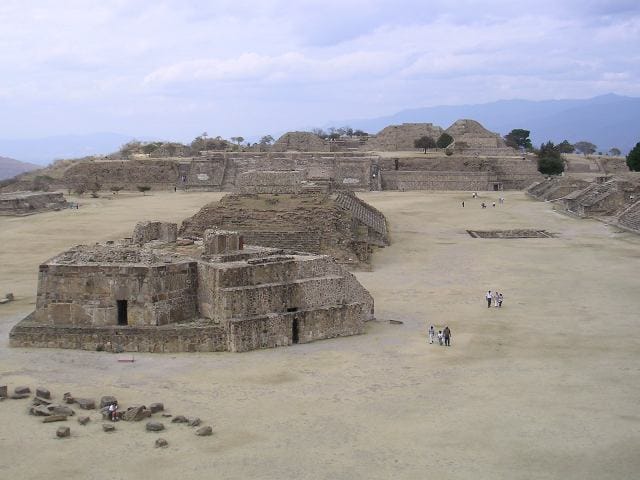
Monte Albán is the reason Oaxaca exists where it does: a flattened mountaintop the Zapotecs leveled by hand into a ceremonial city that dominated the Central Valleys for over a thousand years. The Gran Plaza, the ball court, and the carved Danzantes stones — figures once misread as dancers, now understood as slain or sacrificed captives — are the highlights, and the view over three converging valleys explains in one glance why anyone would haul stone up here. Entry is 210 MXN (about $11 / €10), which includes the on-site museum, and the site runs 8am to 5pm daily, last entry 4:30pm.
Insider tip: Skip the taxis and take the dedicated tourist shuttle from Hotel Rivera del Ángel on Calle Mina — roughly 65 MXN ($3.40) one way, leaving about every half hour from 8:30am. Be on the first or second run. Arrive between 8:30 and 10am for cool light and empty plazas; by noon the tour buses land and the exposed hilltop turns into a furnace with no shade.
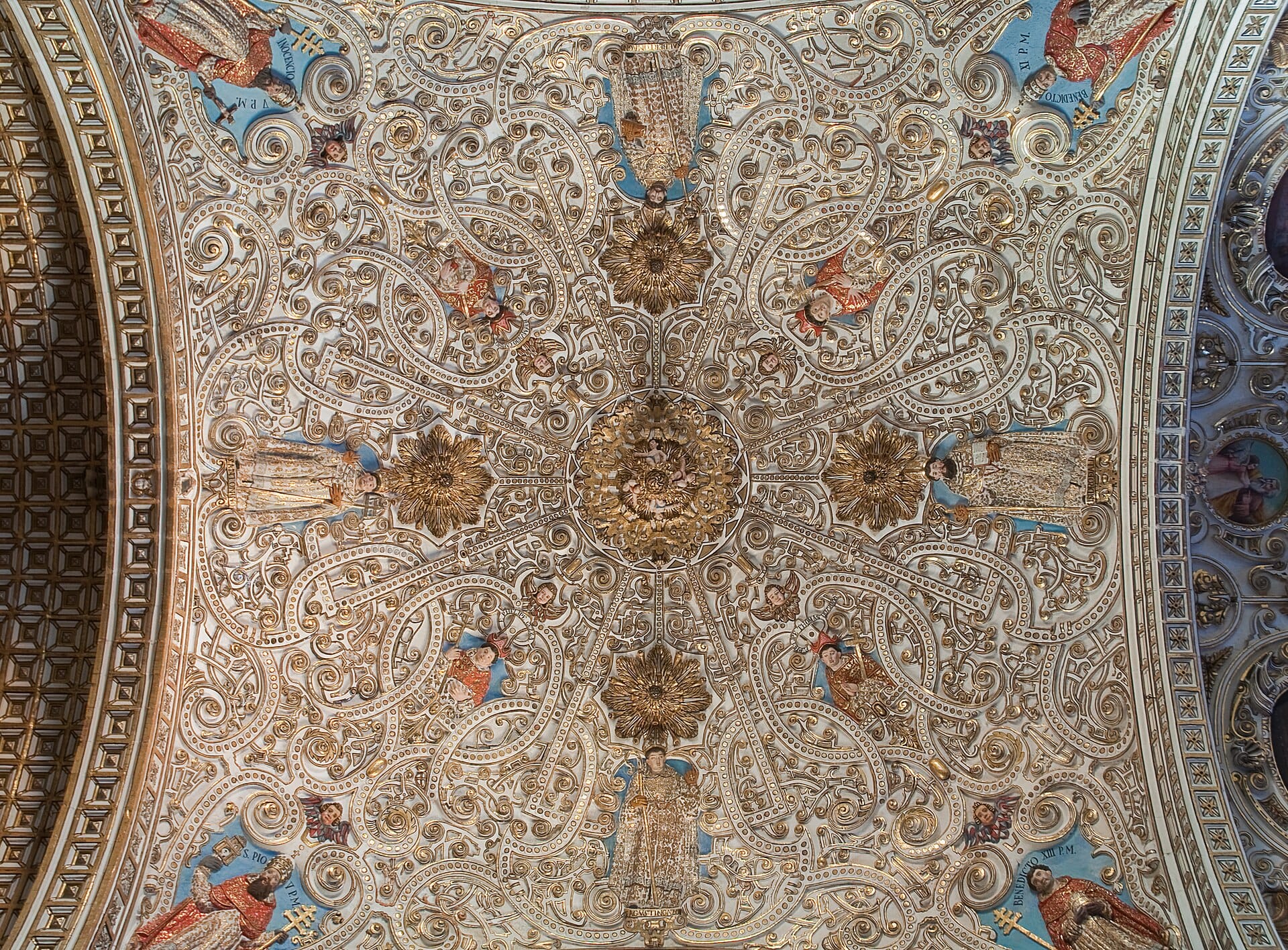
Templo de Santo Domingo de Guzmán — the gold interior
From the outside Santo Domingo is a fortress-like pair of bell towers in green cantera stone. Inside, it's a riot of gilded stucco: the barrel vault over the entrance carries a sculpted family tree of the Dominican order, and the whole nave drips with gold leaf applied over the 16th and 17th centuries. It's free to enter and open daily, roughly 7am to 8pm — step in during a lull, look straight up, then look back at the tree of Santo Domingo above the door before you leave.
Insider tip: The attached former convent houses the Museo de las Culturas de Oaxaca, and this is where you see the treasure from Tomb 7 at Monte Albán — the gold, jade, and turquoise Mixtec funerary hoard. It's 90 MXN (about $4.75 / €4.40), open Tuesday to Sunday 10am to 6pm, closed Mondays. Do Santo Domingo and this museum as one stop; they share a wall.
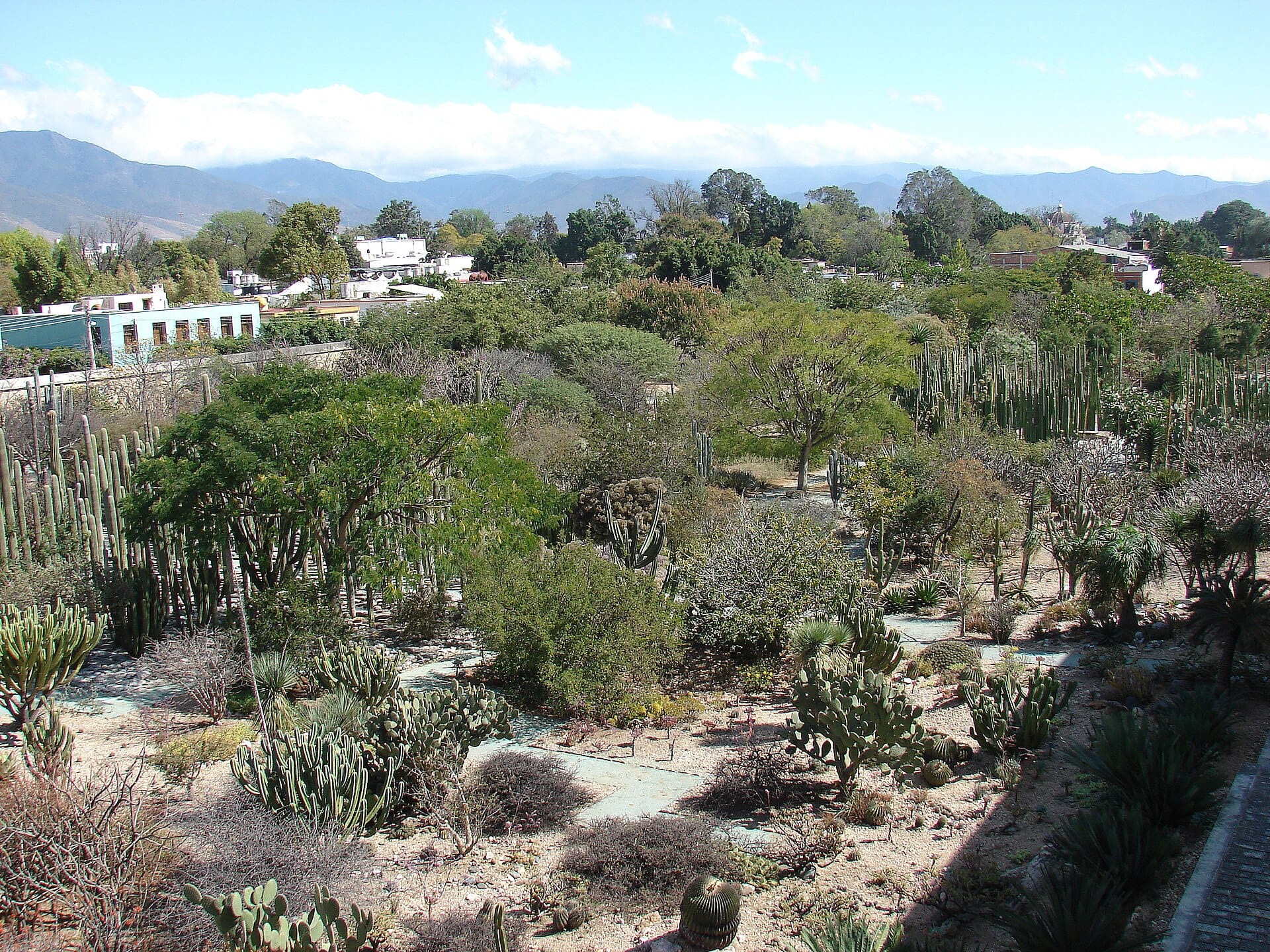
Jardín Etnobotánico — the walled garden of desert plants
Behind Santo Domingo, on land that was once the convent's orchard, is a two-hectare garden planted entirely with species native to Oaxaca — towering columnar cacti, the agaves that become mezcal, dye plants, and the cochineal cactus whose insects gave Europe its red. You can only enter on a guided tour; there's no wandering in alone. The English-language tour has historically run Saturdays at 11am (about two hours, around 100 MXN), with shorter Spanish tours on weekdays. Operations have been in transition lately, so confirm the current schedule and price at the gate on Reforma.
Insider tip: The garden is the best vantage point for photographing the back of Santo Domingo through the cactus — the shot everyone recognizes from Oaxaca. Book or show up for the Saturday English walk if you want the botany explained; otherwise the weekday Spanish tour still gets you in.
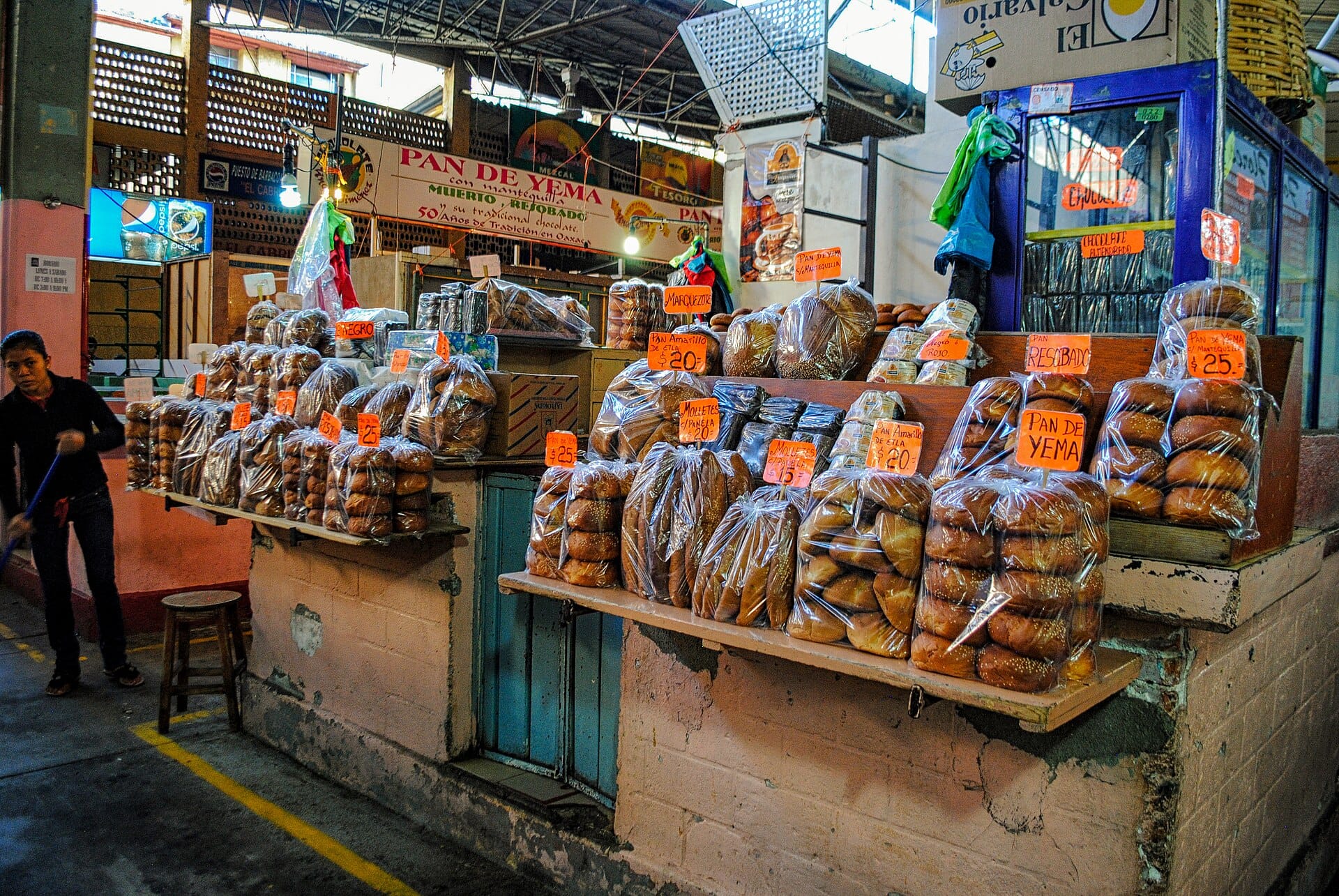
Mercado 20 de Noviembre — and the smoke hall
This is the eating market, one block south of the Zócalo. Its most famous corridor is the Pasillo de Humo, the "hall of smoke," where you buy raw tasajo (thin beef) or cecina (chile-rubbed pork) by weight from a butcher, hand it to a griddle woman, and eat it minutes later with grilled spring onions, quesillo, and salsa. Entry is free; go hungry.
Insider tip: The smoke hall is chaotic and everyone will wave you over — pick a stall that's busy with locals, order the tasajo, and add a stack of blue-corn tortillas. Across the way, find Flor de Huayapam for a cup of tejate, the pre-Hispanic cacao-and-maize drink with a foam cap that looks like nothing else. For a full tlayuda — the giant crisp tortilla folded over beans, cabbage, and meat — the nearby Mercado Benito Juárez and its neighboring stalls do it better than most sit-down restaurants.
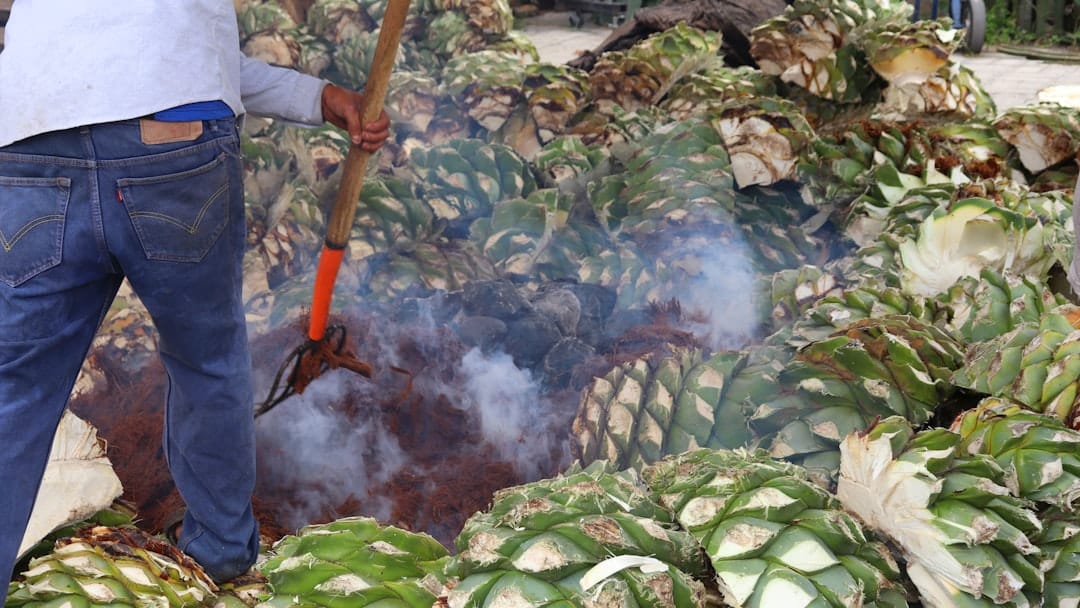
Andador Macedonio Alcalá — the mezcal walk
The Andador Turístico is the pedestrianized stone spine of the center, running from the Zócalo up to Santo Domingo past cantera facades, galleries, and courtyard restaurants. It's a free walk, but its real function after dark is as your mezcal crawl. Oaxaca is the world capital of the spirit, and tasting it here — espadín, tobalá, tepeztate, poured neat with orange and worm salt — is non-negotiable.
Insider tip: For the deepest bench, go to Mezcalería In Situ at Vicente Guerrero 413, run by mezcal writer Ulises Torrentera and holding one of the largest artisanal collections in Mexico — roughly 450 MXN ($24 / €22) for three pours, open Monday to Saturday afternoons into the evening. Expendio Cuish on Alcalá 802 is the more affordable, easygoing option (around 220 MXN for three). Sip, don't shoot; good mezcal is meant to be nursed.
Barrio de Jalatlaco — cobblestones and murals
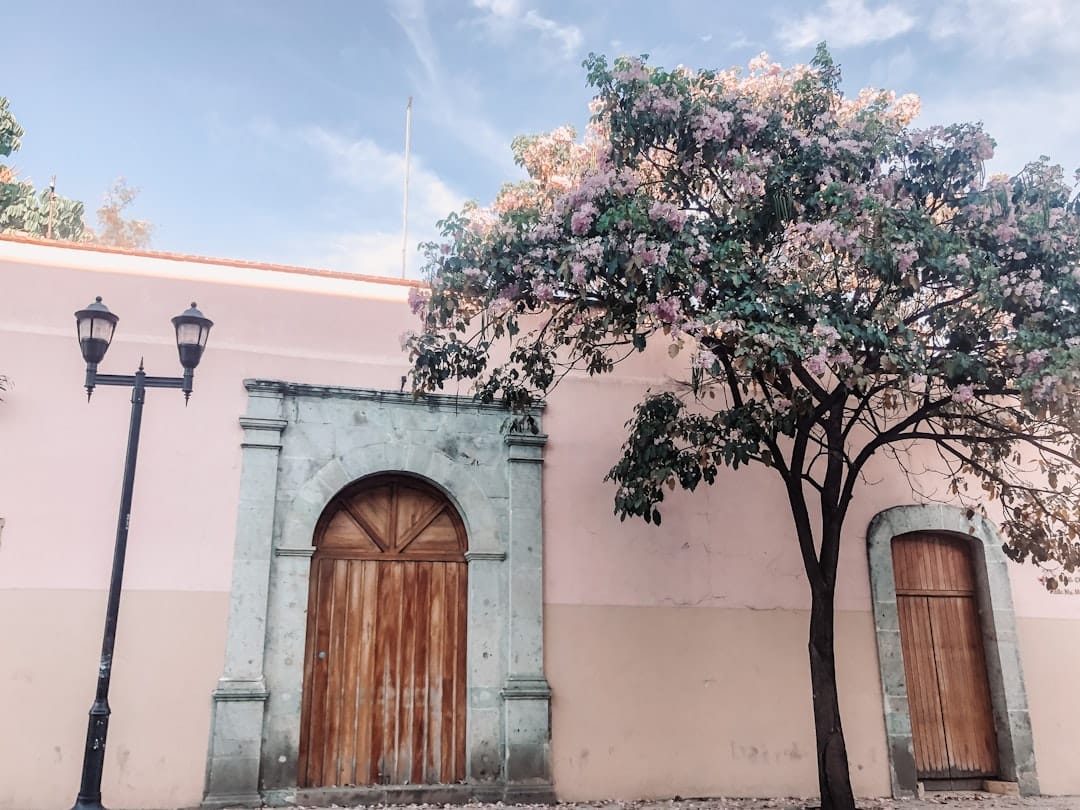
A ten-minute walk east of the center, Jalatlaco is the neighborhood that was a Zapotec village before the Spanish arrived and still feels lived-in rather than staged. Its cobblestone lanes are lined with painted adobe walls and large murals of Oaxacan life, anchored by the 17th-century Templo de San Matías Jalatlaco. It costs nothing but an hour of your morning.
Insider tip: Come early, before the light gets flat, and walk Calle de la República and the streets around the church for the best murals. Stop at one of the barrio's café-galleries for coffee, and note that this is one of the calmest places to base yourself in the city if you'd rather not sleep on top of the Zócalo's noise.
Hierve el Agua — the petrified waterfalls
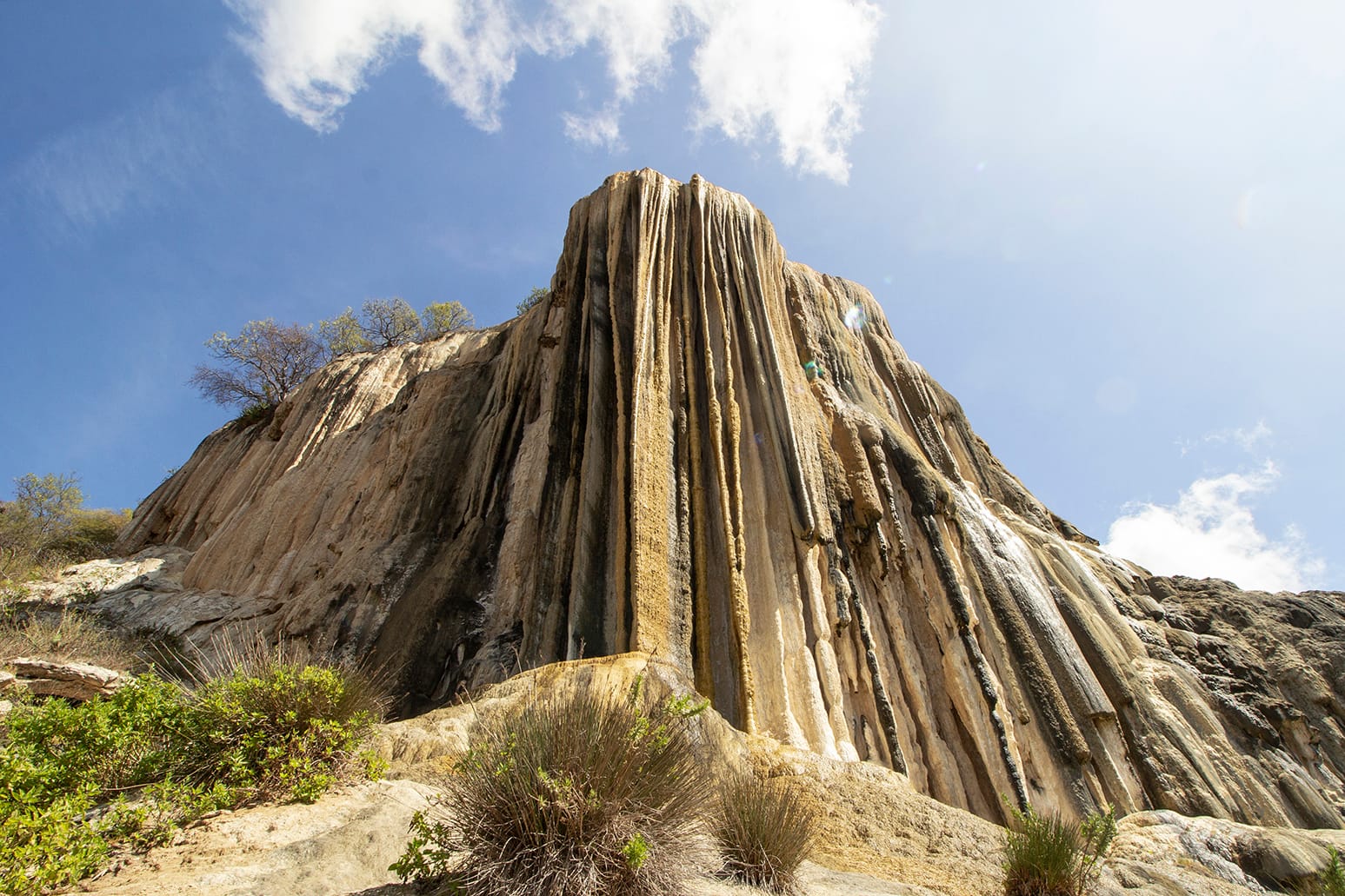
About 70 km east of the city, Hierve el Agua is a pair of mineral-spring "waterfalls" frozen in stone — calcium carbonate deposited over millennia down a cliff face — with spring-fed infinity pools at the top looking out over the Sierra. The total cost on arrival is roughly 110 MXN ($5.80 / €5.30) combining the community road toll and site entry, cash only, with no ATM anywhere near. It's open daily, 9am to 5pm in high season.
Insider tip: One important caveat — a long-running land dispute between two communities that co-manage the site causes unpredictable closures, historically more common June to October. Check a recent source (a local Facebook group, your hotel, or fresh TripAdvisor reviews) in the week before you go. Get there early to swim in the pools before the tour vans arrive around midday.
Mitla — the Zapotec city of geometric stone
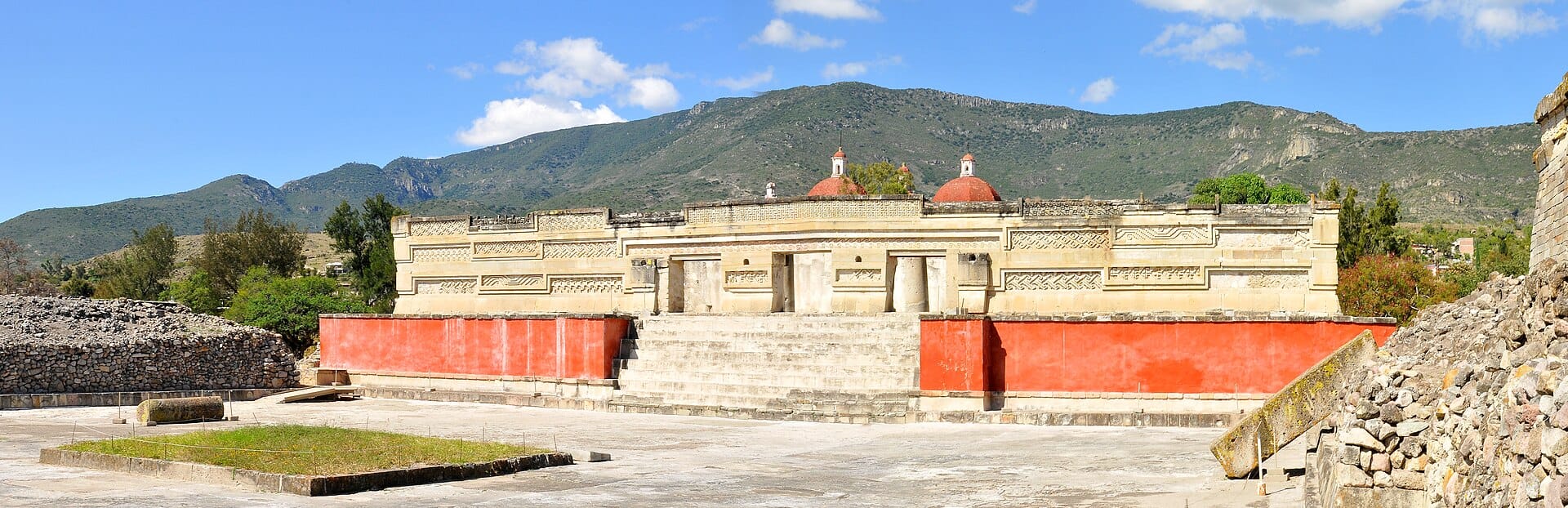
If Monte Albán is about scale, Mitla (46 km southeast) is about detail. Its walls are covered in grecas — intricate geometric mosaics assembled from thousands of cut stones fitted without mortar, a technique found almost nowhere else in Mesoamerica. This was the religious center of the Zapotecs after Monte Albán declined, and the Spanish built a church right on top of it. Entry is about 105 MXN (90 MXN federal fee plus a ~15 MXN state charge), open 8am to 5pm daily.
Insider tip: Mitla pairs naturally with Hierve el Agua and El Árbol del Tule — the 2,000-year-old cypress in Santa María del Tule with the stoutest trunk of any tree on earth (10 MXN to walk the churchyard). Doing all three in one day by colectivo is possible but tight; a Valley Circuit tour (roughly $23–35) ties them together without the transit puzzle.
🗓️ A 3-Day Itinerary
Day 1 — The historic center on foot
Start at the Zócalo with coffee under the laurel trees, then walk five minutes north to the Templo de Santo Domingo (free) and straight into the Museo de las Culturas next door (90 MXN) for the Tomb 7 gold. If it's Saturday, time it for the 11am Jardín Etnobotánico English tour (~100 MXN). Walk back down the Andador Macedonio Alcalá, browsing galleries, and have lunch at Mercado 20 de Noviembre — tasajo grilled to order in the smoke hall, plus a tejate (lunch, ~150 MXN / $8 / €7.30). Spend late afternoon wandering, then start your mezcal education at In Situ (450 MXN for three pours). Total for the day, excluding hotel: roughly $45 / €41.
Day 2 — Monte Albán and Jalatlaco
Catch the 8:30am shuttle from Hotel Rivera del Ángel on Calle Mina (65 MXN each way) up to Monte Albán (210 MXN). Give it two to three hours — the Gran Plaza, the ball court, the Danzantes, and the museum — and be walking back to the shuttle before the midday heat. Back in town, eat a proper tlayuda for lunch. In the cooler late afternoon, walk east to Barrio de Jalatlaco for its murals and San Matías church, then dinner in the neighborhood. Total, excluding hotel: roughly $35 / €32.
Day 3 — The Valley Circuit
Book a Valley Circuit day tour (~$23–35) or DIY it by colectivo. The classic loop is El Árbol del Tule (the giant tree, 10 MXN), a rug-weaving demonstration in Teotitlán del Valle, the Mitla mosaics (~105 MXN), a roadside mezcal palenque, and Hierve el Agua (~110 MXN, if open) to end with a swim. Confirm Hierve el Agua's status the day before. Bring cash for every stop — nowhere out here takes cards. Total, excluding hotel and tour: roughly $30 / €27, or bundle it into the tour price.
🧠 Essential Tips
When to go
The dry season runs October to April, with daytime highs of 25–28°C and cool nights around 8–12°C — bring a layer for evenings. October is arguably the sweet spot: green from the summer rains, active mezcal season, and lower prices than the two peak windows. Those peaks are Día de Muertos (November 1–2), when cemeteries fill with candlelit vigils and the city sells out months ahead, and the Guelaguetza folk-dance festival on the last two Mondays of July — July 20 and 27 in 2026, when hotel rates run two to three times normal. For a quieter, cheaper trip with reliable weather, aim for February. One more only-in-Oaxaca date: Noche de Rábanos, the Night of the Radishes, on December 23, when carvers fill the Zócalo with elaborate scenes cut from oversized radishes.
Getting in and around
Oaxaca's airport (OAX) is only about 9 km south of the center. Buy your ride at the official transport booth inside arrivals, not from touts outside: the shared colectivo van to the Centro Histórico is around 135 MXN ($7 / €6.50) per person, and a private taxi (taxi especial) runs about 490 MXN ($25 / €23). Don't count on Uber or Didi for airport pickups here — they're unreliable at OAX. In town, the historic center is entirely walkable and you rarely need a car. For longer hops, Didi works within the city and is generally cheaper and less hassle than negotiating street taxis.
Safety and money
Oaxaca is one of Mexico's calmer cities and the tourist center is safe to walk at night, but a few specifics: carry cash, because markets, colectivos, mezcal palenques, and the valley sites are cash-only — and there are no ATMs at Hierve el Agua or Mitla. Withdraw in town from a bank ATM (BBVA, Santander) inside a branch rather than a standalone machine to reduce skimming risk. Altitude is real: the city sits at about 1,555 m, so ease into the mezcal the first night. During Guelaguetza and Día de Muertos, book everything — hotels, the Monte Albán shuttle, restaurant tables — well in advance, and watch your pockets in the festival crowds around the Zócalo.
What to eat
Beyond the smoke-hall tasajo and tejate, the checklist is: mole negro, the near-black sauce of chiles, chocolate, and dozens of ingredients, best over turkey or chicken; memelas, thick masa boats topped with beans and quesillo, a breakfast staple — seek out Memelas Doña Vale in the Central de Abastos market; chapulines, lime-and-chile grasshoppers sold by the bag; and quesillo, the local string cheese, in everything. For a late-night finish, Lechoncito de Oro at Libres and Murguía griddles suckling-pork tacos from about 8pm. Wash it down with mezcal, or with a fruit agua fresca from Aguas Casilda in Mercado Benito Juárez, pouring since 1926.
🏨 Accommodation Guide
Budget
Oaxaca's hostels are colonial houses, not bunk warehouses. Casa Ángel Youth Hostel near the Zócalo runs dorms around 200–350 MXN ($11–18) and privates from about 700 MXN, with a rooftop. Posada del Centro, a family-run guesthouse three blocks from the Zócalo, sits around 600–900 MXN ($32–47) for a simple private room. Base yourself in the Centro Histórico if you want everything on foot.
Mid-range
This is the sweet spot in Oaxaca, where boutique means a bougainvillea courtyard rather than a chain lobby. Casa de las Bugambilias (nine rooms, around 1,800–3,200 MXN / $95–170) and Hotel Parador San Agustín (about 1,200–2,200 MXN, breakfast included) sit in the center. For the quieter, arty option, Azul Cielo in Jalatlaco runs roughly 1,500–2,800 MXN — five minutes from the Zócalo but a world calmer.
Luxury
The landmark stay is Quinta Real Oaxaca, set inside a 16th-century Dominican convent with stone arcades and its own aqueduct fragment, from around 4,000–8,000 MXN ($210–420 / €193–385). Casa Oaxaca, a seven-room hotel attached to one of the city's best restaurants, runs about 4,000–7,000 MXN. Both put you in the Centro Histórico within a few minutes' walk of Santo Domingo.
🎭 Beyond the Tourist Trail
Once you've done the center, go where the crafts are actually made. Teotitlán del Valle, 30 km east, is the Zapotec rug-weaving village where families still dye wool with cochineal, indigo, and marigold and weave on pedal looms — walk into a workshop, watch the cochineal crushed to red on a plate, and buy direct from the loom rather than from a center-city gallery at triple the price. Back in town, skip the polished Andador for an evening in Barrio de Xochimilco, the oldest neighborhood, where a colonial-era stone aqueduct runs above lanes strung with far fewer tourists than Jalatlaco. And if you can time it, the December 23 Noche de Rábanos is one of the strangest, most local traditions in Mexico: a single evening when the Zócalo fills with intricate tableaux carved entirely from radishes, and the whole city queues to see them before they wilt.
❤️ Let VoyaBear Plan Your Oaxaca Trip
Oaxaca rewards planning — the right shuttle time up to Monte Albán, a Saturday slot at the garden, a Hierve el Agua day that isn't the one it's closed, and a table before Día de Muertos sells the city out. That's exactly what VoyaBear does: personalized, fact-checked itineraries built around your dates, your budget, and how much mezcal you actually intend to drink. Tell us when you're going and we'll map the markets, the ruins, and the valley circuit into a trip that flows. Start planning your Oaxaca trip with VoyaBear today.