VoyaBear


Penang packs more good eating into one square kilometre than most countries manage in a whole province, and George Town — the island's UNESCO-listed old quarter — is where it all collides. Cantonese clan houses sit next to Tamil temples, a mosque, and a Chinese fort, all within a fifteen-minute walk, and the walls between them are covered in murals. This is a city where a plate of char kway teow costs RM12 and a bed in a 130-year-old shophouse costs RM40, where the best assam laksa in the country is served from a stall next to a temple, and where the whole historic core is flat enough to cross on foot in an afternoon. Prices below are in Malaysian ringgit (RM), with rough USD and EUR conversions at 2026 rates of about RM4.4 to US$1 and RM4.9 to €1. Here's how to spend three days here without wasting a single meal.
🏙️ Essential Experiences
George Town's Street Art and the UNESCO Heritage Core
George Town earned its UNESCO World Heritage listing in 2008 for one of the largest collections of pre-war shophouses in Southeast Asia, but what most people come to photograph arrived later: the murals. In 2012, Lithuanian artist Ernest Zacharevic painted a series for the George Town Festival, and the two survivors that everyone hunts for are "Little Children on a Bicycle" on Lebuh Armenian (Armenian Street) and "Boy on a Motorbike" on Lebuh Ah Quee nearby. Both incorporate real props — an actual bicycle, a real motorbike — bolted to the wall. Scattered between them are 52 wrought-iron caricature sculptures from the "Marking George Town" project, each explaining a piece of local history in a single pun.
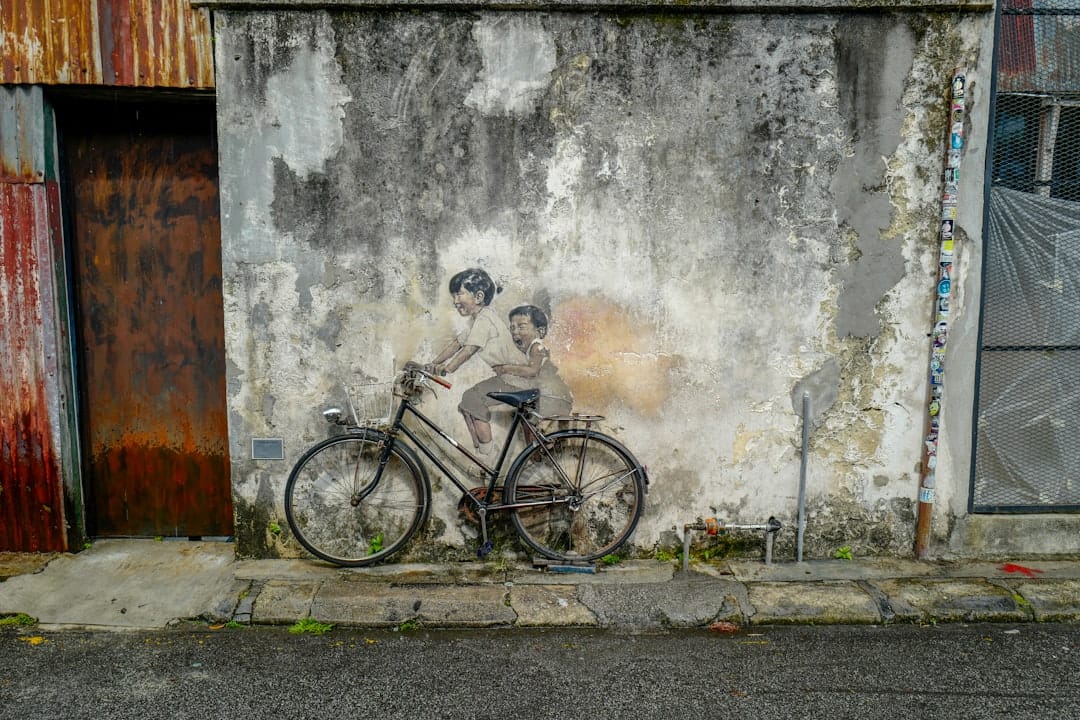
What to do: Start on Armenian Street and work through the surrounding lanes — Lebuh Cannon, Lebuh Ah Quee, Lebuh Muntri — on foot. It's all free and outdoors. Insider tip: Get to "Little Children on a Bicycle" before 9am. By mid-morning there's a queue of people waiting to pose on the mural's bicycle, and by noon the light is flat and harsh. Early morning also means the shophouse coffee shops are open for a proper kopi and you'll have the lanes almost to yourself. Cost: Free.
Kek Lok Si Temple
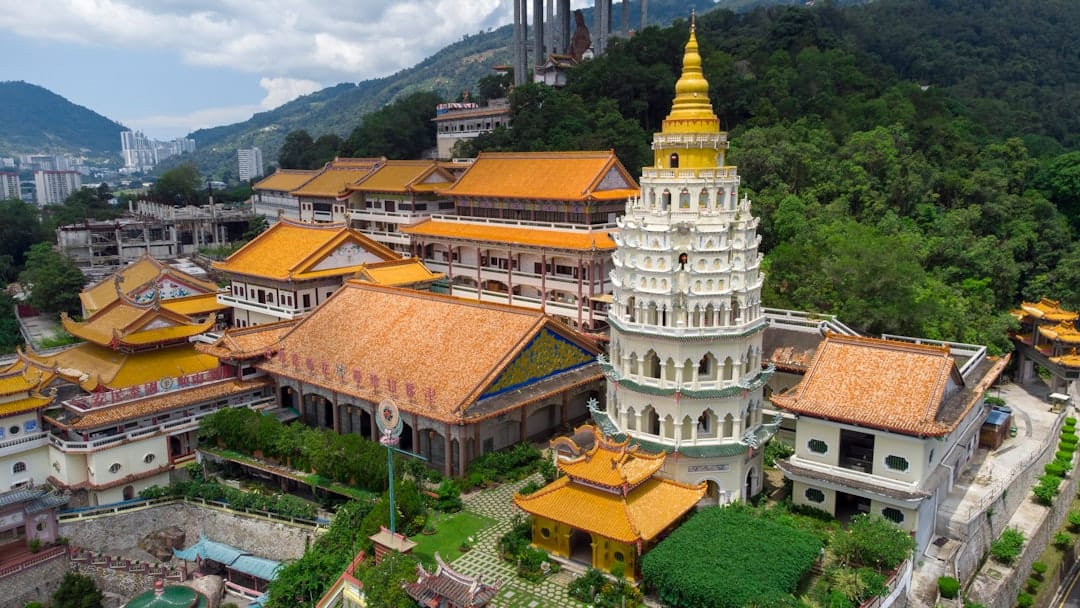
Kek Lok Si, on the hillside at Air Itam, is the largest Buddhist temple complex in Malaysia and worth the trip out even if you've seen a hundred temples. It climbs the slope in tiers, topped by the seven-storey Pagoda of Ten Thousand Buddhas (Ban Po Thar), which mixes Chinese, Thai, and Burmese architecture on a single tower. Above that stands a bronze statue of Kuan Yin, the Goddess of Mercy, sheltered under a pavilion of 16 carved pillars.
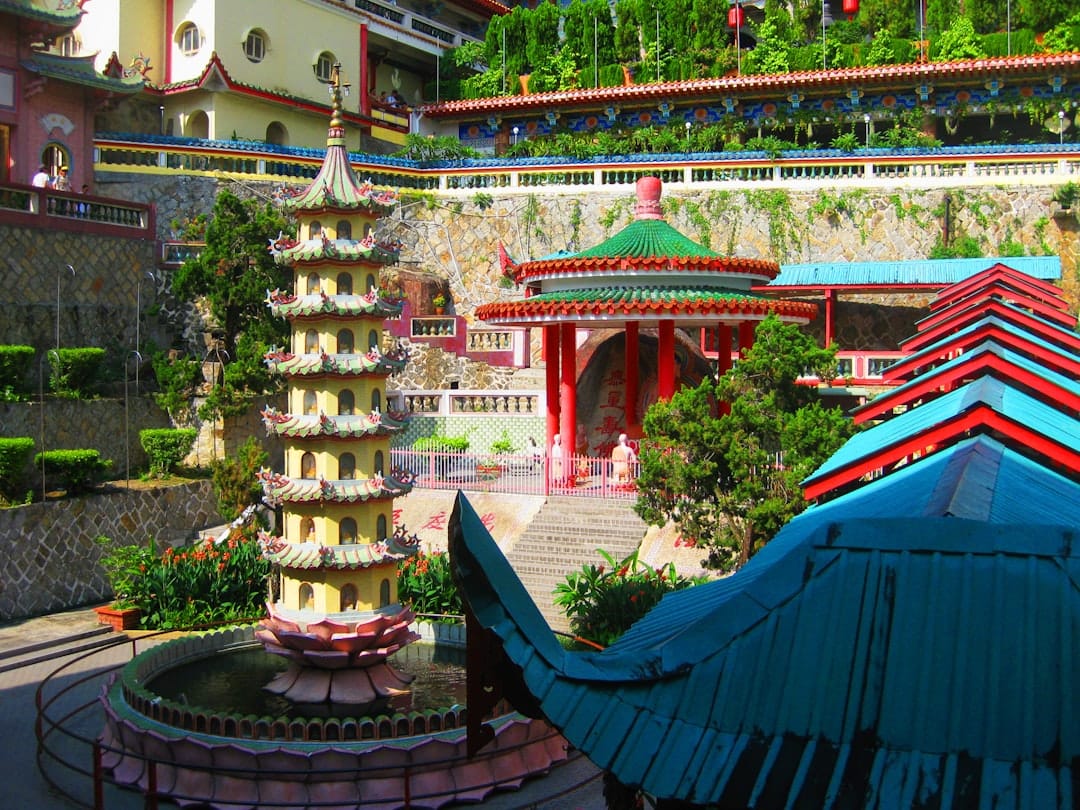
What to do: Entry to the temple grounds is free. To reach the Kuan Yin statue at the top without the steep climb, take the inclined lift (funicular), which runs roughly 8:30am to 5:30pm and is cash only — RM16 return or RM8 one-way for an adult (about US$3.60 / €3.30 return). Climbing the pagoda itself costs RM2. Insider tip: If you're here between late January and February, come back after dark during Chinese New Year, when the entire complex is strung with tens of thousands of lights — it runs for about a month and is the single best free night-time spectacle on the island. To get here, take Rapid Penang bus 201, 204, or 502 from George Town for around RM2, or a Grab for RM20–40 (about 25 minutes). Cost: Free entry; RM16 lift, RM2 pagoda.
Penang Hill and The Habitat
Penang Hill (Bukit Bendera) rises about 800 metres above George Town, and on a clear morning you can see the whole city, the bridge to the mainland, and across the strait. The colonial-era funicular railway has been hauling people up since 1923; the current trains do the climb in a few minutes on one of the steepest tunnel tracks in the world.
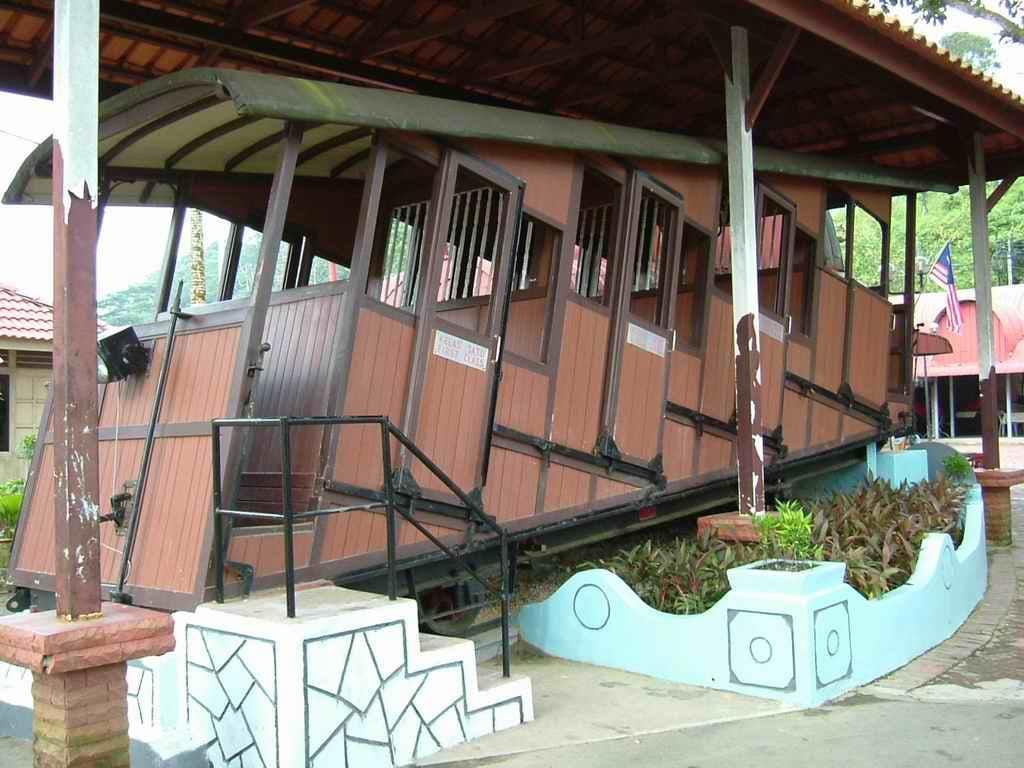
What to do: The funicular runs from 6:30am to 11:00pm (ticket counter from 6:15am). A foreign-visitor adult return on the normal lane is RM40 (about US$9 / €8); the express "fast lane" doubles that to RM80 but skips what can be a very long queue on weekends and holidays. At the top, walk to The Habitat, a rainforest reserve with a canopy walkway and a 360-degree viewing deck (separate ticket). Insider tip: Take the very first train at 6:30am. You'll beat both the crowds and the haze that often builds over the city by late morning, and the temperature up top is a good 5°C cooler than George Town. Skip the express lane on a weekday — the normal queue is short. Cost: RM40 return (normal lane).
Cheong Fatt Tze — The Blue Mansion
The indigo-blue mansion on Lebuh Leith is the most photographed building in George Town, and for once the reputation is deserved. Built in the 1880s for Cheong Fatt Tze, a merchant who went from penniless migrant to one of the richest men in the region, its walls get their colour from a lime wash mixed with natural blue dye. It follows strict feng shui principles, and film buffs will recognise it from Crazy Rich Asians.
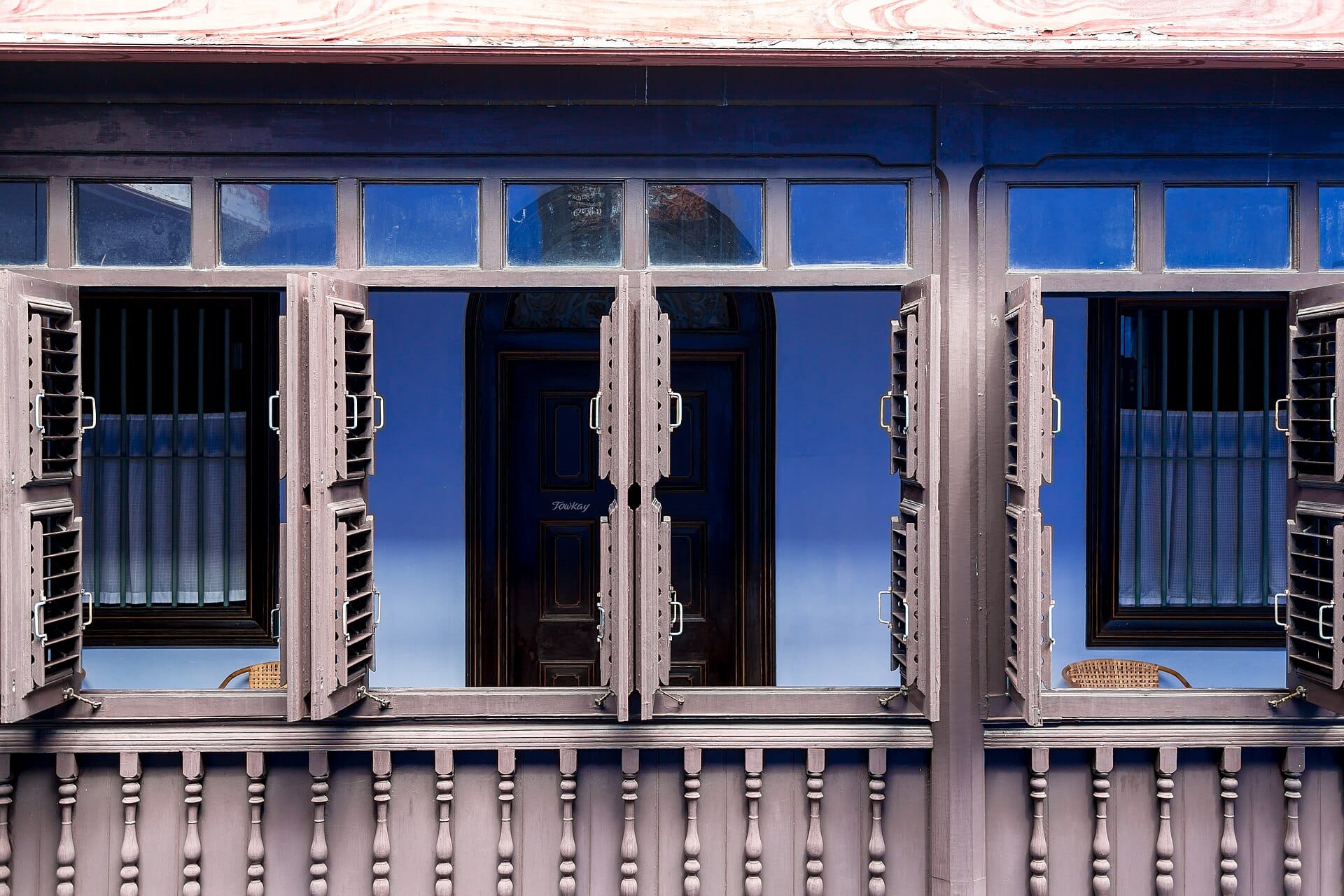
What to do: The only way inside is on a 45-minute guided tour, run daily at 11:00am and 3:30pm, capped at 24 people. It costs RM25 for adults and RM12.50 for children under 12 (about US$5.70 / €5.10). Insider tip: Book online in advance — the tours regularly sell out, and turning up at the door often means being turned away. The guides are genuinely good and the interior antiques are the point; this is one of the few paid attractions in the city where the guided-only format actually earns its keep. If you want more time, the mansion is also a boutique hotel, so you can stay the night. Cost: RM25 adult.
Leong San Tong Khoo Kongsi
Tucked into Cannon Square off Lebuh Cannon, Khoo Kongsi is the grandest of Penang's clan houses — a temple-hall built by the Khoo family, a Hokkien clan that migrated from China. The main hall, Leong San Tong ("Dragon Mountain Hall"), is a riot of carved granite, gilded beams, and a ceramic-tiled roof that took master craftsmen years to finish. It's a working reminder of how the clan associations organised migrant life in colonial Penang.
What to do: The complex is open 9:00am to 5:00pm. Entry is RM15 for foreign adults and RM1 for children (about US$3.40 / €3), which includes the main hall, a small museum, and the association buildings around the square. Insider tip: The square itself was used as a filming location and is often quiet in the last hour before closing — come around 4pm when the light rakes across the carved façade and the tour groups have moved on. Look up at the roof ridge: the dragon and phoenix figures are made from cut-and-paste porcelain, a technique called jian nian. Cost: RM15 adult.
Pinang Peranakan Mansion
If the Blue Mansion shows you the Chinese-merchant side of Penang, the green mansion on Church Street (Lebuh Gereja) shows you the Peranakan one — the Baba-Nyonya culture that grew from Chinese men marrying local Malay women. This was the home of Chung Keng Quee, a 19th-century tycoon and community leader, and it's now stuffed with over a thousand antiques: carved wooden screens, English tiles, Scottish ironwork, and Chinese lacquer, all under one roof.
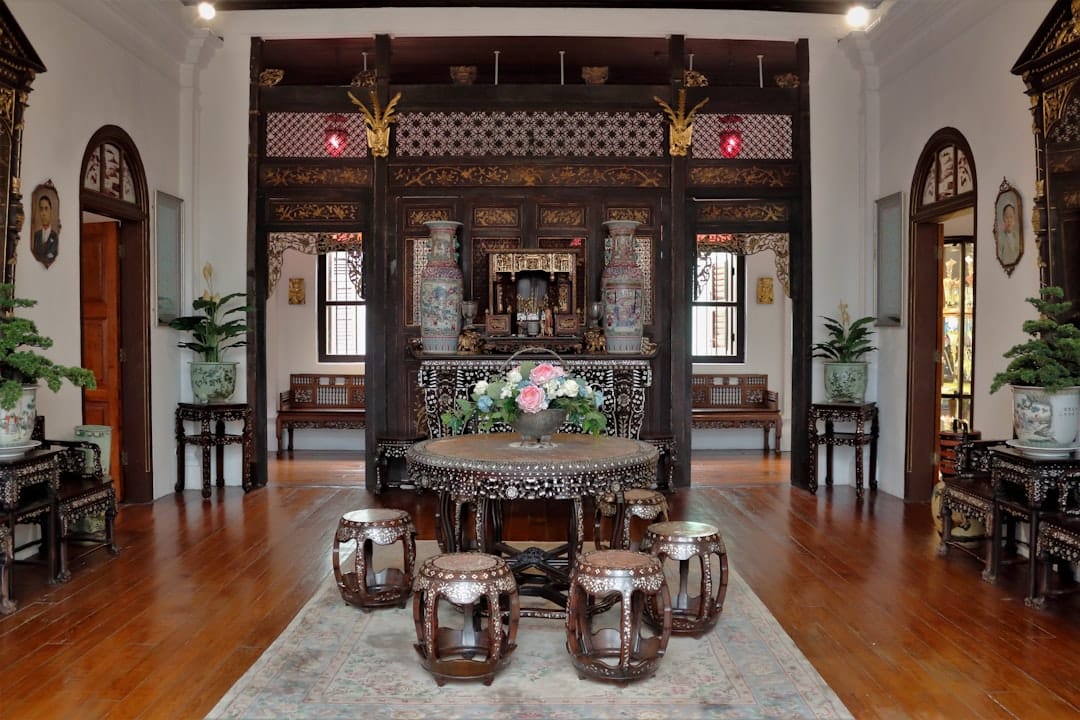
What to do: The mansion is open daily from around 9:30am to 5:00pm, and entry is RM25 for adults and RM12 for children aged 6–12 (about US$5.70 / €5.10). Guided walk-throughs run on an ad-hoc basis depending on how many people turn up. Insider tip: This place fills with tour groups mid-morning; aim for opening time or after 3:30pm to actually see the rooms. Don't rush the nyonya-ware ceramics and the beadwork slippers — the detail is the whole reason to come. It pairs naturally with the Blue Mansion since the two are a short walk apart and tell two halves of the same story. Cost: RM25 adult.
The Clan Jetties
Along Weld Quay, on the waterfront, six Chinese clans built villages on stilts over the sea more than a century ago — each jetty settled by families of the same surname. They're still lived-in communities, not a museum, and the largest and most visited is Chew Jetty, a long wooden boardwalk of houses, tiny shrines, and shops reaching out over the water.
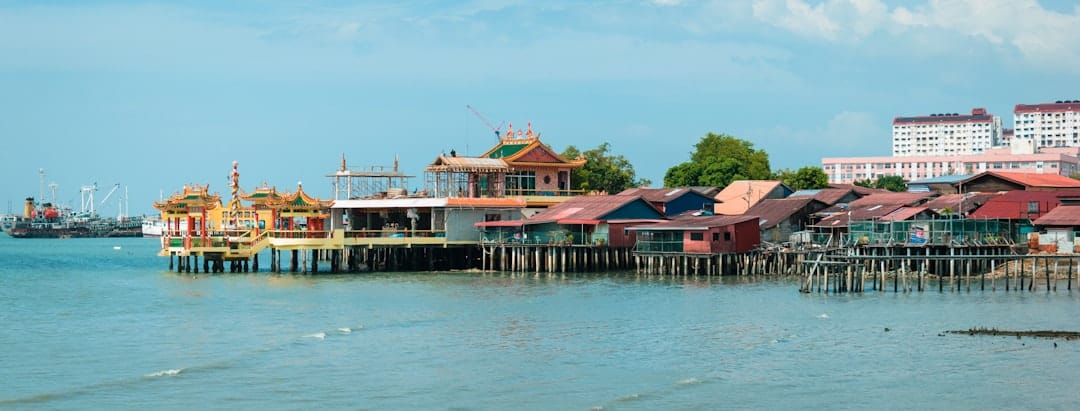
What to do: Walking the jetties is free. Chew Jetty is the busiest and most developed for visitors; the neighbouring Lim, Lee, Tan, and Yeoh jetties are quieter and give you a truer sense of daily life. Insider tip: Come at first light or in the hour before sunset — the midday sun on the boardwalk is brutal and the crowds on Chew Jetty peak with the tour buses at lunchtime. Remember people actually live here: keep to the main walkway and don't photograph into open doorways. From the jetties it's a five-minute walk to Fort Cornwallis. Cost: Free.
Fort Cornwallis
Fort Cornwallis marks the spot where Captain Francis Light of the British East India Company landed in 1786 and claimed the island — the beginning of George Town as a colonial trading port. The star-shaped fort near the Esplanade is the largest standing fort in Malaysia, though "fort" oversells it: the walls are low and it never saw a real battle. What's inside is the interest — a colonial chapel, old cannons, a lighthouse, and displays on the city's founding.
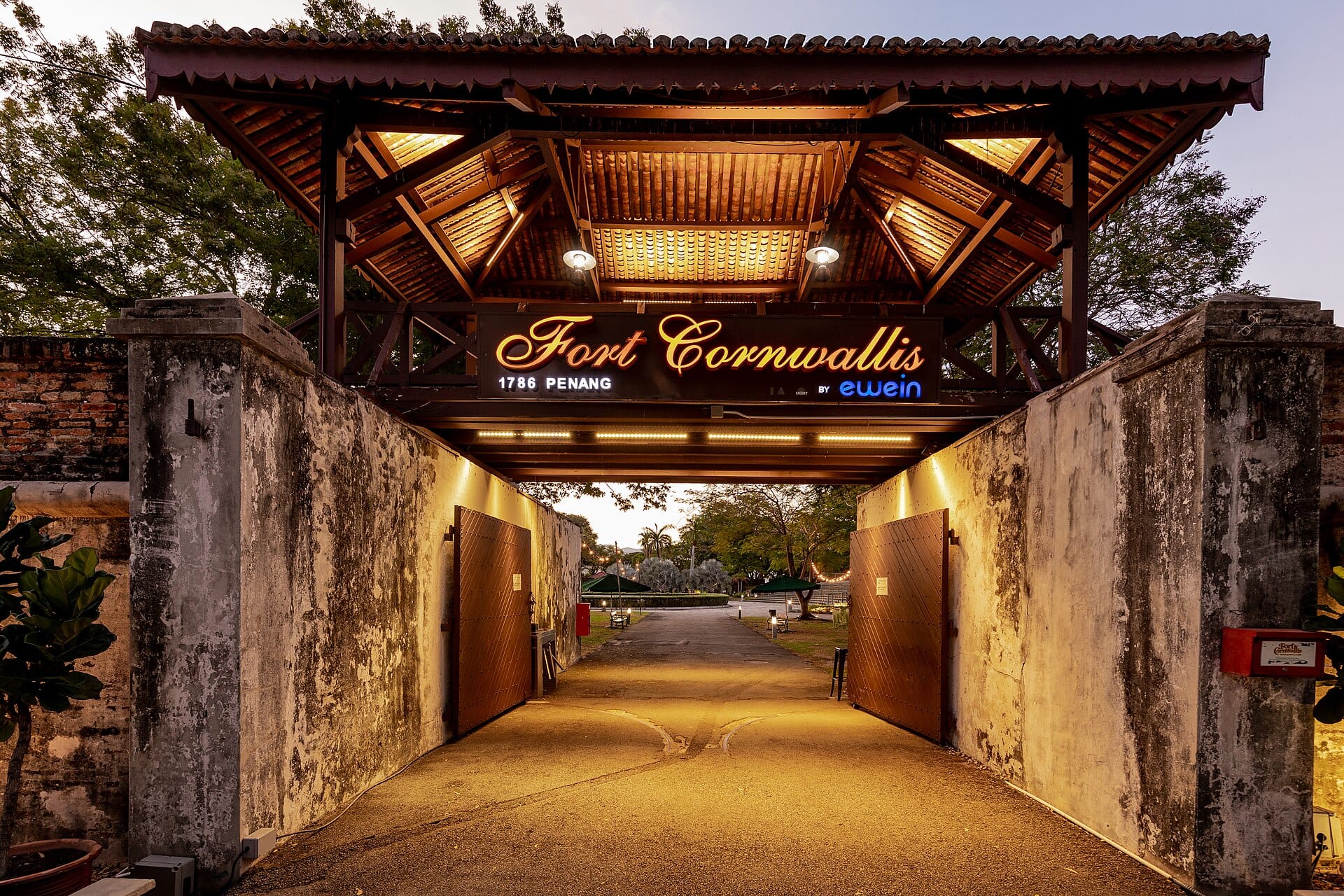
What to do: The fort is open daily 9:00am to 10:00pm — unusually late — and entry is RM20 for adults, dropping to RM10 for holders of a Malaysian MyKad (about US$4.50 / €4). Insider tip: Go in the last hour before sunset. It's cooler, the walls glow, and you can pair it with the Esplanade (Padang Kota Lama) next door, where locals gather in the evening and food carts set up along the seafront. It's a modest site — budget 45 minutes, not two hours — and combine it with the clan jetties, which are a short walk south. Cost: RM20 adult.
🗓️ A Three-Day Itinerary
Three days is enough to cover the historic core on foot, get up Penang Hill, and eat extremely well. George Town is compact and flat, so most of this is walkable; grab a Rapid Penang bus or a Grab for anything further out.
Day 1 — The Heritage Core on Foot
Start early with kopi and toast at a traditional coffee shop, then hunt the murals around Armenian Street (Lebuh Armenian) before the crowds — free, about two hours of wandering. Walk to Khoo Kongsi (RM15) and then Cheong Fatt Tze — the Blue Mansion for the 11:00am guided tour (RM25; book ahead). Lunch on nasi kandar at Line Clear, the 24-hour institution down an alley off Penang Road, serving since 1948 (RM10–20, about US$2.30–4.50). Spend the afternoon at the Pinang Peranakan Mansion (RM25) on Church Street, then walk to the clan jetties and Fort Cornwallis (RM20) for sunset on the Esplanade. Finish at the New Lane (Lorong Baru) street-food market for dinner. Day's attraction costs: about RM85 (US$19 / €17).
Day 2 — Penang Hill and Kek Lok Si
Take a Grab or Rapid Penang bus 204 to the Penang Hill funicular for the first train at 6:30am (RM40 return). Spend the morning at the top and at The Habitat's canopy walk. Come down and head to nearby Air Itam for lunch at the Air Itam Laksa stall by the market — assam laksa for around RM6–8 (US$1.40–1.80). From Air Itam it's a short ride to Kek Lok Si Temple; take the inclined lift up (RM16 return) to the Kuan Yin statue and pagoda (RM2). Head back to George Town in the late afternoon and reward yourself with a bowl of Penang Road Famous Teochew Chendul (RM3.50) on Lebuh Keng Kwee. Day's attraction costs: about RM62 (US$14 / €13).
Day 3 — Food, Markets, and the Edges
Use your last day for the things that don't fit a ticket. Have breakfast at a dim sum house, then spend the morning at the Hin Bus Depot arts space (free) — a former bus depot turned gallery-and-café complex off Jalan Timah, with a lively pop-up market on Sundays. For lunch, make the pilgrimage to Siam Road Char Koay Teow (RM8–12), cooked over a charcoal wok by a hawker who's been at it for decades — expect a wait. In the afternoon, either cycle the durian country around Balik Pulau on the rural west side, or simply wander the Little India blocks around Lebuh Chulia and Lebuh Pasar for textiles, garland-makers, and a banana-leaf meal. End with dinner at Gurney Drive Hawker Centre. Day's costs: mostly food, roughly RM40–60 (US$9–14 / €8–12).
🧠 Essential Tips
Best Time to Visit
The driest, most reliable stretch is December through February: daytime highs around 29–31°C, lower humidity, calmer seas, and the island's biggest festivals. Chinese New Year (late January or February) lights up Kek Lok Si and fills the streets. Avoid October and November, the peak of the northeast monsoon — George Town faces east and takes the heaviest rain of the year in those two months, with November the wettest. If you can only come in August, time it with the George Town Festival, a nine-day arts programme (1–9 August in 2026) that turns the heritage zone into a stage, with roughly 80% of the programme free.
Getting In and Getting Around
From Penang International Airport, the cheapest route into the city is Rapid Penang bus 401E, which runs to Komtar in central George Town for RM2.70 (about US$0.60) and takes roughly an hour; bus 401 covers the same route slightly slower. Pay exact change — drivers give none. A Grab from the airport runs around RM30–45. In the city, Grab is the ride-hailing app locals actually use, and it's cheap; regular taxis rarely use the meter, so default to Grab. The historic core is small and flat enough to walk, and Rapid Penang runs a free Central Area Transit (CAT) shuttle loop around George Town. If you're staying a week and using buses a lot, a 7-day Rapid Penang pass costs RM30.
Safety and Scams
Penang is one of the safer places you'll travel in Southeast Asia, but two things are worth knowing. First, bag-snatching from passing motorbikes is the most common petty crime — walk with your bag on the side away from the road and don't leave a phone loose in an open pocket. Second, at Penang Hill, ignore anyone outside the station offering to sell you "priority" or "skip-the-line" tickets; buy at the official counter, where the only real upgrade is the express lane. Beyond that, it's mostly the tropics testing you: carry water, use sunscreen, and pace yourself in the midday heat, which is genuinely draining.
Food: What and Where
Penang is a hawker-food capital, and you order dish by dish from specialist stalls, not restaurants. The essentials: char kway teow (smoky wok-fried flat noodles with prawns and cockles) from Siam Road Char Koay Teow or the Lorong Selamat stall, RM8–12; assam laksa (sour tamarind-and-mackerel noodle soup) from Air Itam Laksa or Joo Hooi Café on Penang Road, RM6–8; nasi kandar (rice with a flood of curries) from Line Clear or Hameediyah, the latter open since 1907, RM10–20; Hokkien mee (prawn-broth noodles) from 888 Hokkien Mee on Lebuh Presgrave; and cendol (shaved ice, coconut milk, palm sugar, green rice-flour jelly) from the Penang Road Teochew Chendul stall, RM3.50. For a one-stop feast, the Gurney Drive Hawker Centre and the New Lane night market both put dozens of stalls in one place.
🏨 Accommodation Guide
George Town's heritage core is where you want to be — it puts every mural, temple, and hawker stall within walking distance, and the neighbourhoods themselves are part of the experience.
Budget (RM30–70 / US$7–16 a night): The backpacker heart is Lebuh Chulia and Love Lane, lined with hostels, dorm beds, cheap eats, and the city's small bar scene. You can get a clean dorm bed or a basic private room in a restored shophouse here for the price of a couple of coffees back home, and you'll be steps from the murals.
Mid-range (RM150–350 / US$34–80 a night): The heritage core is full of boutique shophouse hotels — restored 19th-century buildings around Armenian Street, Lebuh Muntri, and Church Street with courtyards, tiled floors, and a dozen rooms rather than a hundred. This is the sweet spot in Penang: characterful, central, and still affordable.
Luxury (RM600+ / US$140+ a night): The grande dame is the Eastern & Oriental Hotel on Lebuh Farquhar, a seafront colonial hotel open since 1885 with a famous long bar and sea-facing suites; rooms typically start around US$160–250. For something smaller, Seven Terraces and The Edison George Town are boutique heritage hotels in restored Anglo-Chinese mansions, and you can also book a room inside the Cheong Fatt Tze Blue Mansion itself.
🎭 Beyond the Tourist Trail
Once you've done the murals and the mansions, the more interesting Penang is a short hop away. Hin Bus Depot, off Jalan Timah, is a former bus depot that's become the island's creative hub — galleries, independent cafés, a craft-beer bar, and, on Sundays, a pop-up market of local makers and street food. It's free, it's local, and it's where the city's contemporary art scene actually lives, as opposed to the Instagram murals.
For a full day out, head to Balik Pulau on the rural western side of the island — a landscape of durian orchards, paddy fields, and fishing villages where you can cycle quiet back roads and eat a village-style laksa far from any tour group. Durian season runs roughly June to August, and this is the place to try it at the source. And if you're in George Town in August, the George Town Festival (1–9 August in 2026) fills the heritage zone with theatre, dance, film, and installations, most of it free — the single best time to see the old city put to use rather than just photographed.
❤️ Let VoyaBear Plan Your Penang Trip
Penang rewards planning — knowing that Siam Road Char Koay Teow is worth the wait, that the first Penang Hill train beats the haze, and that October means rain — but stitching it all into three well-paced days takes work. That's where VoyaBear comes in. Tell us how long you've got, what you want to eat, and how hard you want to walk, and we'll build you a personalised Penang itinerary with the timings, the bookings, and the hawker stalls already mapped out. Start planning your trip with VoyaBear today and spend your time in George Town eating, not organising.