VoyaBear


Osaka is the city where locals greet each other with "mokarimakka?" — literally, "are you making money?" — and where the unofficial civic philosophy is kuidaore, eating yourself into ruin. This was Japan's merchant capital for centuries, and it still behaves like one: less polished than Tokyo, louder, funnier, and about a third cheaper for the same bowl of noodles. In 2026 it is also unusually easy to reach, with Kansai International Airport 34 minutes from downtown by train and the yen still trading near multi-decade lows against the dollar and euro. This is a guide built on checked prices and real addresses, so you can spend your energy eating instead of second-guessing.
Orient yourself around two hubs and you'll never be lost. Kita ("north"), centred on Umeda and Osaka Station, is the polished side — skyscrapers, department stores, and the departure point for day trips. Minami ("south"), around Namba and Shinsaibashi, is the loud, food-soaked heart most people picture when they think of Osaka. The two are eight minutes apart on the Midosuji subway line, and almost everything in this guide sits on or near it.
🎭 Essential Experiences
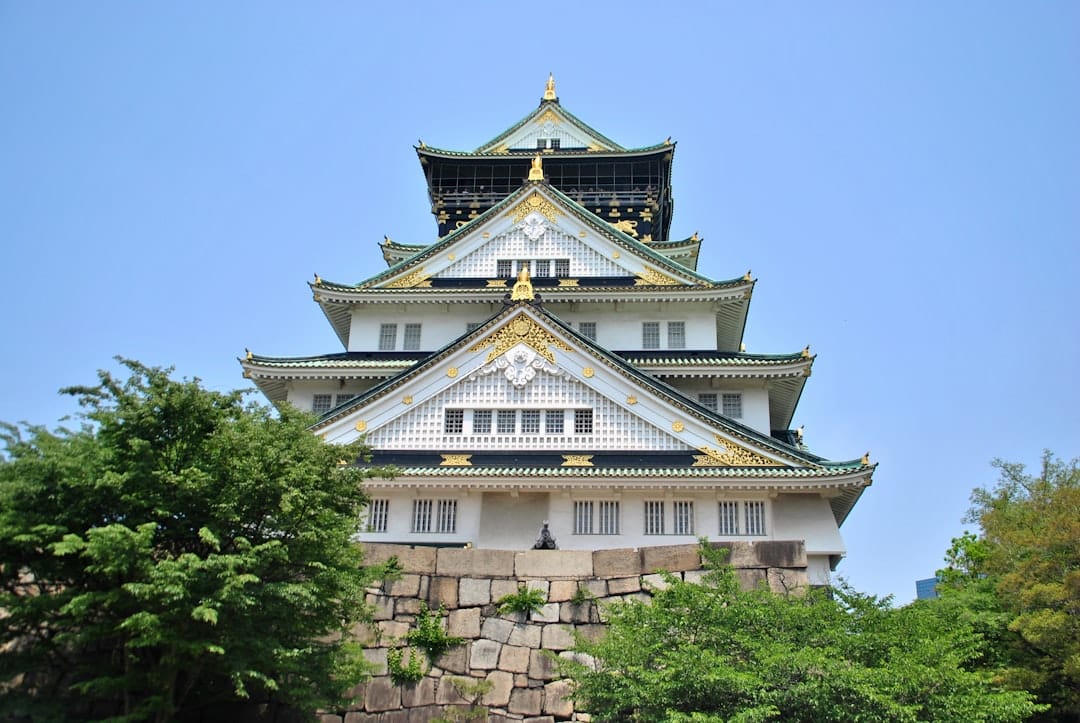
Osaka Castle
The reconstructed main tower (the current concrete version dates to 1931, rebuilt after the 1665 lightning strike and wartime damage) sits on the original 16th-century stone base laid down by Toyotomi Hideyoshi. Inside is an eight-floor museum tracing his rise; the top-floor observation deck looks out over the moats and the surrounding park. Admission to the main tower is ¥1,200 (about $8 / €7.40) for adults, free for anyone 15 and under. Open daily 9:00–17:00, last entry 16:30, closed December 28 to January 1. The insider move: skip the tower queue and walk the free grounds instead — the stone ramparts, the Nishinomaru Garden, and the view of the tower across the inner moat are the real photograph. While you're on the grounds, the Hokoku Shrine at the base of the tower (dedicated to Hideyoshi himself) is free, and the plum grove on the eastern side flowers from late February. For a different angle, the golden Gozabune boat runs a 20-minute loop of the inner moat right beneath the tower walls. Nearest stations are Osakajokoen (JR Loop Line) or Tanimachi 4-chome (Metro).
Dotonbori
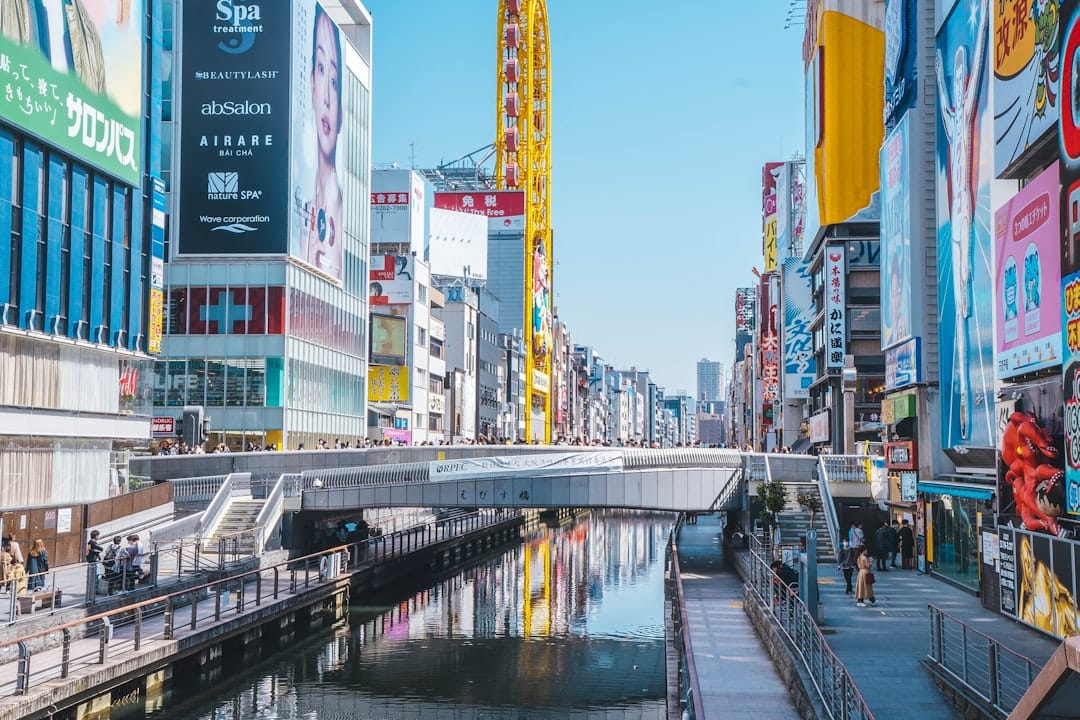
The canal-side strip in Minami is Osaka distilled: the Glico running man sign (first switched on in 1935, now on its sixth LED version), the mechanical crab of Kani Doraku clawing above the street, and a wall of food stalls. It costs nothing to walk, and it is best after dark when the neon hits the water. Come hungry — this is ground zero for takoyaki (octopus dumplings) at Wanaka and Aizuya, and okonomiyaki (savoury cabbage pancakes) at Mizuno, a Michelin Bib Gourmand spot where you should expect to queue 30–60 minutes. Tip: eat standing at the stalls rather than the sit-down chains behind them; the food is the same and the markup vanishes.
Umeda Sky Building
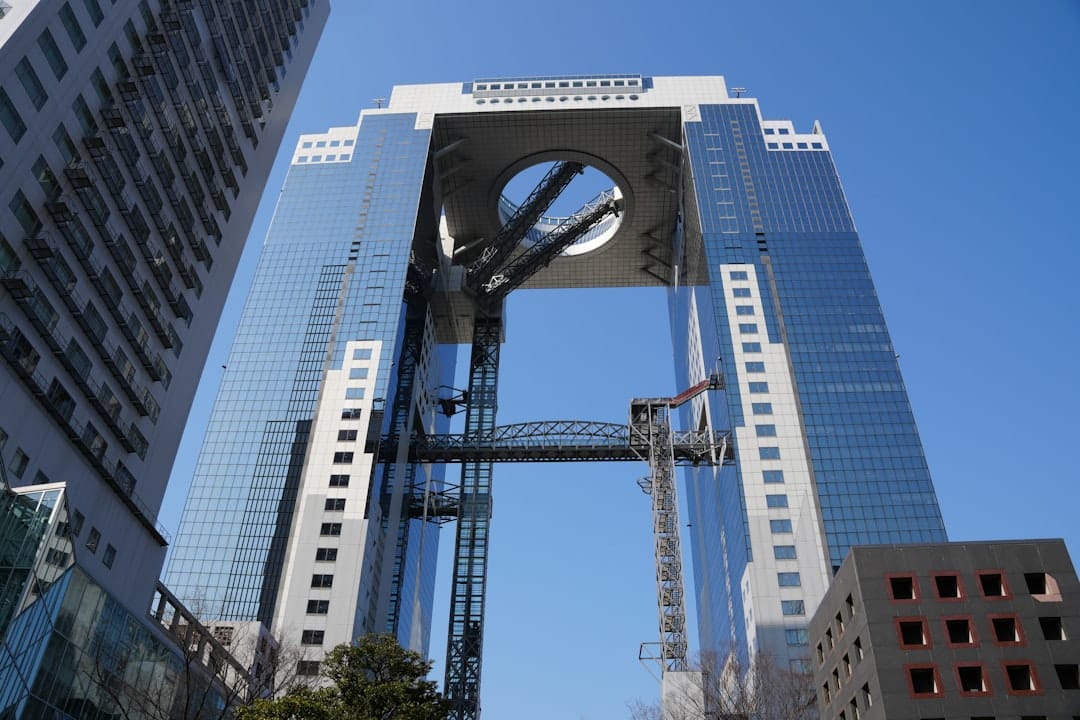
Two 40-storey towers joined at the top by a doughnut-shaped "Floating Garden Observatory" 173 metres up, reached by a glass escalator that crosses the open gap between them. It is a genuinely strange piece of 1993 architecture and the open-air rooftop deck is the best sunset view in the city. The observatory costs ¥2,000 (about $13 / €12.30) for adults, ¥500 for children 4–12. Open 9:30–22:30, last admission 22:00; the rooftop closes in heavy rain. Go about 45 minutes before sunset to catch the city in daylight, dusk, and full neon on one ticket. It is a 7-minute walk from JR Osaka Station's Central North exit.
Osaka Aquarium Kaiyukan
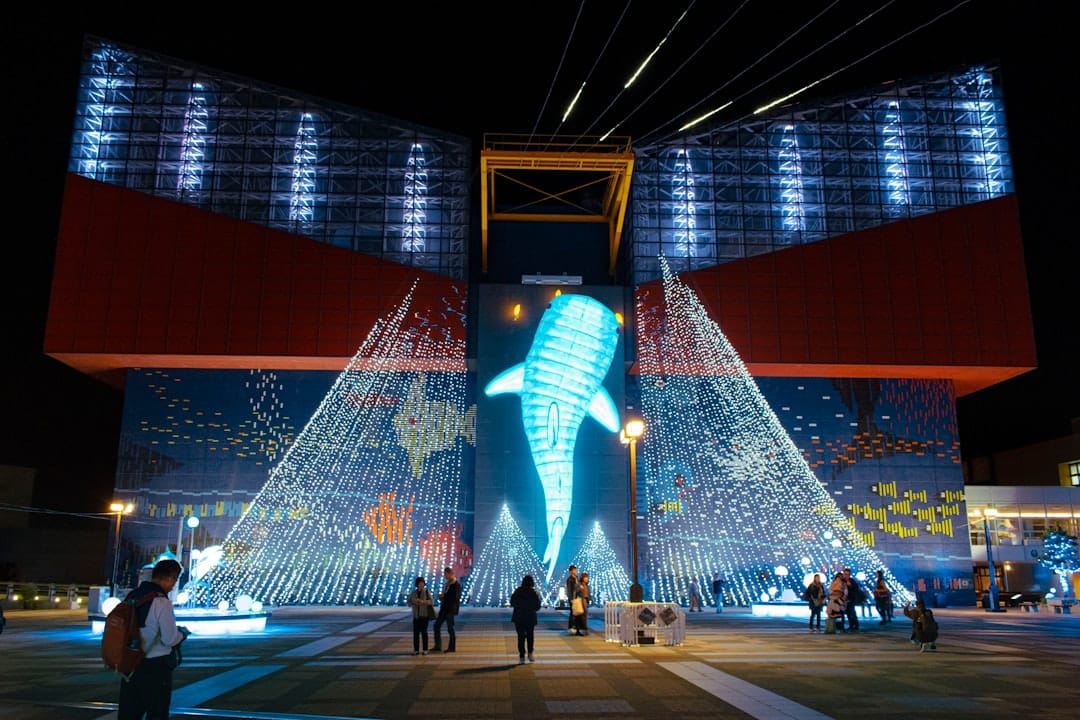
One of the largest aquariums in the world, built around a single nine-metre-deep central tank that holds two whale sharks and a manta ray. The route spirals down around that tank so you keep meeting the same animals at different depths — a smarter layout than the usual corridor of glass boxes. Tickets run ¥2,400 on weekdays up to ¥2,700 at peak times (about $16–18 / €14.80–16.70) under dynamic pricing, so a Tuesday is cheaper than a Saturday. Open 10:00–20:00, last entry 19:00. Book online for a timed slot and arrive after 16:00 when the tour groups have cleared. Take the Metro Chuo Line to Osakako Station, a 5-minute walk.
Shitennoji Temple
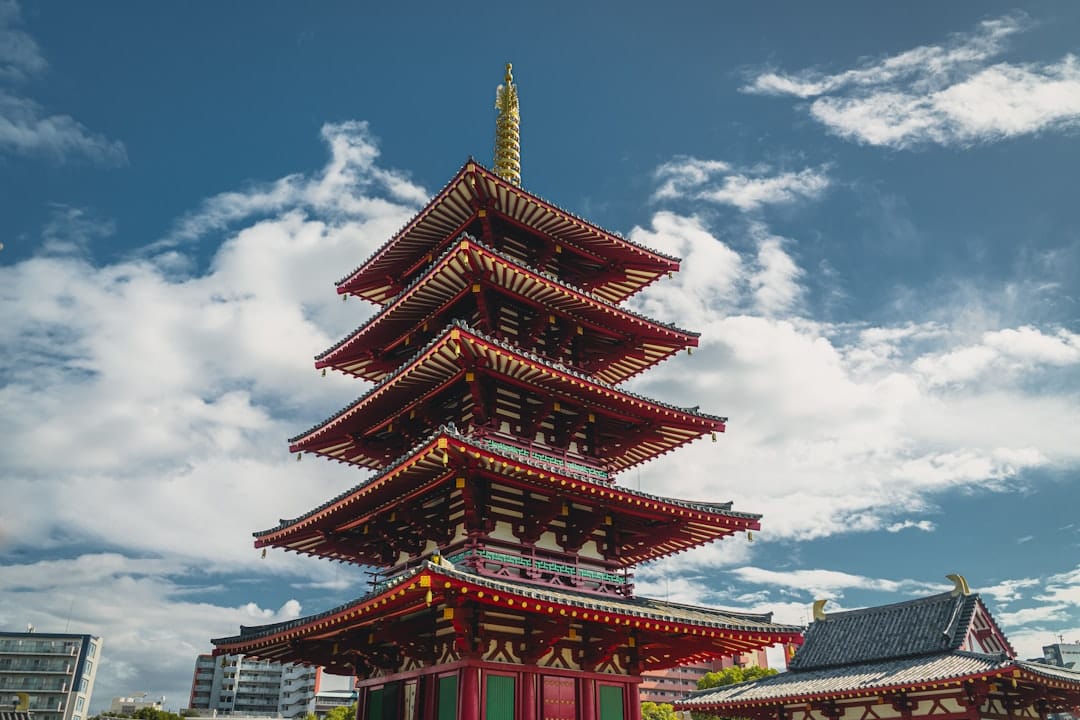
Founded in 593 by Prince Shotoku, this is one of the oldest officially administered Buddhist temples in Japan. The grounds are free to wander, and most visitors do exactly that. Pay only if you want the good parts: the Central Precinct with its five-storey pagoda you can climb is ¥300 (about $2 / €1.85), the Gokuraku-jodo garden another ¥300, and the treasure house ¥500. Open 8:30–16:30 (until 16:00 October–March). Time your visit for the 21st of any month, when a 300-plus-stall flea market fills the grounds with antiques, kimono, and street food. Take the Tanimachi Line to Shitennoji-mae-Yuhigaoka Station.
Sumiyoshi Taisha
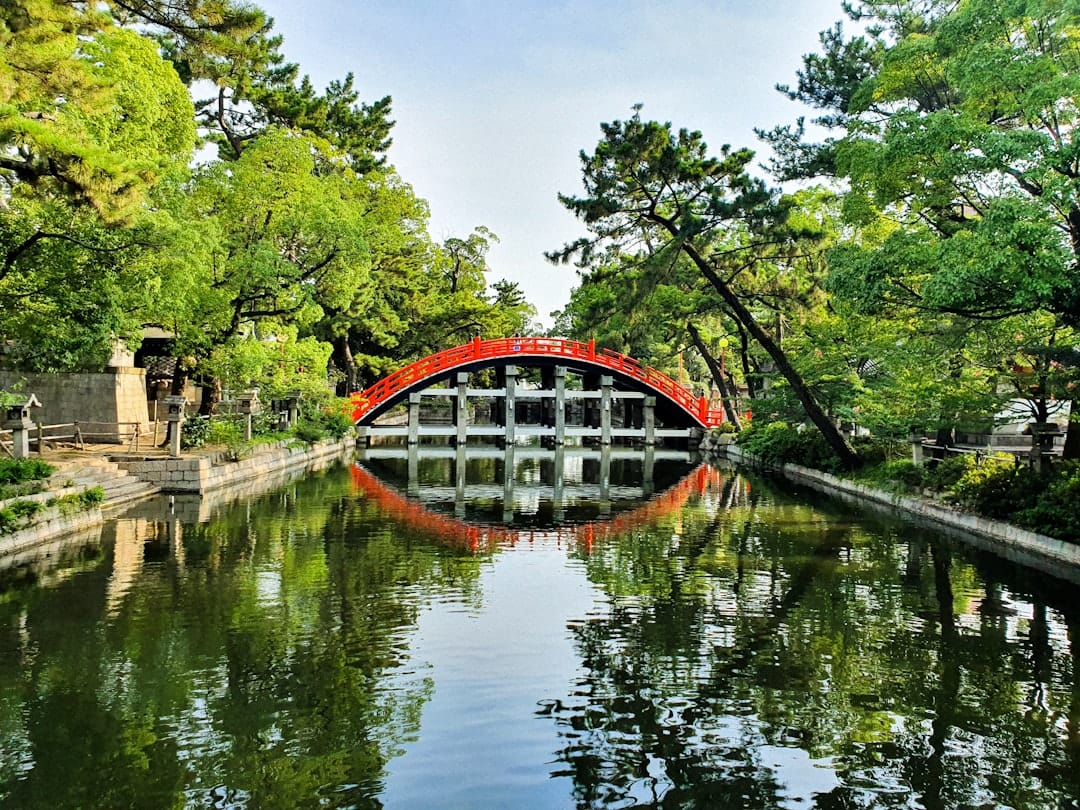
The head shrine of some 2,300 Sumiyoshi shrines nationwide, and one of the few built in the pre-Buddhist Sumiyoshi-zukuri style — straight roofs, no curved Chinese eaves, which makes it look older and starker than most shrines you'll see. The signature is the Sorihashi, a steeply arched vermilion bridge so drum-round that its reflection completes a full circle in the pond; locals call it Taiko-bashi. Entry is free, open 6:00–17:00 (from 6:30 October–March). The best way in is the Hankai tram — Osaka's last surviving streetcar, the chin-chin densha — from Tennoji, a slow rattle through old neighbourhoods for a flat ¥230.
Shinsekai and Tsutenkaku Tower
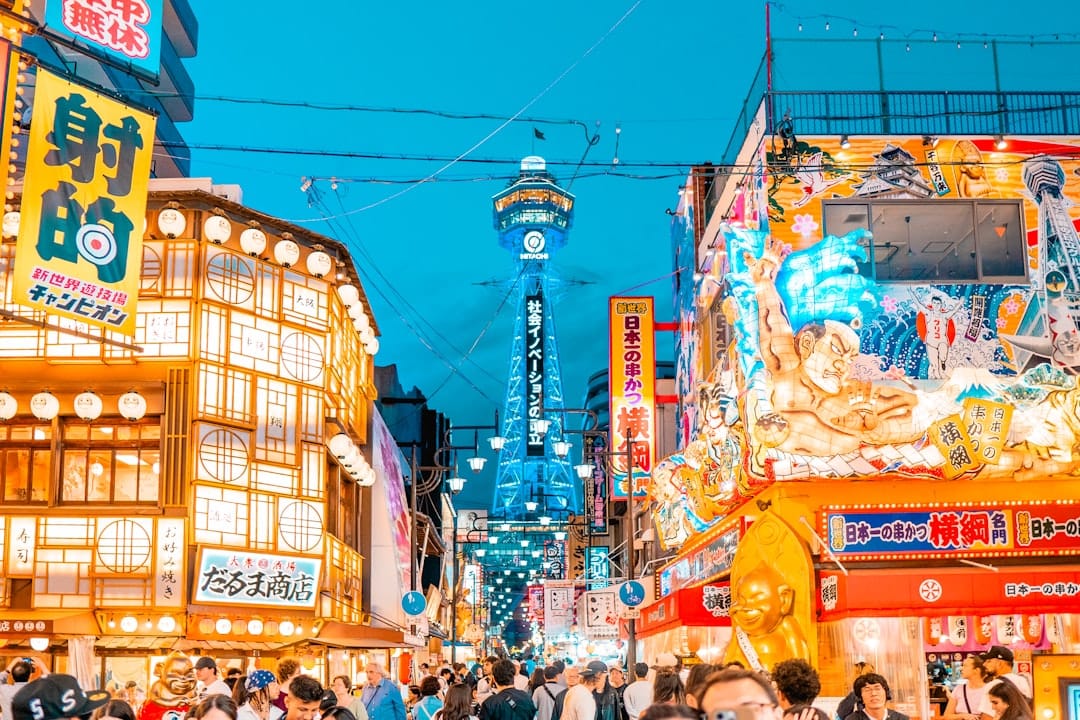
Shinsekai ("New World") was built in 1912 as a fantasy district — half Paris, half Coney Island — then left to age into a gloriously unpretentious pocket of retro Osaka. At its centre stands Tsutenkaku, a 103-metre tower whose observation deck costs ¥1,200 (about $8 / €7.40); open 10:00–20:00, last entry 19:30. For an extra ¥1,000 the Tower Slider spirals you down the outside in about 10 seconds. The real reason to come is dinner: this is the home of kushikatsu, deep-fried skewers at ¥100–200 each. Daruma is the famous chain; Yaekatsu is where locals go. The one iron rule, posted on every wall: no double-dipping in the communal sauce. Nearest stop is Ebisucho Station (Sakaisuji Line).
Namba Yasaka Shrine
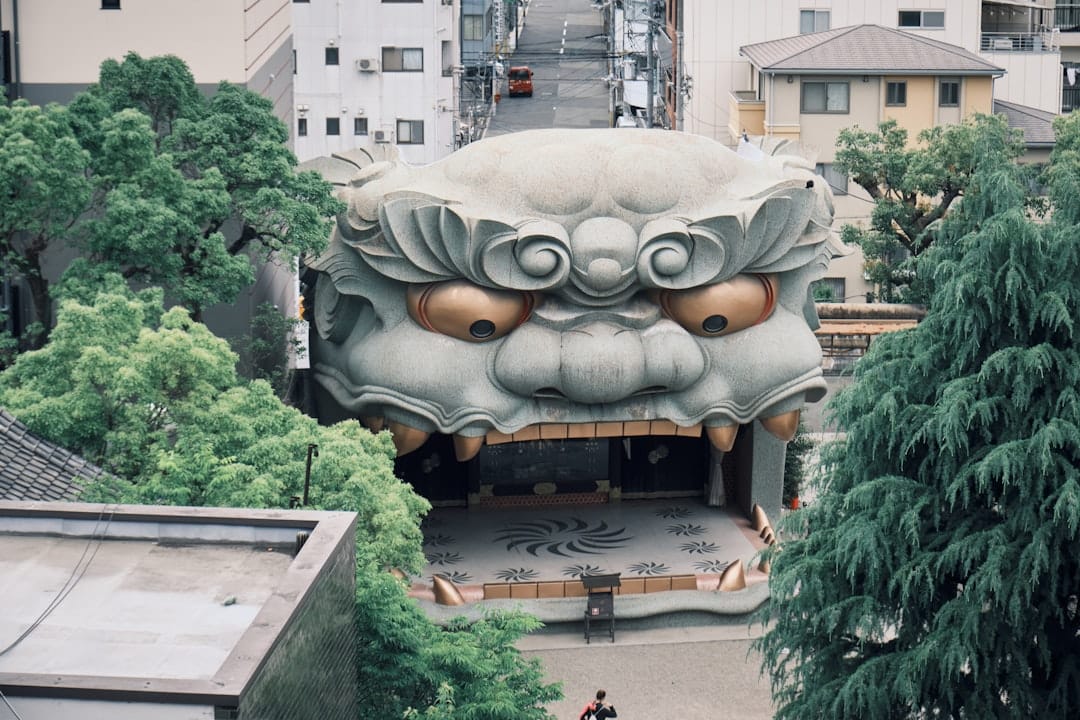
A five-minute detour from the Dotonbori crowds delivers you to a shrine dominated by a 12-metre lion's head — a giant open-mouthed ema-den (votive stage) that is meant to swallow bad luck and, more usefully for students and job-seekers, evil spirits standing between you and success. It became Osaka's first designated intangible folk cultural property in 2001. Entry is free, open 9:00–16:50. It takes ten minutes to see and it is one of the most photographed spots in the city, so come before 9:30 to have the lion to yourself. Namba Station is a 6-minute walk.
🗓️ A 3-Day Itinerary
This route keeps each day geographically tight, so you spend your time eating rather than riding trains. Budget roughly ¥1,000–1,500 (about $7–10 / €6–9) per person per day on transit and admissions combined if you use a day pass.
Day 1 — Minami: Castle, canals, and neon
Start at Osaka Castle at opening (9:00) to walk the grounds before the heat and the tour buses; budget 90 minutes, ¥1,200 if you go up the tower. Take the Metro to Namba (about 15 minutes, ¥240) and eat your way through Kuromon Ichiba Market — grilled scallops, wagyu skewers, sea-urchin on the shell — arriving before 11:00 while stalls are fully stocked and the aisles aren't shoulder-to-shoulder. Spend the afternoon at Namba Yasaka Shrine and shopping the covered Shinsaibashi arcade, then land in Dotonbori for dinner: okonomiyaki at Mizuno (queue early) and takoyaki from a Wanaka stall, maybe ¥2,500 (about $17 / €15) for a full evening of grazing.
Day 2 — South and sky: temples, trams, and a sunset
Head to Shitennoji Temple (¥300 for the inner precinct), then ride the Hankai tram south to Sumiyoshi Taisha (free) for the drum bridge. Loop back to Shinsekai for a late lunch of kushikatsu at Yaekatsu — count on ¥1,500–2,000 (about $10–13 / €9–12) of skewers — and climb Tsutenkaku for the retro view. In the evening, cross the city to the Umeda Sky Building (¥2,000) and time the Floating Garden for sunset, then eat under the tracks in the Umeda alleyways.
Day 3 — Bay day or day trip
Option A: spend the morning at Osaka Aquarium Kaiyukan (¥2,400–2,700) and ride the 112.5-metre Tempozan Ferris wheel next door for ¥900. Option B: Osaka is the best day-trip base in Japan — Kyoto is about 30 minutes by JR Special Rapid from Osaka Station (¥580), Nara with its bowing deer is about 45 minutes (¥820), and Kobe 25 minutes (¥420). Whichever you choose, end back in Nakazakicho (below) for coffee and one last unhurried meal.
🧠 Essential Tips
When to go
Aim for late March to early April for cherry blossoms — peak bloom is usually around April 4–5, and the roughly 4,800 trees lining Kema Sakuranomiya Park along the river are the city's best hanami spot, with daytime highs of 14–20°C. November is the other sweet spot: it is Osaka's driest month, foliage peaks mid-to-late month, and temperatures sit at a comfortable 12–18°C. October is the quiet-crowd insider pick, with clear skies and 18–24°C. If you can only come in summer, plan around the Tenjin Matsuri on July 24–25, one of Japan's three great festivals, with 100-odd decorated boats on the river and around 3,000 fireworks — but expect 33°C-plus humidity and hotel prices two to three times the autumn rate.
Getting in and getting around
From Kansai International Airport (KIX), the Nankai line runs straight to Namba. The Rapi:t limited express does it in 34 minutes for ¥1,670 (about $11 / €10.30) with reserved seats and luggage space; the regular Airport Express is ¥970 (about $6.50 / €6) and takes 44–45 minutes with more stops. Buy an ICOCA IC card (¥2,000, including a ¥500 refundable deposit) and tap through every train, subway, and bus in the region; it also pays at convenience stores. Osaka Metro base fares run ¥190 to ¥420 by distance. If you'll take four or more rides in a day, the Enjoy Eco Card day pass is worth it at ¥820 weekdays / ¥620 weekends. Google Maps handles routing here reliably; Navitime's Japan Travel app is the local backup for exact platform and transfer detail.
If you plan to hit several paid sights in one day, do the maths on the Osaka Amazing Pass: about ¥3,300 (roughly $22 / €20) for one day, ¥5,500 for two, it bundles unlimited Metro and bus rides with free entry to more than 40 attractions, including Osaka Castle, Tsutenkaku, and the Umeda Sky observatory (though the Sky Building slot is free only before 3 p.m., and the aquarium is not covered). Two of the sights in this guide plus a few train rides already beat the price, so for a busy castle-and-towers day it pays for itself before lunch.
Staying safe (and polite)
Osaka is very safe — the real risks are to your wallet and your manners, not your person. Avoid the touts outside "girls' bars" and clubs in Kita-Shinchi and around the north end of Dotonbori after midnight; the "one drink" becomes a padded bill. Do not eat while walking in Kuromon Market if a stall has set out a small standing counter — eating on the move is increasingly frowned on, and some stalls now post signs. Carry cash: many of the best stalls and older kushikatsu counters still don't take cards. And when you cross the Ebisubashi bridge over Dotonbori, keep your bag zipped — it's the one genuinely pickpocket-prone crush of tourists in an otherwise honest city.
What to eat
Beyond takoyaki, okonomiyaki, and kushikatsu, chase down kitsune udon (thick noodles under a sheet of sweet fried tofu, an Osaka invention), doteyaki (beef tendon slow-simmered in miso, best in Shinsekai), and horumon (grilled offal). For the pork-bun cult, 551 Horai's steamed butaman are a citywide obsession — the branch inside Namba station has a permanent line and sells them by the box to take home. Finish with a hot-from-the-oven cheesecake from Rikuro Ojisan near Namba, a single wobbling round baked in front of you and stamped with the shop's smiling-old-man logo.
🏨 Accommodation Guide
Namba / Minami is where most first-timers should stay: you can walk home from Dotonbori, and every subway line converges nearby. Budget travellers do well in capsule and pod hotels here — Nine Hours, First Cabin, and CUBEnST run clean, quiet berths for under $40 / €37 a night. Mid-range lands roughly $90–200 / €85–185: Dormy Inn Premium Namba (with its top-floor hot-spring bath), Cross Hotel Osaka right on Dotonbori, and the Mitsui Garden chain are all reliable.
Umeda / Kita in the north is calmer, more corporate, and the better base if you plan a lot of day trips, since the JR and private lines to Kyoto, Kobe, and Nara all start here. Tennoji / Shinsekai in the south is the value play — retro, local, and a notch cheaper for the same star rating. For luxury ($230 / €215 and well up), Osaka has genuine heavyweights: the Conrad and the InterContinental in the north, the St. Regis on Midosuji, W Osaka on the same boulevard, and the long-standing Ritz-Carlton beside Umeda.
❤️ Beyond the Tourist Trail
Ten minutes' walk north of the Umeda towers, Nakazakicho is the antidote to Dotonbori's neon roar. This pocket of low wooden houses survived the wartime bombing that flattened most of central Osaka, and over the last two decades it has filled with independent cafés, vintage-clothing shops, and tiny galleries wedged into converted nagaya row houses. There is nothing to "see" and no admission to pay — you just wander the lanes, duck into a café built inside a 90-year-old home, and watch a different, slower Osaka go about its day. Come on a weekday morning; the shops open late (many not before noon) and close early. Pair it with the nearby Ohatsu Tenjin shrine, tucked improbably beneath office towers, where the ill-fated lovers of Japan's most famous puppet-play tragedy are still honoured.
For a dated seasonal fix, the Osaka Tenmangu shrine hosts the Tenjin Matsuri land and river processions every July 24–25, and in December the Midosuji boulevard runs an illumination that has held a Guinness record for the most LED lights on a street. Neither costs a yen to watch.
🐻 Plan your Osaka trip with VoyaBear
This guide gives you the bones — the verified fares, the real opening hours, the stalls worth queuing for. Turning it into a day-by-day plan around your dates, your budget, and your appetite is where VoyaBear comes in. Tell us how long you have and what you're into — history, food crawls, day trips, or all three — and we'll build a personalized Osaka itinerary that gets the timing and the reservations right. Start planning your trip with VoyaBear today.