VoyaBear


Fes has roughly 9,000 lanes packed into a walled medina that cars cannot enter, which means the loudest thing you'll hear on the main artery, Talaa Kebira, is a porter shouting "balak!" as his mule shoulders past with a load of cowhides. Founded in the late 8th century, Fes el-Bali is one of the largest car-free urban areas on earth and home to the oldest continuously operating university in the world, running since 859. This is not a city you tick off in a morning. It's a city you get lost in — literally, because your phone's blue dot will spin uselessly between fourteenth-century walls — and that's the point. Here's how to spend three days in Fes in 2026 without wasting a dirham or a single hour.
🏙️ Essential Experiences
Fes el-Bali & Bab Bou Jeloud, the Blue Gate
Start where everyone starts: Bab Bou Jeloud, the triple-arched gate built in 1913 that frames the medina's western entrance. It's blue-tiled on the outside, green on the inside (green being the color of Islam), and if you stand in the right spot the arch perfectly frames the minaret of the Bou Inania Madrasa behind it. Beyond the gate, the medina fans out into a UNESCO-listed maze where entire lanes are dedicated to one trade — coppersmiths hammering in Place Seffarine, dyers with forearms stained indigo, butchers displaying camel heads to prove the meat is fresh.
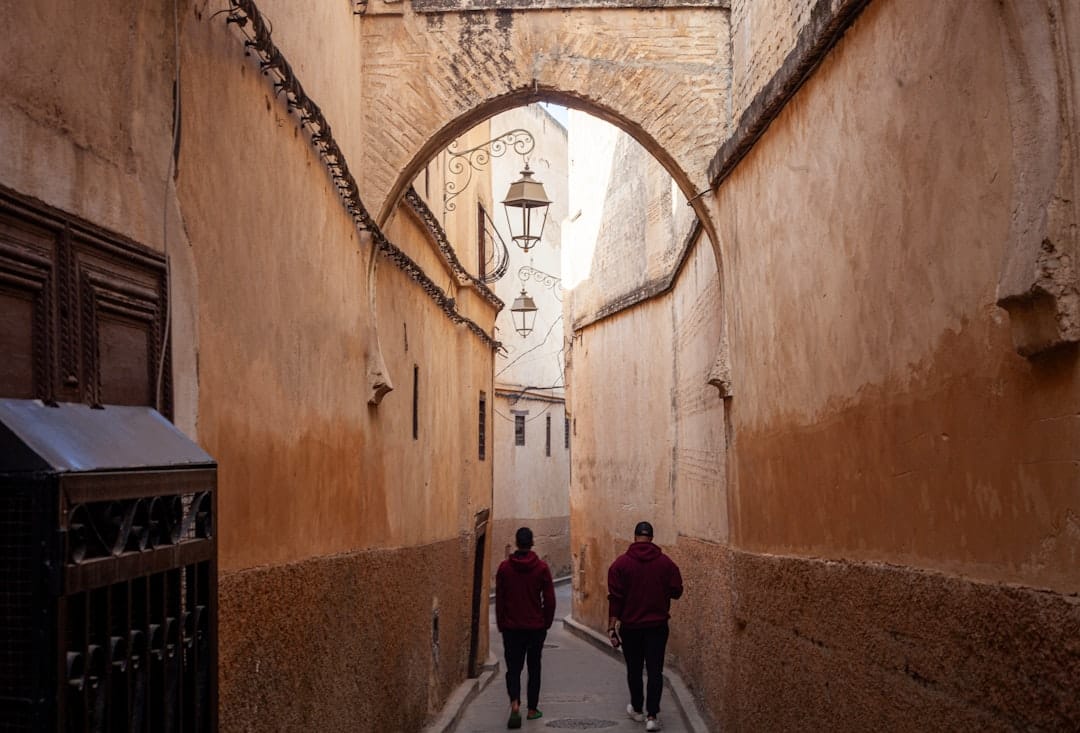
Insider tip: Don't fight the maze — use it. Rather than hiring a guide for the whole trip, walk downhill; almost every lane in Fes el-Bali eventually drains toward the river and the R'cif area, so "go down" is your reset button when you're lost. If you do want a licensed guide, agree the price and route before you start, and expect around 300–400 MAD ($30–40) for a half day. Cost: the medina itself is free.
Bou Inania Madrasa
Of the dozen or so Quranic schools in Fes, the Bou Inania is the one to prioritize. Built by the Marinid sultan Abu Inan between 1350 and 1355, it's the only madrasa in the city that also functioned as a full congregational mosque, which is why it has a minaret. The courtyard is a masterclass in Marinid craft: carved cedar, banded onyx and marble, and zellige tilework in geometric patterns so tight they look printed. Across the lane, note the water clock — a fourteenth-century contraption of thirteen brass bowls whose mechanism nobody has fully reconstructed.
Insider tip: Go right at opening or in the last hour before close. Mid-morning the courtyard fills with tour groups funneling in the same direction, and the space is small enough that twenty people ruin the acoustics and the photos. Cost: 20 MAD (about $2). Open roughly 9 AM–5 PM, but it closes to non-Muslims during the five daily prayer times, so build in slack.
Al Quaraouiyine Mosque & University
This is the headline fact about Fes: the University of Al Quaraouiyine, founded in 859 by Fatima al-Fihri — a woman who spent her inheritance on it — is recognized by UNESCO and Guinness World Records as the oldest existing, continually operating university on the planet. It predates Bologna and Oxford by centuries. Non-Muslims can't enter the mosque, but you can catch views of the courtyard, the green-tiled roofs, and the enormous brass doors through several gates along the surrounding lanes.
Insider tip: The restored Al Quaraouiyine library reopened in 2016 and holds manuscripts over a thousand years old, but public access is inconsistent and often restricted to researchers — don't build your day around getting in. Instead, circle the exterior and duck into the adjacent Al-Attarine Madrasa (below), which gives you the same Marinid artistry up close. Cost: free to view from outside.
Al-Attarine Madrasa
Named for the spice and perfume market (attarine) at its doorstep, this small madrasa from the 1320s is, sqm for sqm, the most concentrated display of Marinid decoration in Fes — and unlike the Quaraouiyine mosque, non-Muslims can walk all the way in. Every surface is worked: zellige to shoulder height, then carved stucco, then cedar. Climb to the upper floor where students once lived in cells barely bigger than a cupboard for a rooftop angle on the Quaraouiyine's minaret next door.
Insider tip: Pair it with the Nejjarine and Quaraouiyine in a single loop — all three sit within a two-minute walk of each other in the heart of the medina, so you're not backtracking across the whole city. Cost: 20 MAD (about $2).
Chouara Tannery
The Chouara is the oldest and largest of Fes's three tanneries, its stone vats of dye and lime in continuous use since the eleventh century. From the leather-shop terraces above, you look down on a honeycomb of round pits: white ones for soaking hides in lime and pigeon droppings, colored ones for the dyes — poppy for red, saffron for yellow, mint for green, indigo for blue. It is genuinely medieval, and it genuinely smells like it.
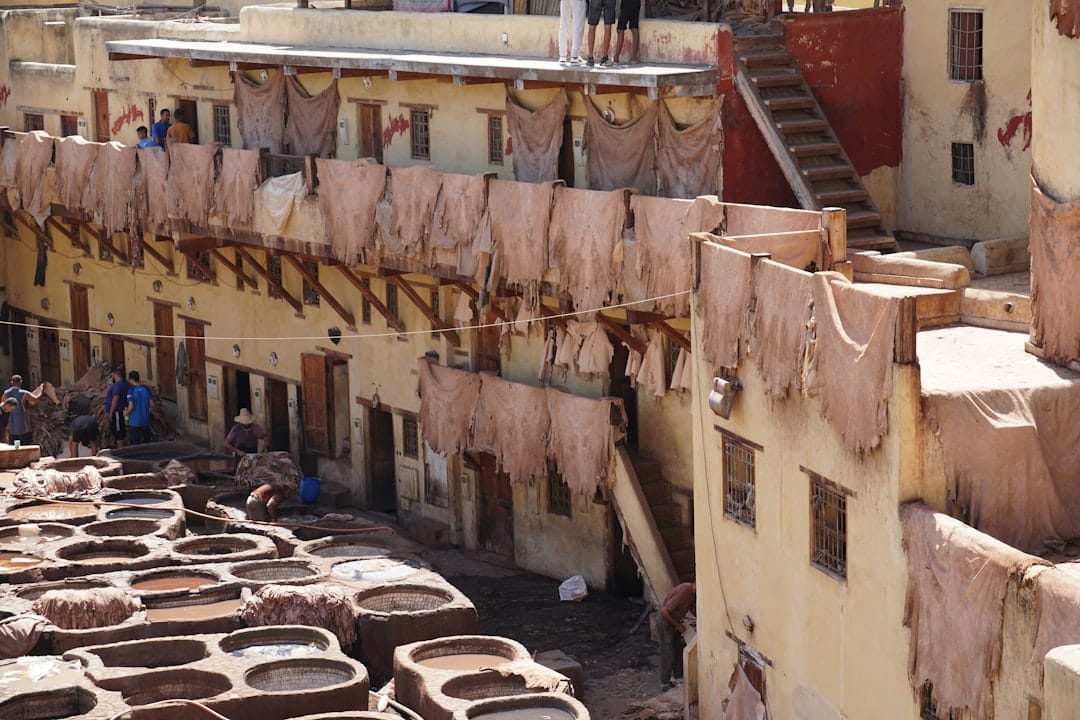
Insider tip: Entry is free, but the shopkeepers who own the terraces expect a tip of around 20 MAD for the view — hand it over and you won't be pressured to buy a jacket. Take the sprig of mint they give you at the door and hold it under your nose; you'll need it. Come between 10 and 11 AM, when the light hits the vats and the day's work is underway. Cost: free (tip ~20 MAD).
Nejjarine Museum of Wooden Arts & Crafts
Housed in a meticulously restored eighteenth-century fondouk (a caravanserai where traveling merchants once stabled animals downstairs and slept upstairs), this museum is worth it as much for the building as the collection of carved cedar doors, astrolabes, and prayer beads. The three-story courtyard, wrapped in filigreed wooden balconies, shows you exactly how Fes's merchant economy was built.
Insider tip: Skip straight to the rooftop terrace café. It's one of the few legal, easy-to-find high vantage points inside the medina, with a clear view over the rooftops toward the Quaraouiyine — a mint tea up here beats craning your neck in the lanes below. Cost: from 20 MAD; the beautifully tiled Nejjarine fountain out front is free.
Dar Batha Museum
On the edge of the medina near Bab Bou Jeloud, this nineteenth-century Hispano-Moorish palace holds the best collection of Fassi craft in the city: the distinctive cobalt "Fes blue" ceramics, zellige panels, embroidery, and Berber carpets, arranged around a large Andalusian garden courtyard. It's the calmest, most air-conditioned hour you'll spend in Fes, and it makes sense of everything you've been squinting at in the souks.
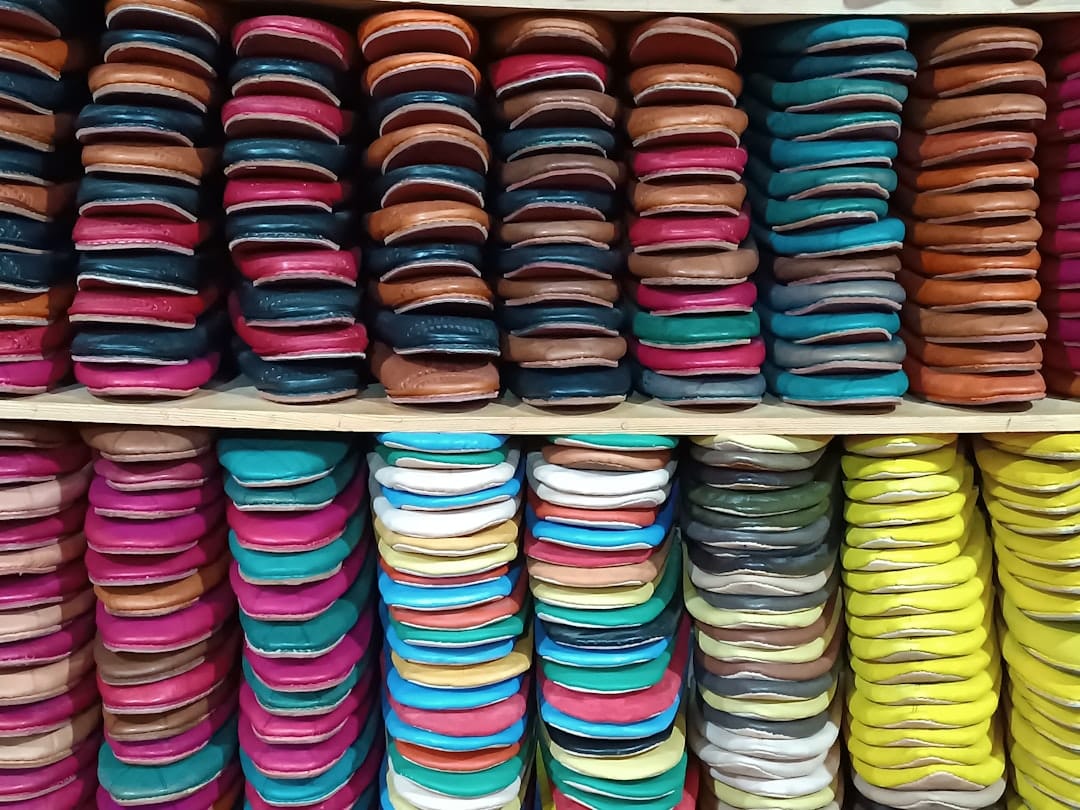
Insider tip: The garden itself is the highlight — sit under the enormous Barbary oak in the middle. During the June sacred music festival, Dar Batha's courtyard hosts some of the most intimate concerts of the program. Cost: from 20 MAD.
The Merenid Tombs
For the one photo that explains Fes, climb to the ruined Merenid (Marinid) Tombs on the northern hillside above the medina. The fourteenth-century tombs themselves are crumbling and empty, but nobody comes for them — they come for the view. From up here the entire bowl of Fes el-Bali spreads below you, thousands of flat roofs and satellite dishes and the green tiles of the Quaraouiyine, with the call to prayer rising from a hundred minarets at once around sunset.
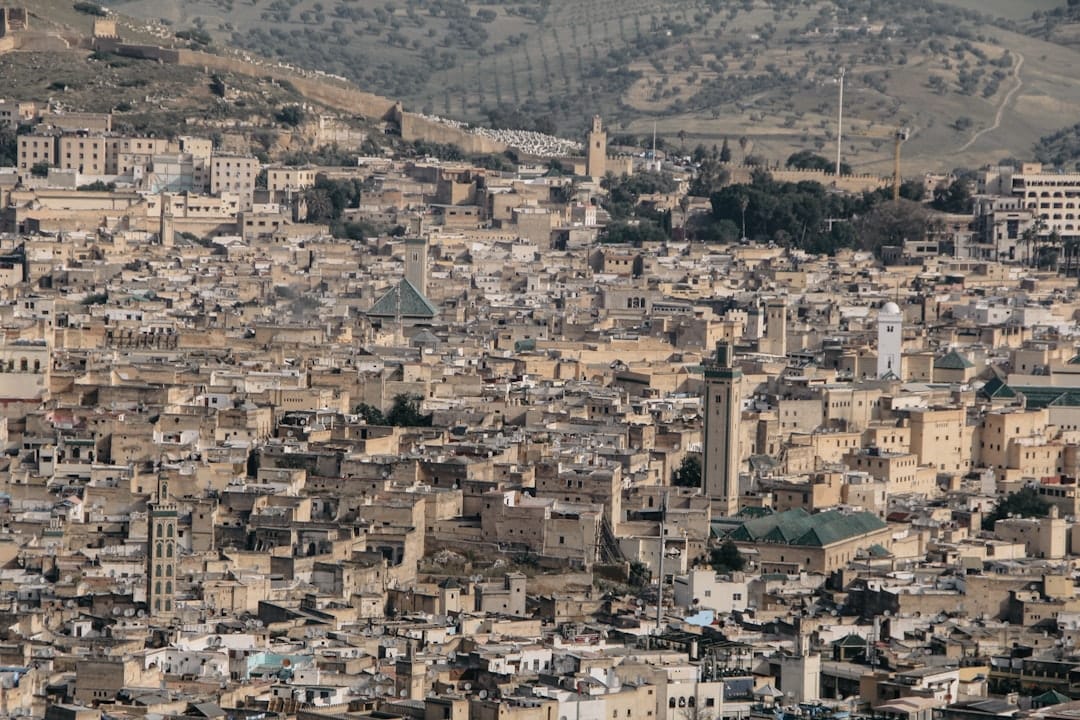
Insider tip: Take a petit taxi up (it's a steep 20-minute walk otherwise) and time it for about 45 minutes before sunset. Come with a companion rather than alone at dusk, as the hillside empties out fast after dark. The nearby Borj Nord fortress holds an arms museum if you want to make it a longer stop. Cost: free.
🗓️ A 3-Day Itinerary
Day 1 — The Medina Core
Enter at Bab Bou Jeloud around 9 AM and walk down Talaa Kebira. Hit the Bou Inania Madrasa first (20 MAD) while it's quiet, then let the street pull you downhill past the food stalls and coppersmiths. Mid-morning, work your way to the Chouara Tannery (free, ~20 MAD tip) for the 10–11 AM light. Lunch at a rooftop café — the Nejjarine terrace or Café Clock — then spend the afternoon on the tight loop of the Attarine Madrasa (20 MAD), the Nejjarine museum (from 20 MAD), and the exterior of Al Quaraouiyine. Total spend on entries: about 80 MAD ($8 / €7.50), plus lunch around 80–120 MAD.
Day 2 — Palaces, Gardens & the Mellah
Start at Dar Batha Museum (from 20 MAD) when it opens, then cross into Jnan Sbil, the medina's only public garden (free, closed Mondays), for a genuinely quiet hour. In the afternoon, walk into Fes el-Jdid, the "new" fourteenth-century quarter, to see the golden doors of the Royal Palace from the square outside (you can't go in) and the Mellah, the Jewish quarter established in 1438, with its distinctive balconied houses and the restored Ibn Danan Synagogue (around 20 MAD). Wrap up at the Merenid Tombs for sunset — a petit taxi up costs roughly 20–30 MAD.
Day 3 — Slow Down or Day-Trip
Option A: stay in the city, take a half-day cooking class (many riads and Café Clock run them for around 400–550 MAD / $40–55, market shopping included), and spend the afternoon buying what you actually want — leather from the tannery shops, blue pottery from the Art Naji cooperative in Ain Nokbi, brass from Seffarine. Option B: hire a grand taxi or driver for a day trip to the Roman ruins of Volubilis and the imperial town of Meknes, about an hour west; a full day with a driver runs roughly 800–1,200 MAD ($80–120) split between however many of you fit in the car.
🧠 Essential Tips
When to go
Aim for March–May or September–November. Spring and autumn give you warm, dry days in the low-to-mid 20s°C without the crush of high summer, when Fes bakes into the high 30s and the medina's stone walls hold the heat well past sunset. If you can time it, the Fes Festival of World Sacred Music runs June 4–7 in 2026 (its 29th edition), with headline concerts at the grand Bab Al Makina square by the royal palace and afternoon sets in the Jnan Sbil gardens — book a riad months ahead, as the city sells out.
Getting in and around
Fès–Saïss Airport (FEZ) sits about 15 km south of the city. A petit taxi to the medina is a fixed 120 MAD (about $12 / €11), paid in cash, roughly 25 minutes. The budget alternative is Bus 16 for 4 MAD, but it only reaches the train station about 3 km short of the medina and runs hourly, 7 AM–7 PM, so you'll need onward transport anyway — the taxi is worth it. Inside Fes el-Bali there is no transport, because no car fits: you walk, and your riad will send a porter with a handcart to meet you at the nearest gate (Bab Bou Jeloud or Bab R'cif) if you message ahead — that pickup matters more than any map app. Red petit taxis, which are metered, handle everything outside the walls. Ride-hailing apps have thin, unreliable coverage in Fes, so don't count on them; a metered petit taxi to the right gate is the move. Between cities, the national rail operator ONCF connects Fes to Casablanca (about 4 hours), Rabat (about 3 hours), and Tangier, with cheap, comfortable trains that beat the road.
Money, scams & staying sensible
The currency is the Moroccan dirham (MAD); at the time of writing roughly 10 MAD to $1 and 11 MAD to €1. Carry cash — many medina spots don't take cards — and keep small notes for taxis and tips. The classic Fes hustle is the "friendly guide": a young man who insists a monument or the tannery is "closed today" or "this way is prayer only," then steers you to a relative's shop. It's rarely closed. A polite, firm "la, shukran" (no, thanks) and walking on solves it. If you accept unsolicited directions or a "student" walking you to a viewpoint, expect to pay 20–50 MAD at the end. Fes is generally safe, including for solo travelers, but the medina is genuinely disorienting after dark, so screenshot your riad's location pin and note the nearest gate before you head out at night.
What to eat
Fes is Morocco's culinary capital, and its signature dish is pastilla (bastilla) — a saffron-and-cinnamon pie of shredded pigeon or chicken under crisp warqa pastry, dusted with powdered sugar. It sounds wrong and tastes right. Also hunt down harira (tomato, lentil and chickpea soup), bissara (a thick fava-bean soup eaten for breakfast with a slick of olive oil and cumin, a few dirhams a bowl from street stalls near Bab Bou Jeloud), and a proper lamb or kefta tagine. For an easy landmark, Café Clock, just off Talaa Kebira near the Bou Inania, is famous for its camel burger and runs rooftop concerts and cooking classes; Chez Rachid near Bab Bou Jeloud does reliable, well-priced tagines. Finish with chebakia (sesame-honey pastry) or a hot sfenj doughnut from a street fryer.
🏨 Accommodation Guide
The single best decision in Fes is to sleep inside Fes el-Bali, the old medina, in a riad — a traditional house built around an interior courtyard. You step off a chaotic lane through an unmarked door into cool silence, tilework, and a plunge pool. The catch: cars can't reach the door, so pack light and arrange the porter pickup.
Budget ($25–70/night): Small guesthouses and dars scattered through Fes el-Bali, many family-run with a handful of rooms and a rooftop for breakfast. Book near a main gate (Bab Bou Jeloud or R'cif) so you can find your way home. Beds in simple riads start around $25–30.
Mid-range ($100–180/night): Full-service riads like Riad Le Calife (from about $120) and Riad Laaroussa Hotel & Spa (from about $150), both in Fes el-Bali, with courtyards, hammams, and rooftop dinners. This tier is the sweet spot in Fes — genuine palace atmosphere at a fraction of European prices.
Luxury ($200–400+/night): Palais Amani (from about $215) and Riad Fes – Relais & Châteaux (from about $280), both restored grand houses in the medina with spas, courtyard pools, and staff who'll walk you home through the lanes. If you'd rather have easy taxi access and a modern room, the Ville Nouvelle — the French-built new town — has standard hotels, but you trade away all the atmosphere.
🎭 Beyond the Tourist Trail
Most visitors never cross the river to the Andalusian Quarter (Adwa al-Andalus), settled in the ninth century by refugees from Córdoba. It's residential, steep, and quiet, with its own grand mosque and far fewer shops trying to sell you anything — the Fes locals actually live in.
For craft with no middleman, take a petit taxi to the pottery cooperatives at Ain Nokbi on the edge of town, where you can watch potters throw the famous Fes-blue ceramics and, more impressively, maâlems (master artisans) hand-chipping zellige tiles into stars with a hammer and a memorized geometry. The Art Naji workshop here runs free walk-throughs.
And if you have a spare day and a taste for the surreal, the Middle Atlas town of Ifrane — an hour south — was built by the French in the 1930s to look like an Alpine village, red roofs and all, and the cedar forests just beyond it are home to troops of wild Barbary macaques. It's the least Moroccan-looking place in Morocco, which is exactly why it's worth the drive.
❤️ Let VoyaBear Plan Your Fes Trip
Fes rewards people who know which lane to turn down, which madrasa opens when, and which "closed today" is a hustle — and punishes people who wing it. That's where VoyaBear comes in. Tell us how many days you have, what you want to eat, and how much you want to walk, and we'll build you a personalized, hour-by-hour Fes itinerary with the riad booked, the porter pickup arranged, and the day trip to Volubilis slotted in on the right afternoon. Start planning your Morocco trip with VoyaBear today and spend your time getting lost in the medina on purpose, not by accident.