VoyaBear


🏙️ Why Luang Prabang Is Worth It in 2026
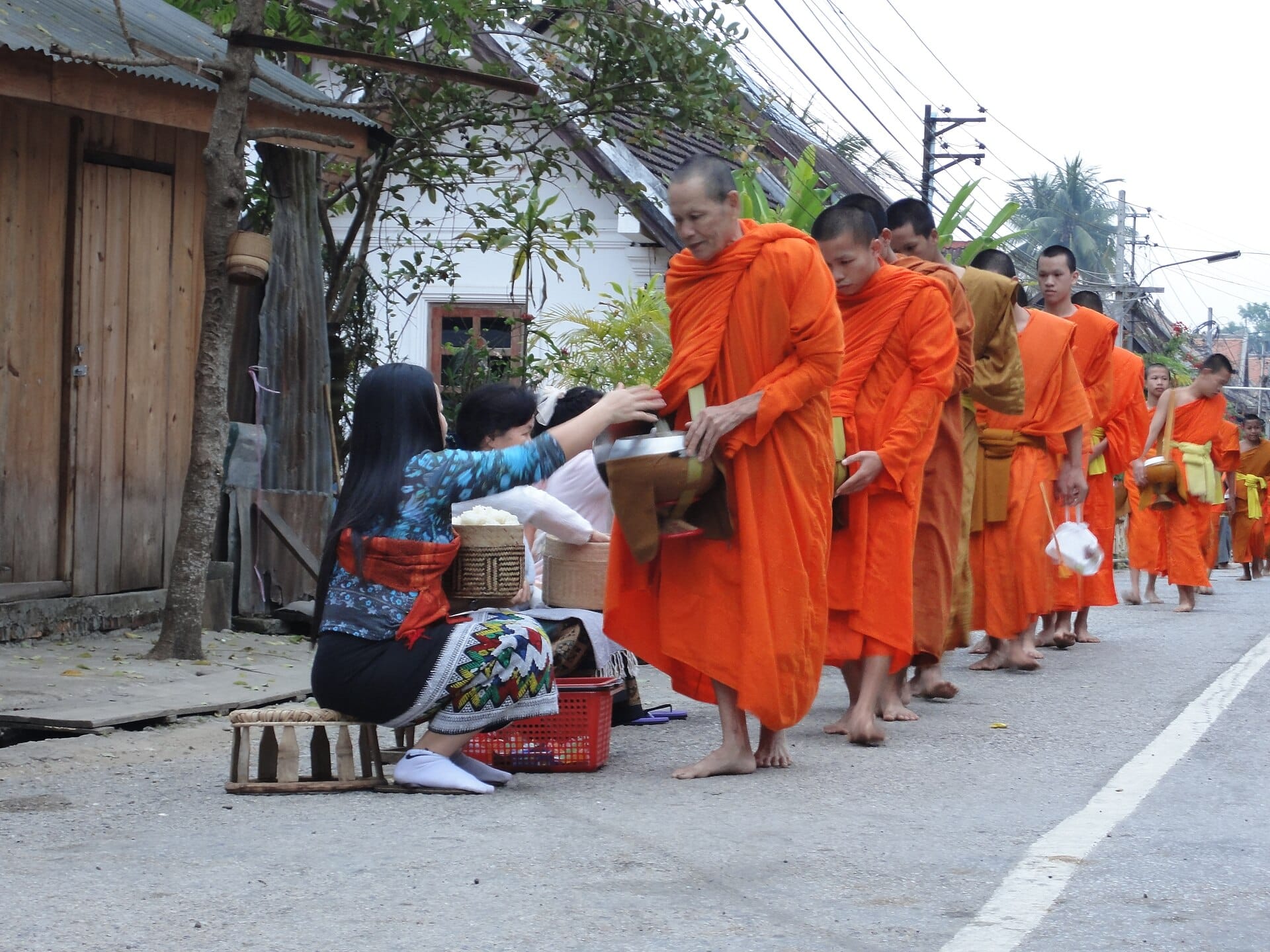
At 5:45 a.m., before the coffee stalls open, a line of barefoot monks in saffron robes files silently down Sakkaline Road while residents kneel on the pavement dropping sticky rice into their alms bowls. This is Tak Bat, and it has happened every dawn for centuries, not for tourists but because the town's monks still walk these streets at first light to collect their only meals of the day. That single scene tells you what this town is: a UNESCO-protected peninsula of 33 working temples wedged between the Mekong and Nam Khan rivers, where French colonial shophouses sit next to gilded Buddhist monasteries and the whole historic core is small enough to cross on foot in twenty minutes.
Getting here is easier than it has ever been. Since the Laos–China Railway opened, the trip from Vientiane that once took most of a day on switchback mountain roads is now a two-hour ride on an air-conditioned electric train. That has brought more visitors, but Luang Prabang has strict heritage building codes, a nightly curfew that shuts the bars by midnight, and no high-rises, so it has kept the slow, low-rise rhythm that makes people cancel their onward flights. Come for two days, stay for five. Here is exactly how to spend that time, what everything costs in 2026, and where to eat the things you will still be thinking about a year later.
🎭 Essential Experiences
Tak Bat — the dawn alms-giving procession
The morning alms ceremony is free, moving, and routinely ruined by tourists who treat it like a photo safari. Monks leave their temples around 5:30–6:00 a.m. and walk in single file down Sakkaline and Sisavangvong roads collecting food. To watch it respectfully: sit or kneel so your head stays lower than the monks', stay at least five metres back, kill your camera flash, and do not step into the procession. Do not buy the sticky rice hawked by vendors along the route — it is often low quality and giving it can genuinely make monks ill; if you want to participate, buy proper rice from the morning market and have a local show you the etiquette first. Insider tip: skip the tour-bus crush on Sisavangvong and walk two blocks toward the quieter residential end near Wat Xieng Thong, where you can observe from across the street without becoming part of the spectacle. Cost: free to watch.
Wat Xieng Thong — the 1560 royal monastery
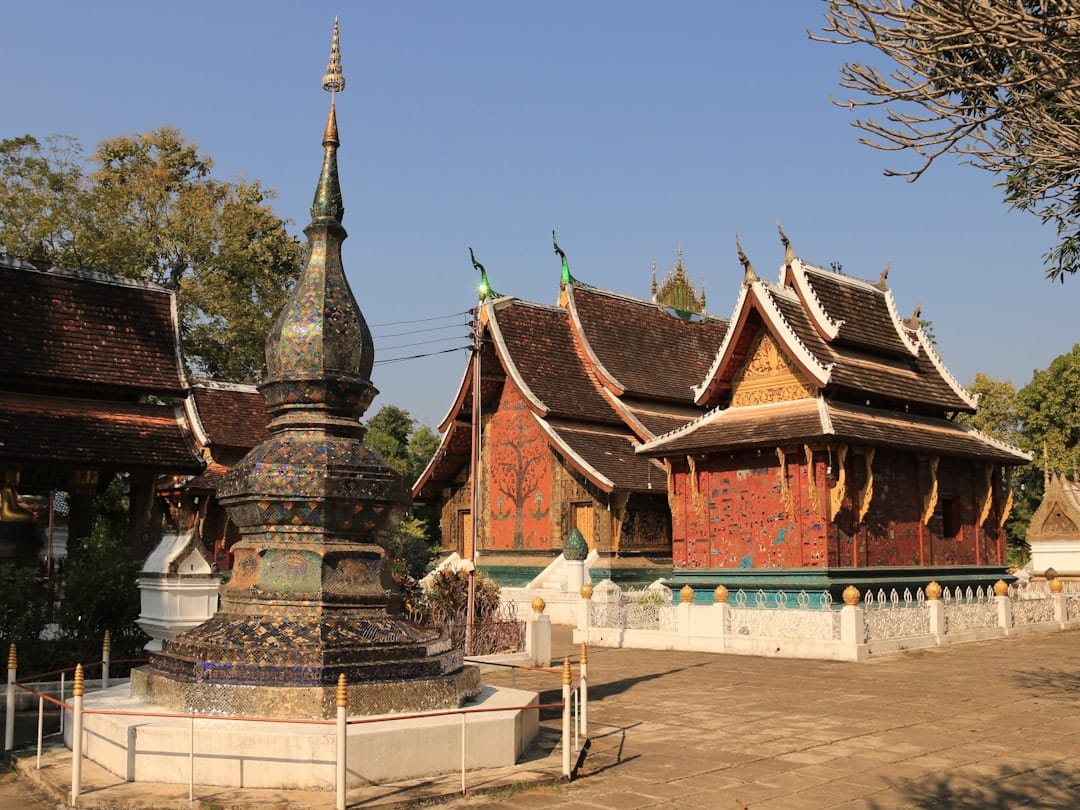
If you see one temple, make it this one at the tip of the peninsula. Built in 1560 under King Setthathirath, Wat Xieng Thong was the coronation site of Lao kings and survived the sackings that flattened much of the region. The showpiece is the Tree of Life, a shimmering glass-mosaic mural set against a deep-red exterior wall of the rear chapel, added in 1960. Look for the low, sweeping roofline that nearly touches the ground — the defining feature of classic Luang Prabang temple architecture. Insider tip: arrive right at the 8 a.m. opening; by 9:30 the tour groups arrive and the funerary carriage house gets crowded. Cost: 20,000 kip (about $0.90 / €0.80), open daily 8 a.m.–5 p.m.
Mount Phousi — the 355-step hill in the middle of town
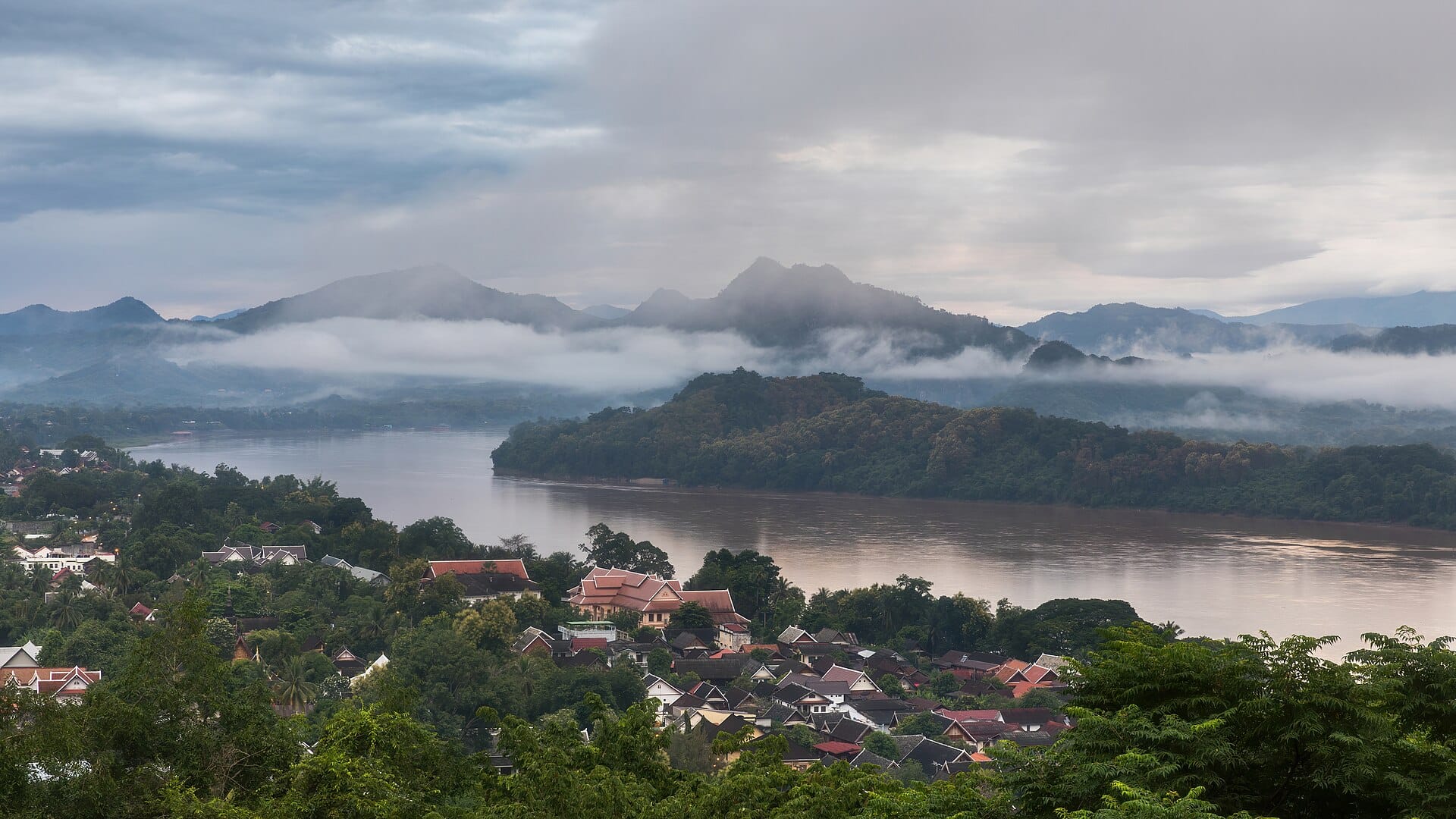
The 100-metre hill in the center of the peninsula gives you the standard postcard: temples, red rooftops, and the two rivers converging. It is roughly 355 steps to the top, where the small gilded stupa of Wat Chom Si sits. Everyone comes for sunset, which means the summit platform is shoulder-to-shoulder by 5:30 p.m. and you will photograph the back of someone's phone. Insider tip: come at sunrise instead — you will have the summit nearly to yourself, and the light over the Mekong is just as good — or climb up the quieter eastern staircase from Kingkitsarath Road by the Nam Khan. If you want sunset without the scrum, watch it from a riverbank bar along the Mekong instead. Cost: 20,000 kip (about $0.90 / €0.80).
Royal Palace Museum (Haw Kham) — the last king's home
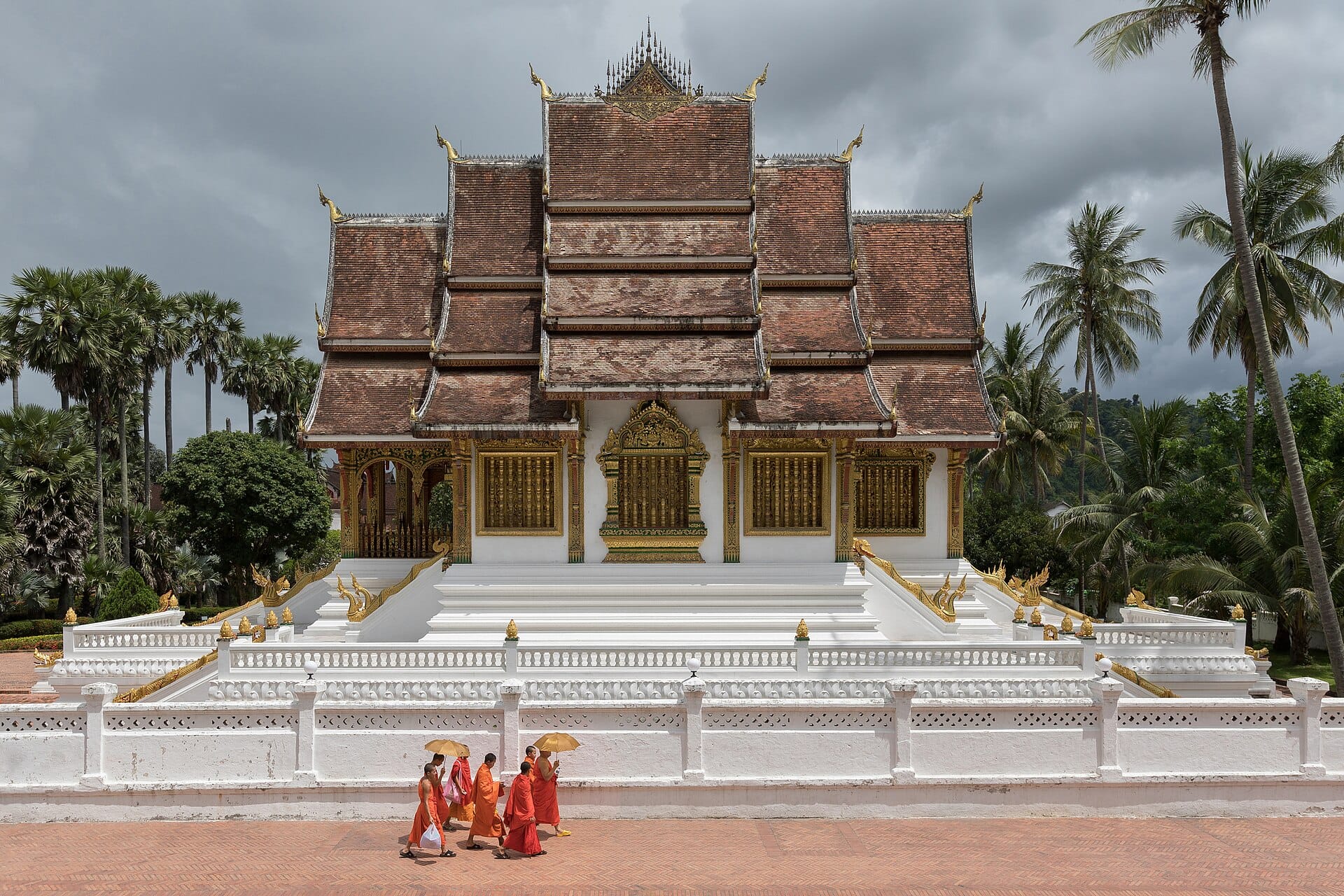
Built in 1904 for King Sisavang Vong, the royal palace became a museum after the monarchy was abolished in 1975, and it is left much as the royal family kept it. The reason to go is the Phra Bang, the 83-cm gold-alloy standing Buddha that gives the town its name and is Laos's most sacred object, housed in the ornate Haw Pha Bang chapel on the grounds. Inside the palace, photography is banned and you must remove your shoes; there is a dress code (no bare shoulders or knees). Insider tip: it is generally closed on Tuesdays and shuts for lunch (roughly 11:30 a.m.–1:30 p.m.), so go in the morning and pair it with the neighboring Haw Pha Bang chapel. Cost: 30,000 kip (about $1.35 / €1.15).
Kuang Si Falls — the turquoise cascades
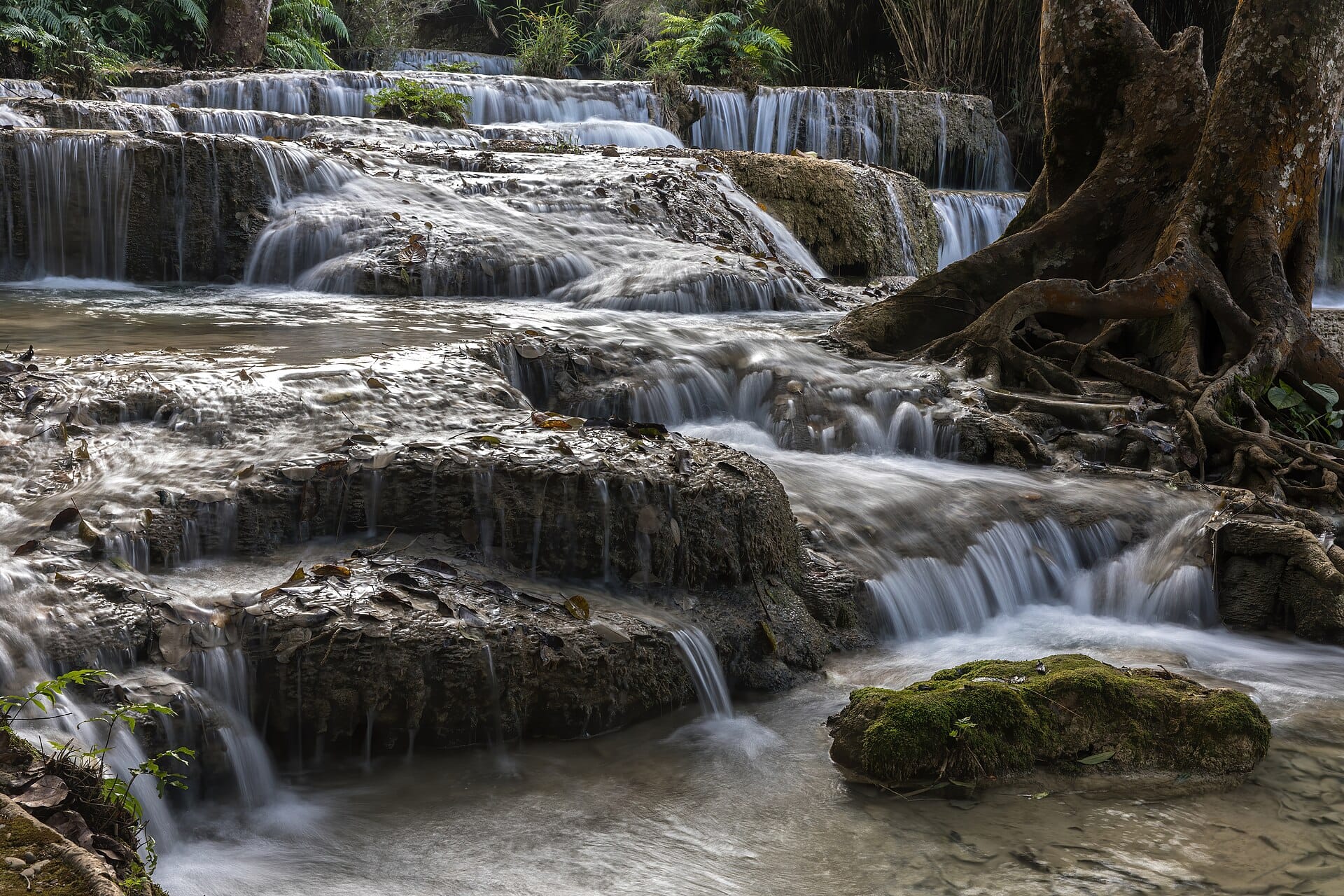
About 29 km south of town, Kuang Si is a multi-tiered waterfall dropping into a staircase of mineral-blue pools you can actually swim in. The main drop is around 50 metres; below it, wooden walkways connect a series of shallow travertine pools — the second and third tiers are the best for swimming. The ticket also covers the Tat Kuang Si Bear Rescue Centre near the entrance, home to rescued Asiatic black (moon) bears, run by the charity Free the Bears. Insider tip: leave town by 8–9 a.m. to beat both the heat and the midday tour crowds; the pools are emptiest right at opening. A shared songthaew/tuk-tuk runs about 50,000 kip (~$2.25) per person round-trip, or roughly 250,000–300,000 kip ($11–13) to hire one privately for the group. Bring your own water and snacks — food at the falls is limited and overpriced. Cost: 60,000 kip (about $2.70 / €2.30), open daily 8 a.m.–5 p.m.; the ticket includes the electric shuttle inside the park.
Pak Ou Caves — 4,000 Buddhas in a Mekong cliff
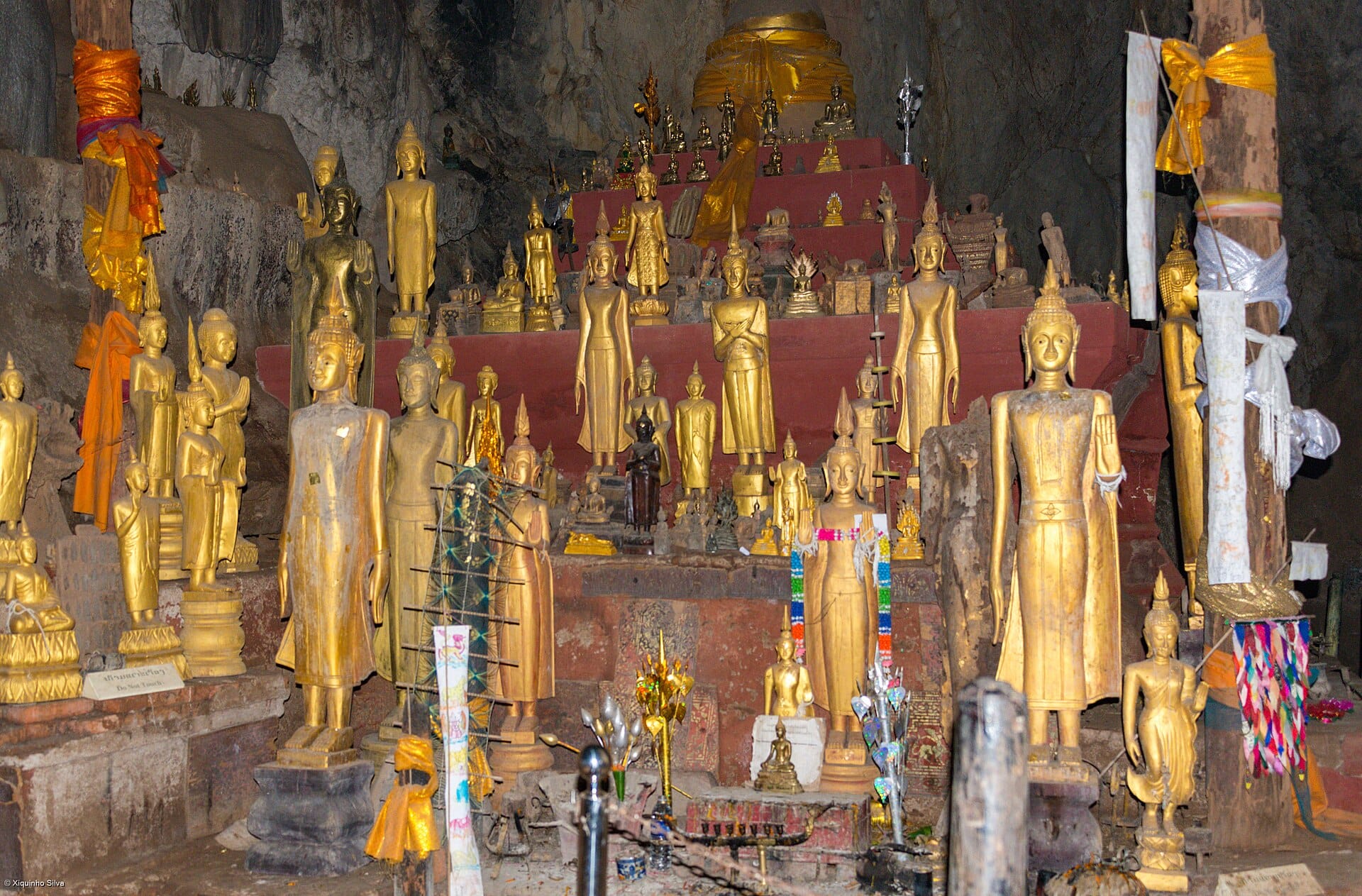
Two caves set into a limestone cliff at the confluence of the Mekong and Nam Ou rivers hold more than 4,000 Buddha statues, left over centuries by pilgrims. The lower cave, Tham Ting, is bright and opens right onto the river; the upper cave, Tham Theung, is darker and reached by a steep 15–20-minute climb, so bring a flashlight (or use your phone). The journey is the real draw: a slow boat up the Mekong takes about two hours upstream and one hour back, past fishing villages and buffalo on the banks. Insider tip: book a shared slow boat at the town pier rather than an overpriced hotel tour, and combine it with a stop at Ban Xang Hai, the "whisky village" that distills lao-lao rice spirit. Cost: 20,000 kip (about $0.90 / €0.80) cave entry; shared slow-boat seats run roughly 100,000–150,000 kip ($4.50–6.75) per person depending on the group.
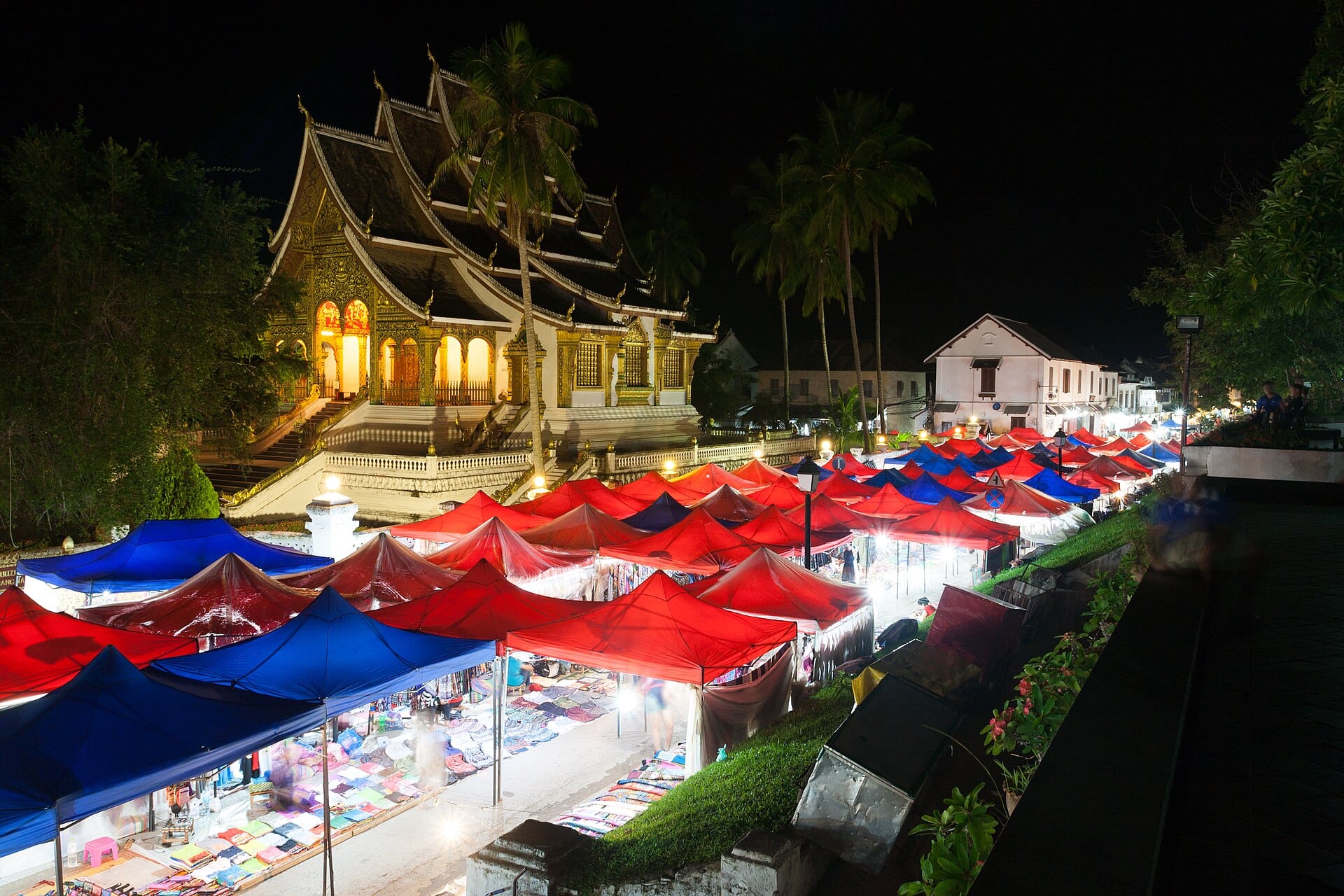
The Night Market — Hmong textiles and a food alley
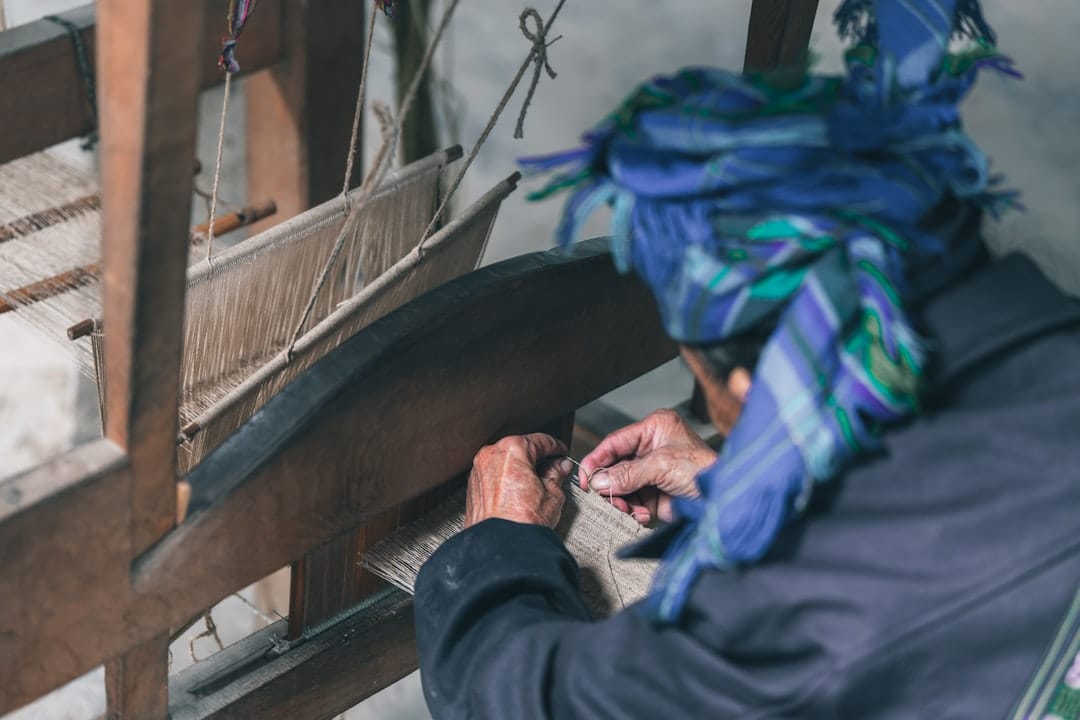
Every evening from about 5 p.m. to 11 p.m., Sisavangvong Road closes to traffic and fills with red-canopied stalls selling handwoven textiles, Hmong appliqué blankets, paper lanterns, silver, and spices. Prices are negotiable — start at about half the asking price and settle somewhere in the middle, politely. The real prize is the narrow food alley that runs off the market (near Wat Mai), where you can pile a plate at a vegetarian buffet for around 20,000–25,000 kip ($1) or get grilled Mekong fish and skewers. Insider tip: for genuine handmade weaving rather than factory imports, buy from the stalls where an older woman is actively working a small loom or hand-stitching — and check TAEC or Ock Pop Tok first so you know what real Lao silk feels like. Cost: free to browse.
TAEC — the ethnology centre that explains everything
Laos has at least 49 officially recognized ethnic groups, and the small, well-curated Traditional Arts and Ethnology Centre is the one place that makes sense of the textiles, headdresses, and customs you will see everywhere else. Housed in a restored 1920s French judge's residence up the hill near Mount Phousi, it has sharp English labeling and a genuinely good fair-trade shop stocking work made by the artisans themselves. Insider tip: go early in your trip, not late — an hour here turns the night market from a blur of "ethnic" souvenirs into things you can actually identify and value. It is closed Mondays. Cost: 25,000 kip (about $1.10 / €0.95), open Tuesday–Sunday 9 a.m.–6 p.m.
🗓️ A 3-Day Itinerary
Day 1 — The peninsula on foot
Set an alarm and start with the 5:45 a.m. Tak Bat near Wat Xieng Thong (free). Grab coffee and a baguette afterward — the French left behind excellent bread — then walk the length of the peninsula to Wat Xieng Thong (20,000 kip) at 8 a.m. before crowds. Loop back to the Royal Palace Museum (30,000 kip) in the late morning, then break for lunch. Spend the hot afternoon at TAEC (25,000 kip) in the shade, then climb Mount Phousi (20,000 kip) — sunrise-fresh legs or not — and end at the night market for dinner in the food alley (~25,000 kip). Total spend: roughly $6–8 plus food; all walkable.
Day 2 — Kuang Si Falls and weaving
Leave by 8:30 a.m. for Kuang Si Falls — share a tuk-tuk (~50,000 kip / $2.25 per person round-trip; 40-minute drive). Pay the 60,000-kip entry, visit the Bear Rescue Centre, then hike to the upper pools and swim before the tour buses land around 11 a.m. Back in town by mid-afternoon, catch the free Ock Pop Tok shuttle (from beside the 3 Nagas hotel) out to their riverside Living Crafts Centre for a free self-guided tour and a weaving demo. Sunset drink on the Mekong, then dinner. Total spend: roughly $8–12 plus food and any weaving class.
Day 3 — Mekong, caves, and slow time
Take a morning slow boat up the Mekong to the Pak Ou Caves (boat ~100,000–150,000 kip per person; 20,000-kip cave entry), stopping at Ban Xang Hai whisky village on the way. You will be back by early afternoon. Use the rest of the day the way locals use it: rent a bicycle (~20,000 kip / $2.50 a day), cross one of the seasonal bamboo bridges over the Nam Khan (5,000–6,000 kip in dry season), and find a café. Finish with the vegetarian buffet or a proper sit-down Lao dinner. Total spend: roughly $8–12 plus food.
🧠 Essential Tips
Best months to visit
Aim for November through February, the cool dry season, when daytime highs sit around 21–22°C and nights drop to 12–14°C — comfortable for temple-walking and cool enough for a jacket at dawn. January and February are the driest. Avoid March and April: it is both the hot season (highs of 30°C+) and, more importantly, slash-and-burn season, when farmers burn fields and a thick haze settles over the valley, wrecking the views and the air quality. The June–October wet season brings green landscapes, lower prices, and short afternoon downpours rather than all-day rain. If you can time it, the Lai Heua Fai fire-boat festival at the end of Buddhist Lent (Boun Ok Phansa) lights up the town with candlelit boats floated down the Mekong — in 2026 it falls in late October. Lao New Year (Pi Mai) runs mid-April (around the 14th–16th) with citywide water fights, but it collides with the worst of the haze and heat.
Getting there and around
From Luang Prabang International Airport (LPQ), 5 km from the center, a taxi, tuk-tuk, or shared minivan into town is a fixed 100,000 kip (about $4.50), roughly 20 minutes. The Laos–China Railway station sits about 12 km out (25 minutes by minivan); the fast train from Vientiane takes just 2 hours, with second class around 330,000 kip (~$15) and first class 522,000 kip (~$23) — book a day or two ahead in high season because seats sell out. In town, download the LOCA app, a Lao ride-hailing service with fixed, upfront pricing that spares you the tuk-tuk haggle. For everything else, the peninsula is walkable, and a bicycle rents for about 20,000 kip ($2.50) a day. Always agree a tuk-tuk fare before you climb in — drivers do not use meters.
Money and safety
The kip runs around 22,450 to the US dollar and 26,000 to the euro in 2026 (rates have been volatile, so check before you go). Carry cash — many small vendors and the market do not take cards, and ATMs cap withdrawals. Luang Prabang is one of Southeast Asia's safest towns; violent crime against tourists is rare and there is a midnight curfew. The real hazards are mundane: agree tuk-tuk fares in advance, be wary of the "cheap" rice sold at the alms ceremony, watch the current if you swim in the Nam Khan, and ride motorbikes cautiously — the mountain roads outside town are unforgiving and rental insurance is thin. Dress modestly at temples: shoulders and knees covered, shoes off inside.
What to eat
Luang Prabang has its own distinct food, different from both Thai and Vientiane cooking. Order khao soi Luang Prabang — a rice-noodle soup in a light tomato-and-pork broth (nothing like the Thai coconut curry version); the long-running shop across from Wat Sensoukharam is the classic spot. Try or lam, a thick pork-and-herb stew bitter with sakhan (a peppery woody vine), and sai oua, the lemongrass-and-herb pork sausage. Two only-here specialties: khai paen, crisp sheets of dried Mekong river weed fried and sprinkled with sesame, and jeow bong, a sweet-spicy chili paste with buffalo skin that you smear on everything. Wash it down with rich Lao coffee — Saffron Coffee on the Mekong roasts local beans. For a cheap feast, the night-market food alley's vegetarian buffet is unbeatable value at around 20,000 kip a plate.
🏨 Accommodation Guide
Budget — $12 to $35 a night
Stay in the Old Town peninsula or just off it around Ban Wat That to be walking distance from everything. Family-run guesthouses with fan or basic A/C rooms run $12–25, and hostels like Mad Monkey Luang Prabang offer dorm beds and a social scene for around $10–18. This is where the town shines for budget travelers — clean, quiet guesthouses near temples cost a fraction of what a comparable location would in Thailand.
Mid-range — $70 to $200 a night
The sweet spot in Luang Prabang is the boutique heritage hotel, and there are dozens. Villa Maly and Maison Dalabua (with its lotus ponds) sit in restored colonial buildings with pools; Satri House occupies a former Lao prince's residence; Burasari Heritage and The Belle Rive put you on the Nam Khan and Mekong respectively. Expect French-colonial architecture, gardens, and a pool for well under what the same design would cost elsewhere in the region.
Luxury — $350 to $1,200+ a night
At the top end, Amantaka occupies a converted French hospital compound of whitewashed suites with private plunge pools a few blocks from the center; Rosewood Luang Prabang is a hillside retreat of tented villas above a waterfall on the town's edge; and Sofitel Luang Prabang turns the former governor's residence into a walled garden estate. For rice-paddy seclusion 15 minutes out, Pullman Luang Prabang sits among working fields.
❤️ Beyond the Tourist Trail
Cross the bamboo footbridge (or the newer bridge) over the Nam Khan to Ban Xieng Maen and the villages on the far bank, where you can walk past working temples and gardens with almost no other tourists and reach quiet riverside spots like Wat Long Khoun. Serious textile buyers should make the trip out to the Ock Pop Tok Living Crafts Centre on the Mekong (free entry, free shuttle from beside the 3 Nagas hotel, daily weaving and natural-dye demos), where the profits fund the weavers themselves. For a taste of how locals actually shop, the morning market off Sisavangvong before 8 a.m. sells jungle vegetables, river fish, and khao piak khao rice porridge to residents, not tourists.
And if your dates line up, plan around Lai Heua Fai in late October 2026, when neighborhoods build enormous illuminated boats, parade them to the temples, and float thousands of banana-leaf candle boats down the Mekong at dusk — the single most beautiful night of the Luang Prabang year, and one most itineraries miss entirely.
✈️ Plan Your Luang Prabang Trip with VoyaBear
Luang Prabang rewards travelers who slow down and get the details right — the dawn timing of Tak Bat, the sunrise window on Phousi, the boat you book yourself instead of the tour you overpay for. That is exactly the kind of planning VoyaBear handles for you. Tell us how many days you have, what you want to eat, and how you like to travel, and we will build a personalized Luang Prabang itinerary with the right hotels, verified prices, and the timing that keeps you a step ahead of the crowds. Start planning your trip with VoyaBear today — and spend your mornings watching the mist lift off the Mekong instead of standing in line.