VoyaBear


Jaipur is not "the Pink City" because someone thought it sounded pretty. In 1876 Maharaja Sawai Ram Singh II had the entire walled city painted terracotta pink to welcome the Prince of Wales, the future Edward VII, and the color stuck so thoroughly that a municipal law still forbids old-city buildings from being any other shade. That is the useful thing to understand before you arrive: Jaipur is a designed object. Laid out in 1727 by the architect Vidyadhar Bhattacharya on a nine-block grid drawn from the principles of Vastu Shastra, it was one of the first planned cities in India, and the geometry still holds. The bazaars run in straight lines, the forts sit exactly where the sightlines demand, and even the chaos has a plan behind it.
What that means for a 2026 traveler is that Jaipur rewards you for treating it as more than a day-trip from Delhi. Most Golden Triangle tours give it eighteen hours and a photo of Hawa Mahal from the car window. Give it three days and you get an 18th-century astronomical observatory that tells time to within two seconds, a hilltop fort where you can drink a beer over the whole city at sunset, and mutton curry hot enough to rearrange your priorities. The airport is 13 km from the old city, the monuments are cheap by any standard, and the whole place is walkable in a way most Indian cities are not. Here is how to do it properly.
🎭 Essential Experiences
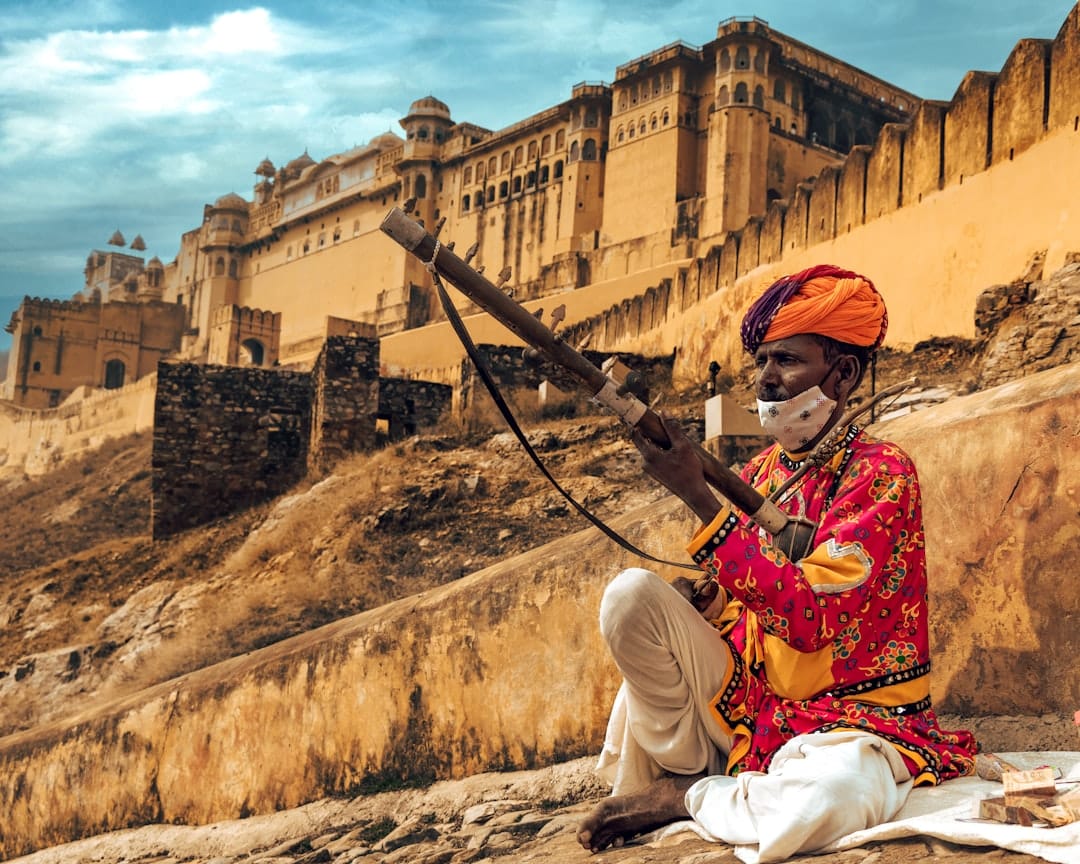
Amber Fort (Amer Fort)
This is the one that earns the hype. Amber Fort sits 11 km north of the city on a ridge above Maota Lake, a sprawl of pale-yellow sandstone and marble built from 1592 onward by Raja Man Singh I. The single thing worth planning your morning around is the Sheesh Mahal, the Mirror Palace, where the walls and ceiling are inlaid with thousands of tiny convex mirrors — light a match inside and the whole room supposedly glitters like a night sky. Also walk the Ganesh Pol gate and the Sukh Niwas hall, which was air-conditioned in the 1600s by water channels running through the walls. Entry is ₹1,000 for foreign visitors (about $11.40 / €10.40) and ₹200 for Indians, open 8:00 am to 5:30 pm. Insider tip: be at the gate when it opens at 8:00 am — by 10:00 am the tour buses from Delhi arrive and the Sheesh Mahal becomes a scrum. Skip the elephant rides at the base; the animals often work in heat and the welfare record is grim, and the shared jeep or a ten-minute walk up gets you to the same courtyard. The evening Light and Sound show costs ₹295 and runs in English at 6:30 pm from October to February (later in warmer months).
City Palace
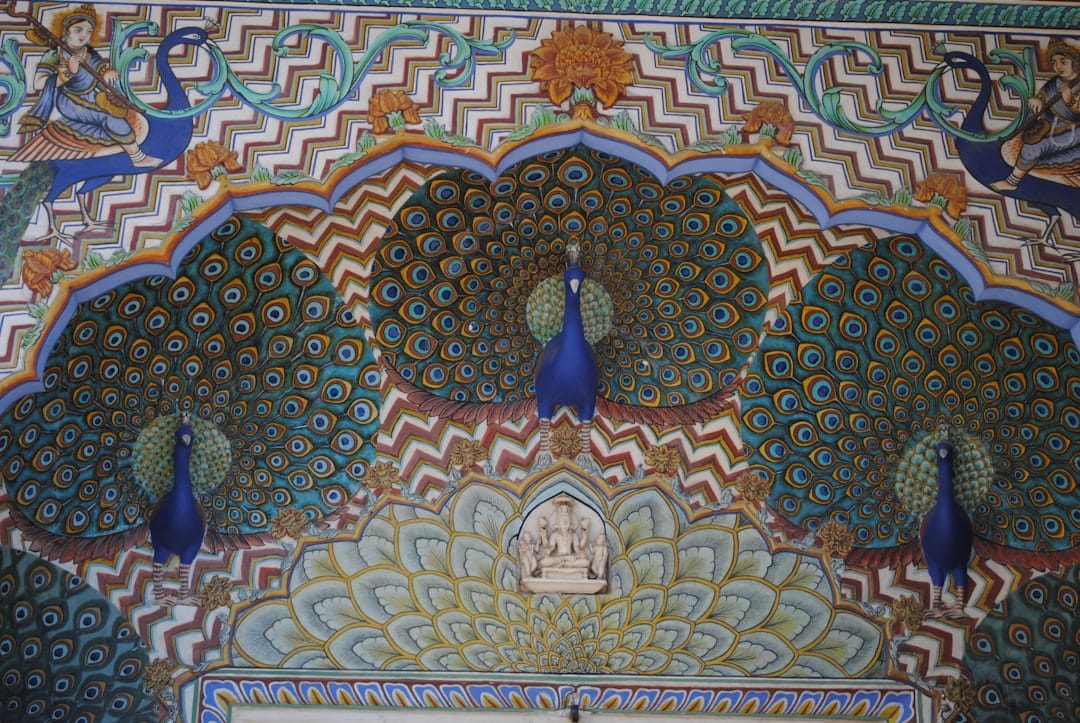
Still the residence of Jaipur's royal family, the City Palace is a working palace with a museum bolted on, which is why it is not on the government's composite monument ticket. Pay the ₹1,000 foreign entry (₹300 for Indians) and head straight for Pritam Niwas Chowk, the inner courtyard with four painted doorways representing the seasons. The Peacock Gate — dedicated to autumn, with three-dimensional peacocks fanning out around the arch — is the most photographed door in Rajasthan for good reason, and it takes morning light best. The seven-storey Chandra Mahal behind it is where the family still lives; a pricier "Royal Grandeur" ticket gets you inside its lower floors if you care. Open 9:30 am to 6:30 pm. Insider tip: the ₹200 audio guide is genuinely worth it here — without context the courtyards are just pretty, and the doorways each carry symbolism you will otherwise walk straight past. Come right at 9:30 am opening to have the Peacock Gate to yourself for a few minutes.
Hawa Mahal
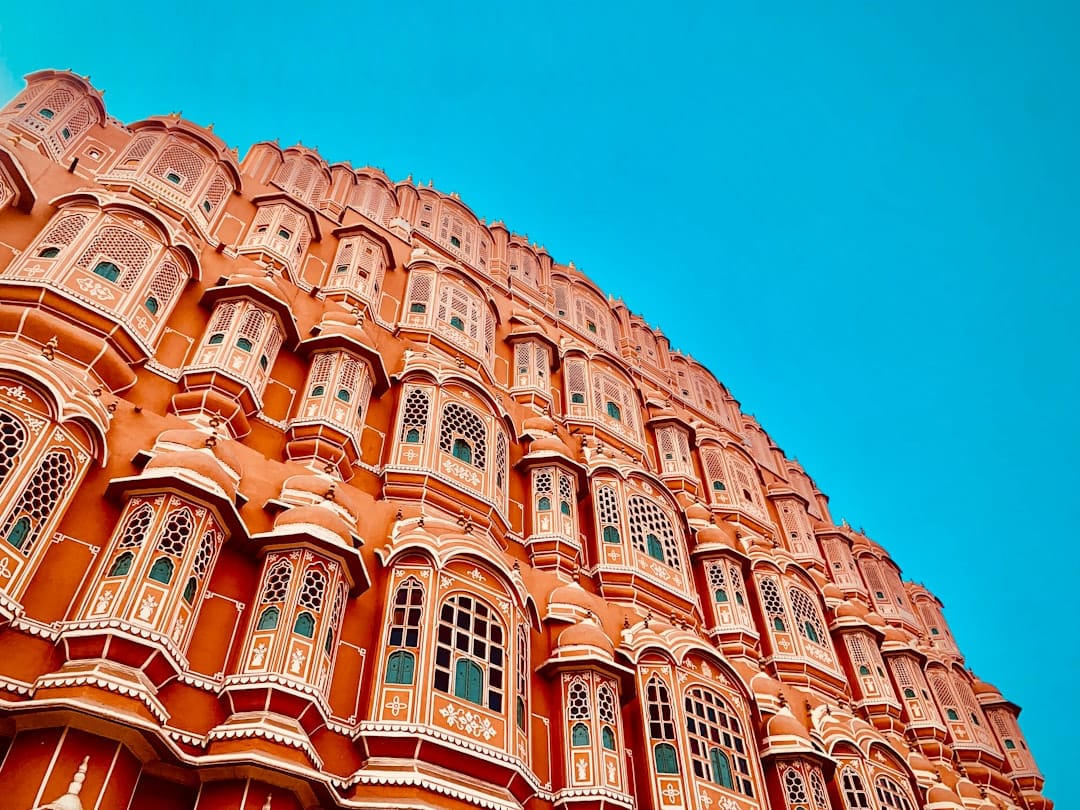
The five-storey pink facade you have seen on every Jaipur postcard is essentially a very elaborate screen. Built in 1799, the Hawa Mahal — Palace of Winds — has 953 small windows (jharokhas) that let the women of the royal household watch street processions below without being seen, while the honeycomb design funneled breeze through the building in summer. Here is the thing nobody tells you: the famous view is of the back of the building from the street, and it is free. Entry (₹600 foreign, ₹100 Indian, open 9:00 am to 4:30 pm) gets you inside to climb the ramps to the top for a view over Sireh Deori Bazaar, which is worth it but not the main event. Insider tip: the best photograph is taken from the rooftop of the Wind View Café or the Tattoo Café directly across the street, ideally at 7:00–8:00 am when the rising sun hits the east-facing facade and the crowds are still asleep. Order a chai, get the shot, then decide if you want to go inside.
Jantar Mantar
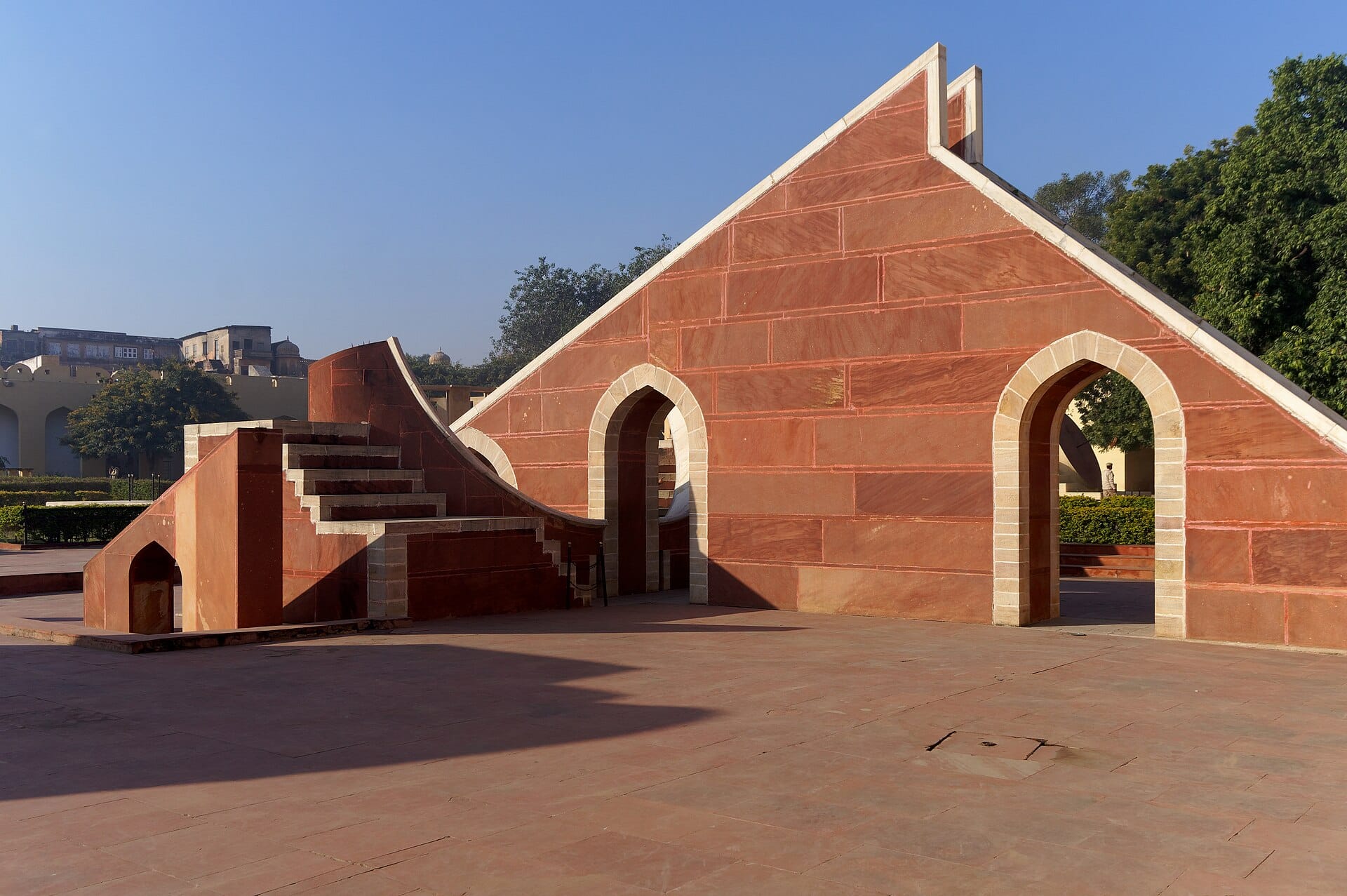
If you visit one thing that makes Jaipur genuinely unusual, make it this. Built by Maharaja Sawai Jai Singh II between 1728 and 1734 and now a UNESCO World Heritage Site, Jantar Mantar is a collection of 19 giant masonry astronomical instruments that actually work. The centerpiece, the Vrihat Samrat Yantra, is a sundial 27 meters tall whose shadow moves visibly — about a millimeter a second — and tells local time to an accuracy of two seconds. Others measure the positions of stars and the signs of the zodiac. Entry is ₹600 for foreign visitors and ₹100 for Indians (₹200 with the composite ticket structure), open 9:00 am to 5:00 pm. Insider tip: this is the one site where you should hire the on-site licensed guide (around ₹300) or rent the audio guide. Without someone explaining how each instrument works, you are looking at a park full of abstract concrete ramps. With the explanation, it is one of the most impressive things in the country.
Nahargarh Fort
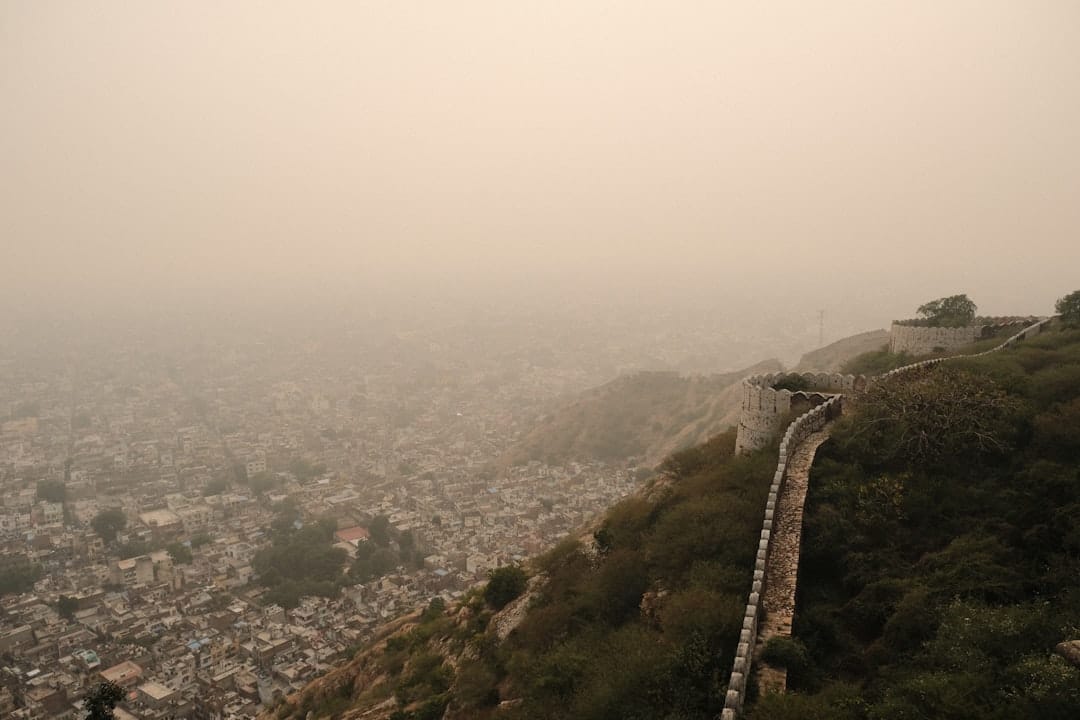
Nahargarh is where Jaipur goes to watch itself. Built in 1734 on the Aravalli ridge above the city, the fort itself is modest compared to Amber — the reason to come is the view, which takes in the entire grid of the old city laid out below you. Entry is ₹600 for foreign visitors and ₹100 for Indians, open 10:00 am to 5:30 pm. Inside, the Madhavendra Bhawan is a honeycomb of interconnected suites built for the king's nine queens, arranged so he could visit any one without the others knowing. Insider tip: come for the last two hours before sunset, not the middle of the day. Time your arrival so you are at the ramparts or the Padao restaurant as the light goes gold and the city below turns pink for real. A taxi up from the old city takes about 30 minutes via the winding road; the walking trail from the base is steep and better tackled in cool weather.
Panna Meena ka Kund
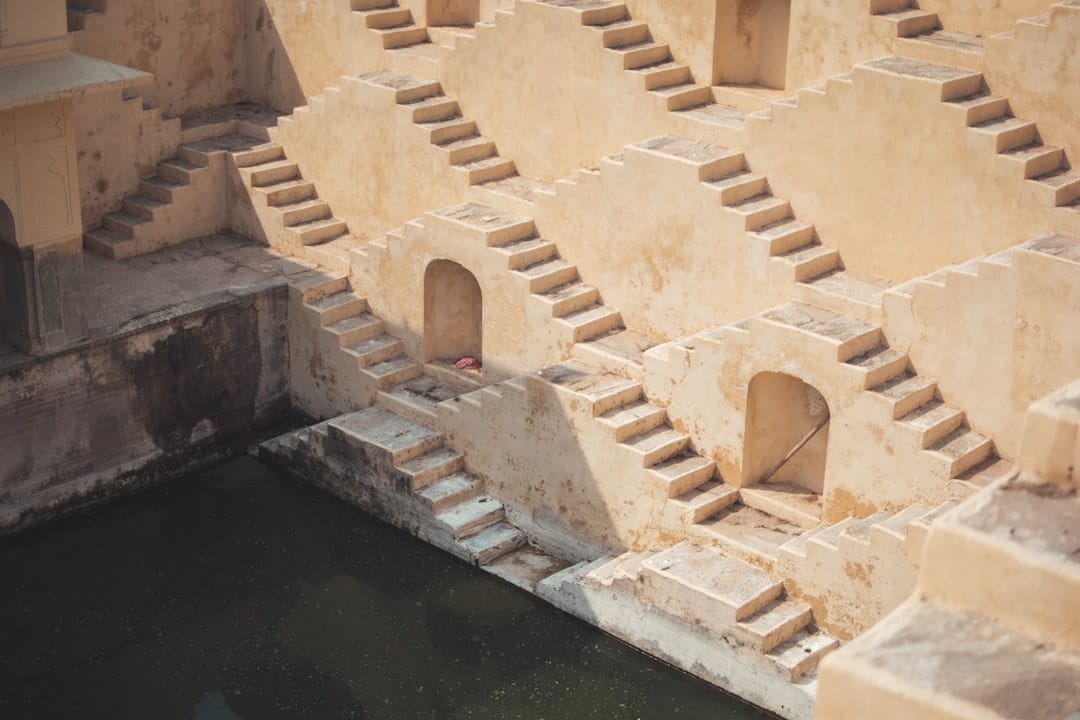
Five minutes' walk from Amber Fort sits an 8-tiered stepwell from the 16th century, and it costs nothing to visit. Panna Meena ka Kund is a square tank ringed by symmetrical criss-cross staircases that zigzag down to the water — the kind of geometry that looks computer-generated but predates computers by four centuries. Stepwells like this were the practical solution to storing monsoon water through Rajasthan's brutal dry months, and this one doubled as a cool community gathering spot. Entry is free. Insider tip: you cannot walk down the stairs anymore (roped off to protect the structure), so this is a ten-minute photo and appreciation stop, not an hour-long one. Pair it with Amber Fort in the same morning — do the fort at 8:00 am, then walk over here around 10:00 am before the Instagram crowds thicken. It is directly on the way back toward the Amer town road.
Albert Hall Museum
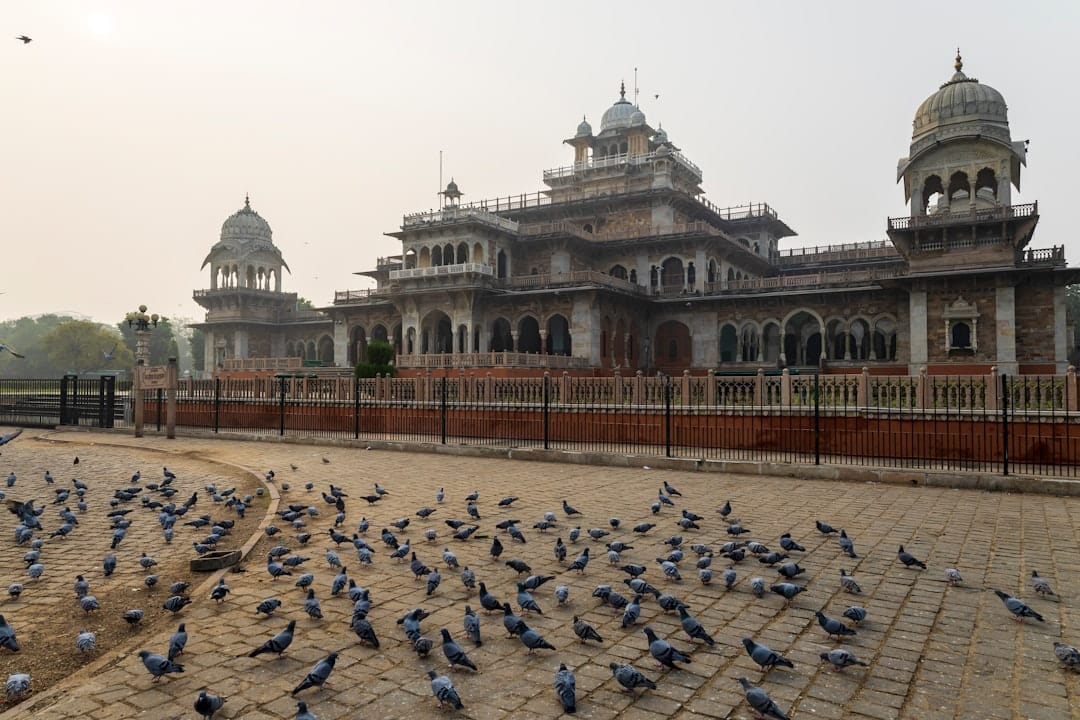
The oldest museum in Rajasthan, opened in 1887 and named after Albert Edward (again, the future Edward VII — the man got a lot of things named after him here). The building itself is the draw: a florid Indo-Saracenic pile of domes and arches designed by Samuel Swinton Jacob, sitting in Ram Niwas Garden. The collection inside runs to metalwork, miniature paintings, carpets and an actual Egyptian mummy. Entry is ₹300 for foreign visitors and ₹50 for Indians, open 9:00 am to 5:00 pm. Insider tip: the real move is to skip the interior and come at dusk, when the whole building is floodlit and glows against the dark garden, with hundreds of pigeons on the forecourt. It is one of the best free photographs in the city and takes fifteen minutes. If you do go inside, the miniature painting gallery is the strongest section.
🗓️ A 3-Day Itinerary
Day 1 — The old walled city. Start early at Hawa Mahal: get the sunrise facade shot from the Wind View Café around 7:30 am, then be first through the City Palace gates at 9:30 am for the Peacock Gate. Walk five minutes to Jantar Mantar (they are neighbors) and give it 90 minutes with a guide. Break for lunch at LMB in Johari Bazaar — a thali runs ₹400–600 ($4.50–6.80 / €4.20–6.25). Spend the afternoon shopping the straight-line bazaars: Johari for jewelry, Bapu Bazaar for textiles and leather jutti slippers. End at Nahargarh Fort for sunset (taxi up around 4:30 pm), with a drink at Padao. Total sightseeing spend: roughly ₹2,300 ($26 / €24) in entry fees.
Day 2 — Amber and the northern forts. Taxi to Amber Fort for the 8:00 am opening (about ₹400 / $4.50 each way, or use the metro-plus-auto combination). Do the Sheesh Mahal and Ganesh Pol first, then walk to Panna Meena ka Kund by 10:00 am. If you have energy, Jaigarh Fort sits directly above Amber, connected by fortified walls and home to the Jaivana — at the time of casting, the largest wheeled cannon in the world; entry is a bargain ₹200 foreign / ₹150 Indian. Back in town, spend late afternoon at Albert Hall Museum, timed so you catch it floodlit at dusk. Dinner: laal maas at Handi or Niros on MI Road (₹500–1,000 per head).
Day 3 — Slow down and go local. Breakfast on pyaaz kachori at Rawat Mishthan Bhandar near the railway station (₹30–50, best between 8:00 and 10:00 am). Spend the morning at the Anokhi Museum of Hand Printing in Amber, a restored haveli explaining Rajasthani block-printing (entry around ₹30), then browse the crafts. Afternoon is for whatever you under-served on Days 1 and 2, or a photo stop at Patrika Gate in Jawahar Circle. Finish with dinner and a folk-dance show at Chokhi Dhani, a mock-Rajasthani village on Tonk Road — touristy, yes, but the all-you-can-eat dal baati churma thali is the real thing (₹800–1,200 / $9–14 / €8–13 including entry).
🧠 Essential Tips
When to go
The honest answer is October to March, full stop. Winter days sit in a pleasant 18–27°C range and nights get genuinely cool, dropping toward 7–10°C in December and January, so pack a layer. April through June is when Jaipur becomes a furnace — 44–47°C is normal, and midday sightseeing at exposed forts stops being fun. The July–September monsoon cools things down but brings afternoon downpours and slippery fort steps. If you can align your trip with the Jaipur Literature Festival — held each January at Hotel Clarks Amer and free to attend — it is the largest free literary festival in the world and worth the crowds. The Makar Sankranti kite festival on January 14 fills the sky and every rooftop; Teej (monsoon, around August) and Gangaur (March–April) are the big local processions.
Getting around
From Jaipur International Airport (JAI), 13 km southeast of the old city, a prepaid taxi from the counter costs ₹400–500 and takes 25–40 minutes depending on traffic. Uber and Ola both work well in Jaipur and usually run cheaper (₹300–600), though they surge 2–3x during festival season — Ola is the homegrown app most locals default to. The RSRTC airport bus is ₹30–50 if you are counting rupees. In the city, the Jaipur Metro Pink Line runs from Mansarovar to Badi Chaupar for ₹10–30 a ride (5:30 am to 10:30 pm); the Badi Chaupar terminus drops you right at the eastern edge of the walled city near Hawa Mahal, which makes it genuinely useful now. A one-day tourist metro card is ₹100, three-day ₹200. For everything else, autorickshaws are everywhere — insist on the meter or agree the fare before you climb in.
Money-saving note
If you plan to see several government monuments, buy the composite ticket (roughly ₹1,000 for foreigners, valid two consecutive days) at your first stop. It covers Amber Fort, Nahargarh, Hawa Mahal, Jantar Mantar, Albert Hall and a few gardens — visit three or more and it pays for itself. Note the City Palace and Jaigarh Fort are privately held and charged separately.
Staying safe and not getting fleeced
Jaipur is generally safe, including for solo and female travelers, but the scams are specific and predictable. The classic is the gem export scam: a friendly stranger befriends you, then persuades you to carry or "export" jewels for a share of the profit — it is always fake, and you always lose. Second is the autorickshaw commission run: your driver insists on "just one quick look" at a friend's emporium, where prices are jacked to fund his kickback. Say no, or use Uber/Ola for shopping trips. Ignore "government-approved handicraft" shops near the monuments — the government does not endorse shops. At Amber Fort, only hire guides with a visible photo ID license; freelancers at the gate will invent history cheerfully. When bargaining in Johari or Bapu Bazaar, counter at 40–50% of the opening price and expect to settle around 60–70%; walking away usually drops the price further. At temples, cover shoulders and knees, and be firm with pushy priests asking for "donations."
What to eat
Rajasthani food is built for the desert — heavy, ghee-rich, and made to keep. The dish to try is dal baati churma: hard baked wheat balls cracked open and drowned in ghee and spiced lentils, with sweet crumbled churma on the side. Get it at LMB (Laxmi Misthan Bhandar) in Johari Bazaar, a vegetarian institution since 1954. For the fiery laal maas — mutton in a red gravy built on mathania chilies — go to Handi or the heritage Niros, both on MI Road. Breakfast is pyaaz kachori (crisp pastry stuffed with spiced onion) from Rawat Mishthan Bhandar, which also does a famous mawa kachori dripping in syrup. Drink a thick, malai-topped lassi at the original Lassiwala on MI Road — it is standing-room only and worth it. For variety under one roof, Masala Chowk, an open-air food court beside Ram Niwas Garden, gathers dozens of Jaipur street-food stalls in one clean, safe spot. And if you visit around Teej or Raksha Bandhan, eat ghewar, the honeycomb-shaped disc soaked in syrup — LMB sells it by the piece.
🏨 Accommodation Guide
Budget (₹800–1,500 / $9–17 per night). The old city and the Bani Park area near the railway station are your friends. Zostel Jaipur is the reliable backpacker pick with dorms and privates and a social rooftop. Hotel Pearl Palace (near Hathroi Fort) punches far above its price and its rooftop Peacock restaurant is a destination in itself; Hotel Arya Niwas is a calm, well-run mid-budget standby. Book the old city if you want to walk to the bazaars.
Mid-range (₹3,000–8,000 / $34–91 per night). Look at C-Scheme and Civil Lines — leafy, central, well-connected neighborhoods with a good stock of restored havelis and modern boutique hotels. This tier is where Jaipur delivers the best value: you can sleep in a converted 19th-century merchant's house with a courtyard and a plunge pool for the price of a chain hotel elsewhere. MI Road and Bani Park also sit in this bracket and put you close to the action.
Luxury (₹15,000 to ₹60,000+ / $170–680+ per night). Jaipur is one of the great cities in the world for heritage hotels. Rambagh Palace, the former residence of the Maharaja and now run by Taj, is the icon — expect north of ₹40,000 a night and peacocks on the lawn. Samode Haveli puts you inside a painted 18th-century mansion in the old city; the Rajmahal Palace (RAAS) and the Oberoi Rajvilas on the outskirts are the other blue-chip options. Most cluster in or near the quieter Civil Lines district.
❤️ Beyond the Tourist Trail
When you have done the forts, the city keeps going. Patrika Gate at Jawahar Circle is a relatively new (2016) but genuinely spectacular painted archway where every column tells a different regional story in color — go at 7:00 am to shoot it empty, because by 9:00 am it is wall-to-wall pre-wedding photoshoots. The Anokhi Museum of Hand Printing, tucked into a restored haveli in Amber village, is the antidote to the block-print tat sold in the bazaars — you watch artisans carve and stamp, and the small shop sells the real thing. Design nerds should detour to Jawahar Kala Kendra, an arts center designed by architect Charles Correa on the same nine-square mandala grid as the old city itself — a modern building that quietly rhymes with the 1727 plan.
For an afternoon that most itineraries skip, head to the Sisodia Rani Garden and the Galtaji temple complex (the "Monkey Temple") in a gorge east of the city, where natural spring water fills a series of sacred tanks and, yes, a large population of macaques runs the place — keep your snacks zipped. And if your timing is right, the old city during Diwali (October or November) is worth rearranging a trip for: the bazaars compete for the best light displays and the whole grid glows.
Plan your Jaipur trip with VoyaBear
Jaipur rewards precision — the right fort at the right hour, the composite ticket bought at the right gate, the sunrise café before the crowds. That is exactly the kind of trip VoyaBear is built to plan. Tell us how many days you have, what you want to eat, and how hard you want to push, and we will build you a personalized Jaipur itinerary with the timings, costs and bookings already sorted — so you spend your mornings in the Sheesh Mahal, not in a queue. Start planning your trip with VoyaBear today.