VoyaBear


Bruges packs a UNESCO-listed medieval core into an area you can walk across in twenty minutes, which is the first thing worth knowing: you do not need a car, a metro pass, or really much of a plan. The historic centre sits inside an egg-shaped ring of canals, and almost everything below — the belfry, the Michelangelo, the Flemish Primitives, the brewery — falls within a 1.5-kilometre radius of the Markt. The second thing worth knowing is that September 2026 is a smart time to come. After the August crush thins out, hotel rates drop 25–30%, the mid-September Bruges Beer Weekend sets up trestle tables on the Markt, and you can climb the belfry at 9 a.m. without a queue. This guide is built on verified 2026 opening hours, entry fees, and transit fares, so you can plan tight instead of guessing.
🏙️ Essential Experiences
Bruges rewards depth over box-ticking. Eight sights genuinely earn your time; the rest of the centre is the reward you get for walking between them. Here is what to prioritise, what it costs, and the one detail that makes each visit better.
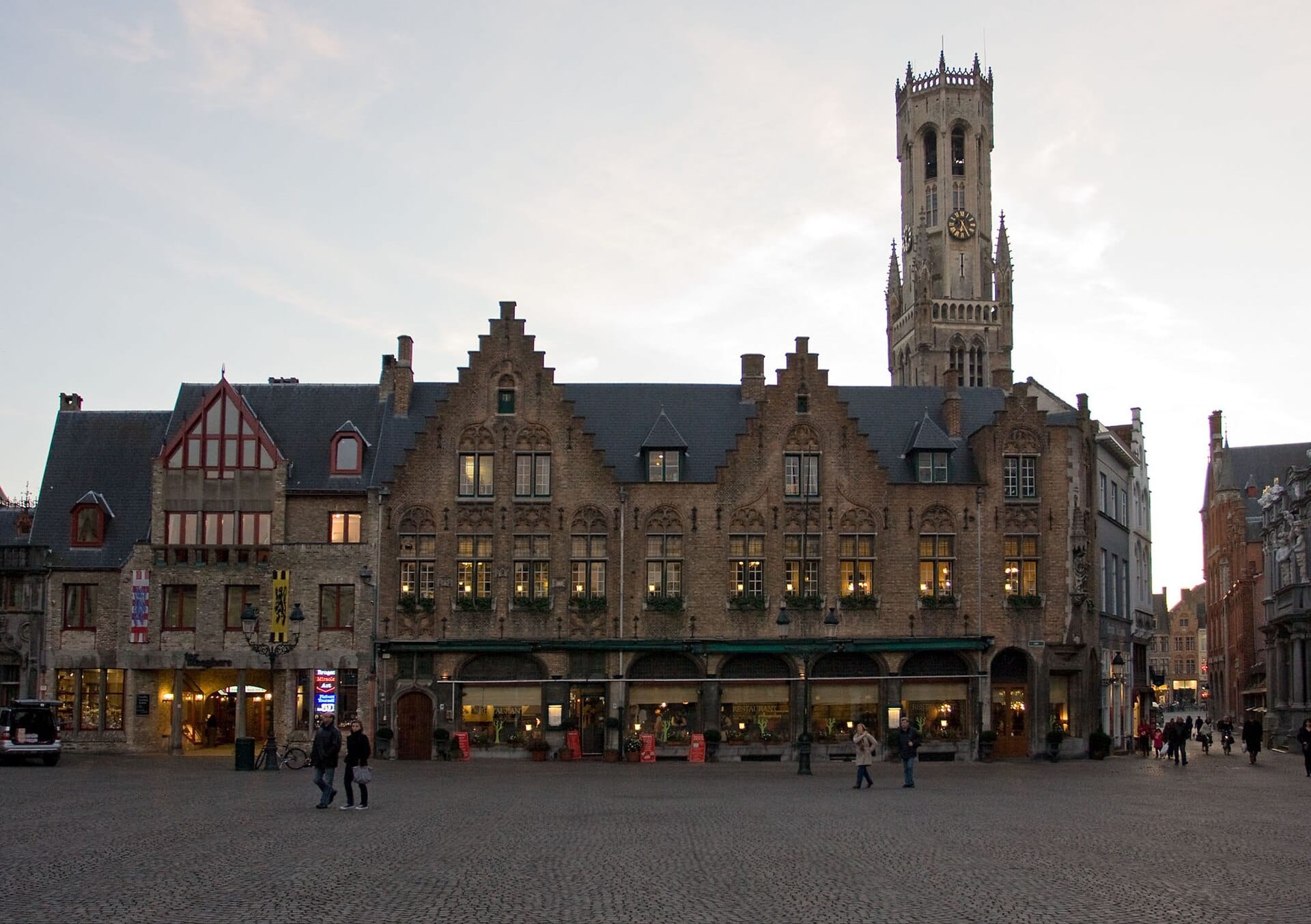
The Belfort and the Markt
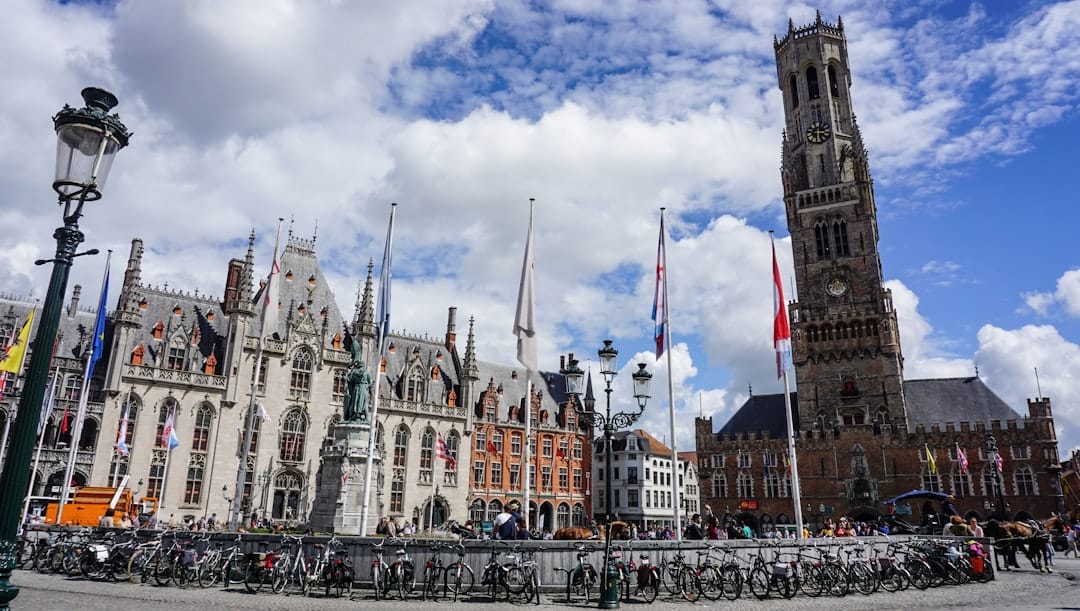
The 83-metre Belfort has loomed over the Markt since the 13th century, and climbing its 366 steps is the single best orientation move in Bruges — from the top you can see the whole compact medieval street plan laid out below, canals and all. The narrow spiral staircase passes the treasury room and the 47-bell carillon before the exposed viewing platform. In 2026 the standard adult ticket is €16 (April 1–November 2), €14 for under-18s, free under 7. Summer hours are 9 a.m. to 8 p.m. daily, with last entry one hour before closing.
Insider tip: entry is capped at a limited number of people at a time, so a mid-afternoon arrival can mean a 45-minute wait on the steps. Show up right at 9 a.m. and you will have the platform nearly to yourself. Skip the ground-floor gift shop and go straight up.
Burg Square and the Basilica of the Holy Blood
A two-minute walk east of the Markt, the Burg is the older of Bruges's two great squares and the one most people rush through. Slow down. This is where the Gothic Stadhuis (City Hall), begun in 1376, stands as one of the oldest town halls in the Low Countries, its façade bristling with statuary. Tucked into the corner is the Basilica of the Holy Blood, a two-level chapel: a plain Romanesque lower church from the 12th century and, up a decorated staircase, a Gothic upper chapel that houses a relic said to contain drops of Christ's blood, brought back from the Second Crusade.
Entry to the basilica is free. The museum and treasury room, with the reliquary and vestments, costs €5 (free for under-12s), and the basilica is open daily 10 a.m. to 5:15 p.m. The relic itself is brought out for veneration every afternoon from 2 to 4 p.m., with an extra Friday-morning slot from 10:15 to 11 a.m.
Insider tip: time your visit for the 2 p.m. veneration if you want to see the relic on its altar rather than locked away — it is a genuinely quiet, unhurried ritual, and there is no charge to sit in on it.
The Groeningemuseum
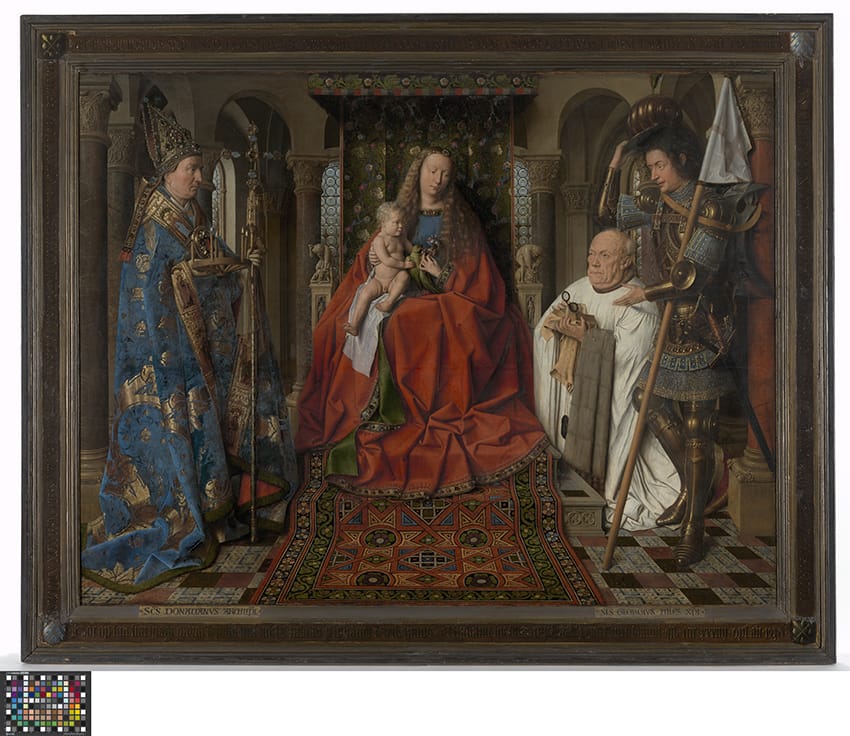
If you see one museum in Bruges, make it this one on the Dijver. The Groeninge holds the city's crown jewels of Flemish Primitive painting, chief among them Jan van Eyck's Virgin and Child with Canon van der Paele (1436) — a painting so precise you can read the reflections in the canon's spectacles and the individual hairs of the fur trim. Hans Memling, Gerard David, and a genuinely unsettling Last Judgement attributed to Hieronymus Bosch round out a collection that traces six centuries of art made in this city. It is a small museum; two focused hours is plenty.
A standalone ticket runs about €15. If you plan to hit several municipal sites, the Musea Brugge (MB) Card is the better deal at €49, giving 72-hour access to all Musea Brugge locations, including the Belfort, the Gruuthuse, and the Church of Our Lady museum.
Insider tip: the Van Eyck is the most crowded spot in the building. Walk in the opposite direction first, see the rest of the collection while tour groups cluster at the entrance, and circle back to the Madonna last, when the room has cleared.
The Church of Our Lady and Michelangelo's Madonna
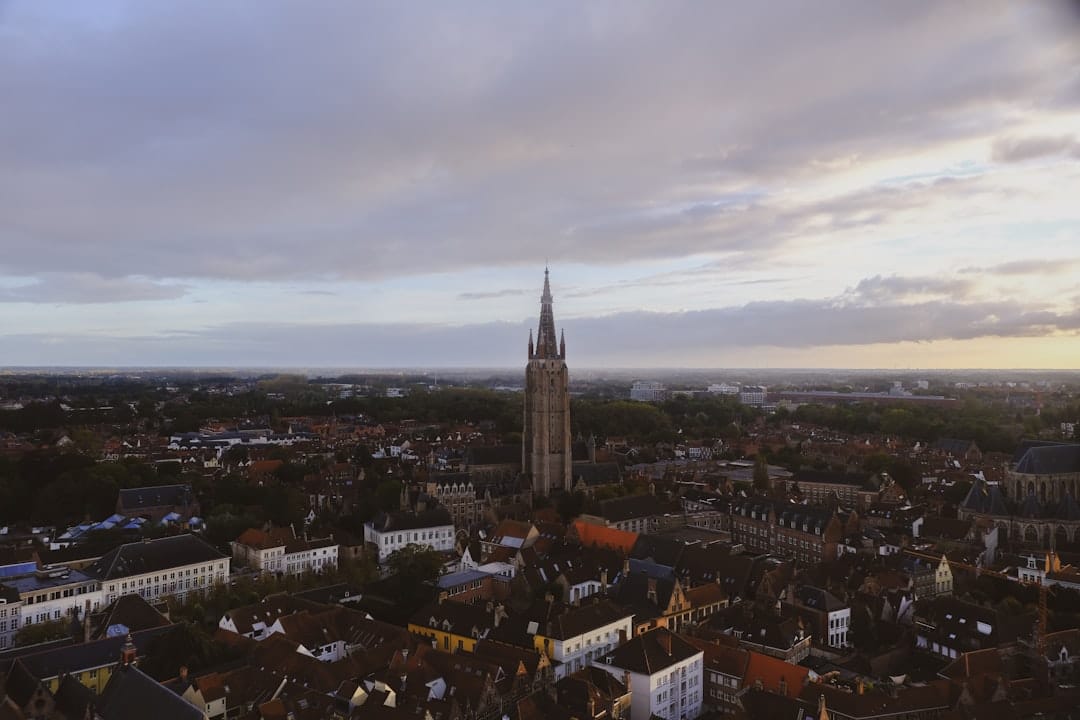
The Onze-Lieve-Vrouwekerk's brick tower rises 115.6 metres, making it the tallest structure in Bruges and the third-tallest brickwork church tower in the world. But the reason to go inside is smaller and far more famous: Michelangelo's Madonna and Child, a marble carved around 1504–06 and bought by the Brugean merchants Jan and Alexander Mouscron, who donated it to the church in 1514. It is the only Michelangelo sculpture that left Italy during the artist's lifetime — a quiet, downcast Virgin with a startlingly self-possessed Christ child, set behind glass in the south aisle.
The church itself is free to enter; the museum section, which includes the painted tombs of Charles the Bold and Mary of Burgundy, costs €10 for adults, €9 for ages 18–25, €5 for 13–17, and is free for under-13s.
Insider tip: you can see the Madonna from the free part of the church, but the museum ticket gets you close and lets you into the choir with the Burgundian mausoleums. If you are already buying the MB Card, this is included.
A canal cruise
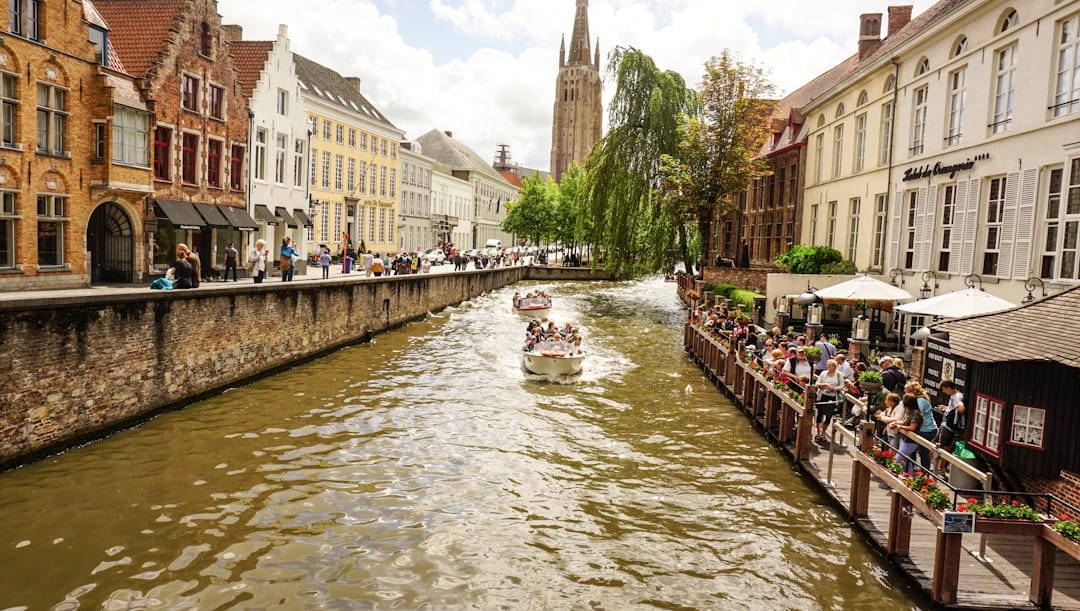
The half-hour canal tour is the one boat ride that is actually worth it, because much of medieval Bruges was built to be seen from the water — you get angles on the brick warehouses, hump-backed bridges, and back gardens that you simply cannot reach on foot. All five licensed operators charge the same regulated fare and run the same route between Jan van Eyck Square and the Beguinage, so there is no comparison-shopping to do. In 2026 it is €15 for adults, €9 for children aged 4–11, running daily from March through October, roughly 10 a.m. to 6 p.m.
The five embarkation jetties are at Rozenhoedkaai, Huidenvettersplein 13, Wollestraat 32, Nieuwstraat 11, and Katelijnestraat 4. Boats are open-topped and leave when full rather than on a fixed timetable.
Insider tip: the Rozenhoedkaai jetty is the most photographed corner in Bruges and therefore the longest queue. Walk five minutes to the Katelijnestraat or Nieuwstraat landing and you will board faster for the identical trip. Go early or late in the day — midday sun flattens the light and fills every boat.
The Begijnhof and Minnewater
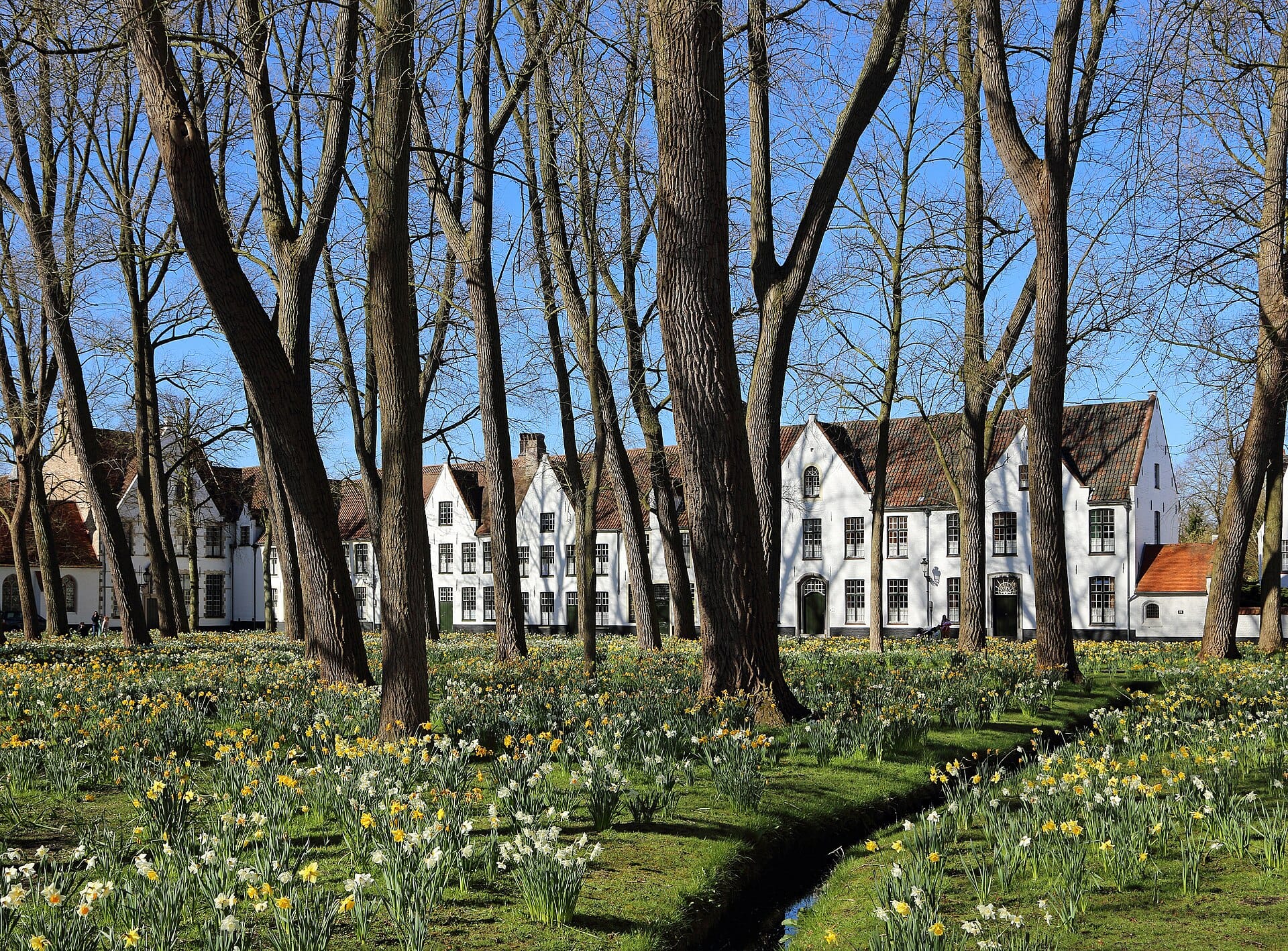
The Begijnhof ten Wijngaarde, recognised as an independent parish in 1245, is a walled courtyard of whitewashed houses that once sheltered the beguines — lay religious women who lived communally without taking full monastic vows. Today it is occupied by Benedictine nuns, and the central lawn is one of the few genuinely hushed spaces in the centre. Entry to the courtyard, gardens, and the exterior of the Begijnhofkerk is free, with gates typically open from about 6:30 a.m. to 6:30 p.m. Just outside sits Minnewater, the so-called Lake of Love, a former harbour basin now ringed by a park.
Insider tip: if you can shift your trip to late March or early April, the courtyard fills with a carpet of daffodils — the single most photographed moment in the beguinage's year. In September the lawn is plain green, so come instead for the quiet: arrive before 10 a.m., before the day-trippers walk down from the station, and you may have the place almost to yourself.
De Halve Maan brewery
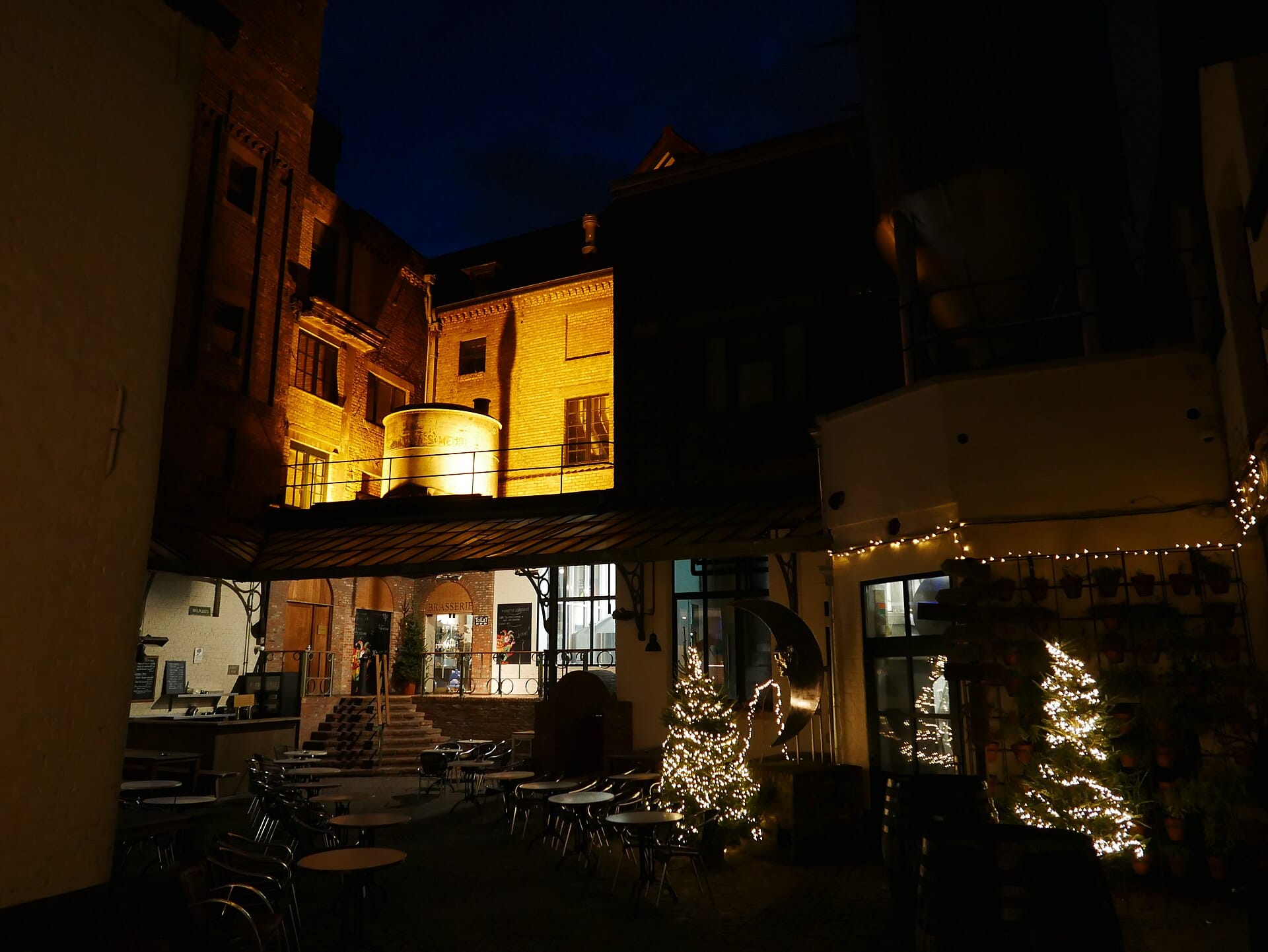
On the Walplein, De Halve Maan has been brewing in the same family since 1856 and is the last working brewery inside the historic centre. It is the home of Brugse Zot ("Fool of Bruges") and Straffe Hendrik, and its party trick is a 3.2-kilometre underground pipeline, opened in 2016, that pumps beer beneath the cobbled streets from the brewery to a bottling plant outside the centre — built specifically so tanker trucks would stop tearing up the medieval lanes. The 45-minute Classic tour costs €16 and includes a beer at the end (unfiltered Brugse Zot Blond, Brugse Zot Dubbel, or Straffe Hendrik Tripel); the 90-minute XL tour, weekends only, is €26 with three beers tasted in the cellars.
Insider tip: the tour involves 220 steps and a rooftop stop with one of the best free-with-ticket panoramas in the city — wear real shoes, not the flat-soled things you brought for the cobbles. If the tour is sold out, the courtyard brasserie serves the same beers with no ticket required.
The windmills of Sint-Anna
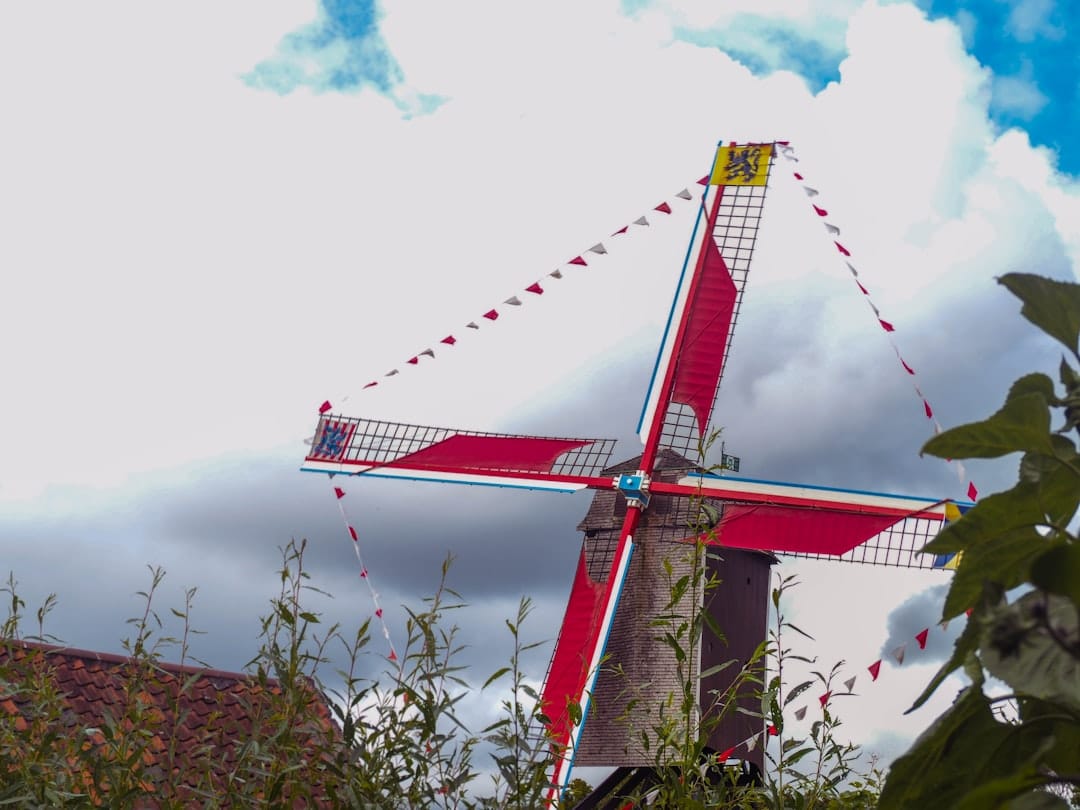
Cross to the eastern edge of the centre — the Sint-Anna quarter, where Bruges residents actually live — and the tourist density drops away almost immediately. Along the grassy Kruisvest ramparts stand four windmills: Sint-Janshuismolen, Koeleweimolen, the Nieuwe Papegaai, and Bonne Chieremolen. Sint-Janshuismolen, built by a guild of bakers in 1770, is the only one still standing on its original spot and still grinds grain. You can walk the ramparts and photograph all four for free, year-round; going inside the working mill costs roughly €3–5 and is possible only from April through September, with limited hours.
Insider tip: pair the windmill walk with the Jeruzalemkerk, a private 15th-century chapel nearby modelled on the Church of the Holy Sepulchre in Jerusalem. This whole quarter is where you go to escape the Markt crowds without leaving the city walls.
🗓️ A Three-Day Itinerary
Three days is the sweet spot for Bruges: enough to see the headline sights without rushing, and enough to spend an afternoon doing nothing more ambitious than eating fries by a canal. Everything below is walkable; total daily walking rarely tops five kilometres. Costs are per person and cover entries and rough meal prices in 2026.
Day 1 — The medieval core
Start at the Markt at 9 a.m. and climb the Belfort (€16) before the queue forms. Down by 10:15, walk two minutes east to the Burg, admire the Stadhuis façade, and step into the free lower chapel of the Basilica of the Holy Blood. Wander south through the lanes to the Church of Our Lady (€10 museum) for Michelangelo's Madonna, then next door to the Groeningemuseum (€15, or start the €49 MB Card here if you are museum-heavy). Lunch at a spot off the square — grey-shrimp croquettes and a Brugse Zot, around €18–24. Late afternoon, take the canal cruise (€15) from the quieter Katelijnestraat jetty. Dinner: moules-frites, roughly €26–32 with a beer.
Day 2 — Beer, quiet corners, and the ramparts
Begin at De Halve Maan on the Walplein; book the 11 a.m. Classic tour (€16) online the night before. Afterwards, walk five minutes to the Begijnhof (free) and loop around Minnewater park. Grab a waffle from a stand — a proper Liège waffle with pearl sugar runs €3–5 — and eat it walking. In the afternoon, cross the centre eastward to the Sint-Anna quarter and the four Kruisvest windmills (free to view; €3–5 to enter Sint-Janshuismolen). End the day at 't Brugs Beertje on Kemelstraat, a tiny bar with more than 300 Belgian beers and staff who will steer you well; a glass runs €4–6.
Day 3 — Slow Bruges and a rampart walk
Use day three to fill gaps and slow down. Climb the tower you skipped, or spend the morning in the Gruuthusemuseum (included on the MB Card) to see how a 15th-century Bruges merchant lived. Walk the antique-shop stretch of Langestraat and browse without a tour group in sight. If the weather cooperates, walk the full canal ring — the tree-lined path past the windmills and around the southern basins is a flat, roughly five-kilometre loop that shows you the city from its edges. Save the afternoon for chocolate: buy a box at The Chocolate Line on Simon Stevinplein (expect €8–12 for a small selection of Dominique Persoone's inventive bars and pralines) and eat well one last time before you leave.
🧠 Essential Tips
Best time to visit
Bruges is a day-trip magnet, so the calculus is mostly about crowds. September and early October are the value sweet spot: mild days around 19°C (67°F), cool nights near 10°C (51°F), about 81 mm of rain across the month in quick passing showers, and hotel prices that fall sharply once August ends. Mid-September brings the Bruges Beer Weekend, when dozens of breweries set up on the Markt. Late March to April is the other prime window, when the Begijnhof daffodils bloom and prices are still low. December trades weather for atmosphere: a Christmas market on the Markt and an ice-sculpture festival, but cold and short daylight. July and August are warmest but busiest — that is when the day-tripper coaches from Brussels and the cruise ports arrive in force.
Getting there and around
Most visitors arrive by train, and it is the right call. From Brussels-Midi/Zuid, a direct intercity train reaches Bruges in about an hour and costs roughly €16 one way at the standard fare. From Brussels Airport (Zaventem), reckon on about 1 hour 25 minutes with the trip costing more — the fare includes a fixed "Diabolo" airport surcharge (around €6–7) added to any ticket departing the airport station, so expect somewhere in the €25–32 range. Trains run at least hourly.
Once you are here, walk. Bruges has no metro and does not need one; the historic centre is about 1.5 km across and every sight in this guide is within a 20-minute stroll. The train station sits roughly 1.5 km south of the Markt — a 15–20 minute walk through the Minnewater park, or a short De Lijn bus hop (buy the app or tap a contactless card). Locals cycle everywhere, and you can rent a bike, but the cobbles and the pedestrian crowds make walking simpler for a short stay.
Safety and the tourist traps to sidestep
Bruges is one of the safer cities you will visit; violent crime is rare and the practical risks are mundane. The real ones: pickpockets work the packed corner of the Markt around the Belfort and the busiest canal-boat queues, so keep your bag zipped and in front of you in crowds. Cyclists have right of way in painted bike lanes and move fast — look before you drift off the pavement to line up a photo. The cobblestones are ankle-turners in heels and brutal on suitcase wheels; pack flat shoes.
On the wallet side, the restaurants ringing the Markt charge a premium for the view and rarely earn it — walk two or three streets off the square for better food at fair prices. The horse-drawn carriages are a fixed, regulated rate (around €55 per carriage for up to five people, about 30 minutes, departing the Markt), so nobody is scamming you, but split among fewer than four people it is expensive. And ignore anyone steering you toward a "special" canal boat — the fare is regulated and identical at all five jetties.
What to eat
Bruges is Flemish comfort food and world-class beer. The essentials: moules-frites, a cauldron of North Sea mussels with fries and mayonnaise; garnaalkroketten, croquettes of tiny grey North Sea shrimp; and vlaamse stoverij (stoofvlees), a dark beef stew braised in brown beer that is the city's true winter dish. For mussels, Breydel-De Coninck on Breidelstraat, between the Markt and the Burg, is a reliable long-runner. Fries themselves are a religion — the two frituur kiosks on the Markt serve them in a paper cone with mayo, around €4. For a sit-down Flemish classic, look for waterzooi, a creamy chicken-or-fish stew, on local menus.
Then the sweets: a chewy, caramelised Liège waffle from a street stand (€3–5), and chocolate from The Chocolate Line on Simon Stevinplein, where Dominique Persoone sells everything from classic pralines to bars spiked with unexpected flavours. Wash it all down with the local beers — Brugse Zot and Straffe Hendrik brewed on the Walplein, best drunk at 't Brugs Beertje, a snug bar off the Steenstraat with a beer list in the hundreds.
🏨 Accommodation Guide
Bruges is small enough that "location" mostly means the historic centre versus a short walk from it. Because it is a heavy day-trip destination, staying overnight is the real luxury — you get the lantern-lit canals to yourself after the coaches leave. Book ahead; the good-value rooms go early, though September availability is far easier than summer.
Budget
The Ezelstraat quarter, just northwest of the centre, is the affordable pocket — old-street character, a few minutes' walk to the Markt, lower rates. Hostels like the well-run Snuffel Hostel offer dorm beds from roughly €25–35, and simple budget hotels run about €80–110 for a double in September. This is also the zone for solo travellers who want the medieval setting without the medieval price tag.
Mid-range
Stay inside the historic centre near the Markt or Burg and you can walk home for an afternoon nap. Well-regarded options such as the Grand Hotel Casselbergh (a converted 15th-century townhouse) and Hotel Ter Brughe (on a canal, with a vaulted brick breakfast cellar) typically run €130–180 a night, dipping lower in shoulder season. You are paying for the address, and in Bruges the address is the point.
Luxury
At the top end, Bruges does history rather than glass towers. Hotel Dukes' Palace occupies a former ducal residence with its own park; The Pand Hotel is an intimate 18th-century townhouse; and the canal-side Relais Bourgondisch Cruyce — the half-timbered hotel featured in the film In Bruges — has water on two sides. Expect roughly €200 to €400-plus a night depending on the room and the season. For the Sint-Anna quarter near the windmills, you will find quiet guesthouses that trade a few minutes' walk for near-total calm.
🎭 Beyond the Tourist Trail
Most visitors never cross the invisible line about 300 metres out from the Markt, which means the rest of the walled city is effectively yours. The Sint-Anna and Sint-Gillis quarters, on the eastern and northern edges, are where Bruges residents actually live — corner cafés with no English menu, working churches, and streets you can photograph without a coach in the frame. Langestraat is the antiques-and-vintage stretch, with lower-key restaurants that locals book for a Friday night.
For a contemporary counterpoint to all the medieval brick, walk to 't Zand on the western side, where the 2002 Concertgebouw concert hall breaks the skyline in terracotta and hosts a sound-art circuit and a rooftop viewpoint. And time your trip around the calendar if you can: the MAfestival of early music and September chamber concerts fill Bruges's oldest churches — including the 15th-century Jeruzalemkerk — with performances for audiences of a couple of hundred, at ticket prices that undercut anything you would pay in a capital. These are the evenings that turn a pretty city into a memorable one.
❤️ Let VoyaBear Plan Your Bruges Trip
Bruges is compact, but a good trip still turns on the details — climbing the Belfort before the queue, catching the 2 p.m. relic veneration, booking the brewery tour the night before, knowing which canal jetty to skip. That is exactly what VoyaBear does. Tell us how many days you have, what you love, and how you like to travel, and we will build you a personalised, hour-by-hour Bruges itinerary — with the verified opening times, real prices, and quiet-corner tips baked in, so you spend your time wandering instead of planning. Start planning your Bruges trip with VoyaBear today, and let us handle the logistics while you handle the waffles.