VoyaBear


Antigua Guatemala is a grid of cobblestone streets nine blocks square, ringed by three volcanoes, and one of them still puts on a show. Volcán de Fuego, 16 kilometers to the southwest, erupts several times an hour — a puff of ash by day, a glow of lava after dark that you can watch from a rooftop bar with a coffee in hand. The city itself has been standing (and half-collapsing) since 1543, when it was the colonial capital of Central America. A 1773 earthquake flattened the grand churches and convinced the Spanish crown to move the capital to modern Guatemala City, which is exactly why Antigua froze in time. UNESCO listed the whole town in 1979, and the ruined baroque facades, the mustard-yellow arch, and the Volcán de Agua looming over the south end are still here, largely unrestored, gloriously photogenic, and refreshingly walkable.
You can see the headline sights in two days, but the city rewards a slower pace: a morning coffee farm, an afternoon of ruined convents, an overnight on a volcano that most people will describe for the rest of their lives. Here is how to do Antigua in 2026 without wasting a peso — or a sunrise.
🌋 Essential Experiences
Arco de Santa Catalina
The mustard-yellow arch over 5a Avenida Norte is the most photographed object in Guatemala, and for once the hype is earned: when the sky is clear, Volcán de Agua sits perfectly framed underneath it. The arch was built in 1694 so cloistered nuns from the Santa Catalina convent could cross the street to their school without being seen by the public — a covered walkway with a clock tower bolted on later. It costs nothing to stand under it.
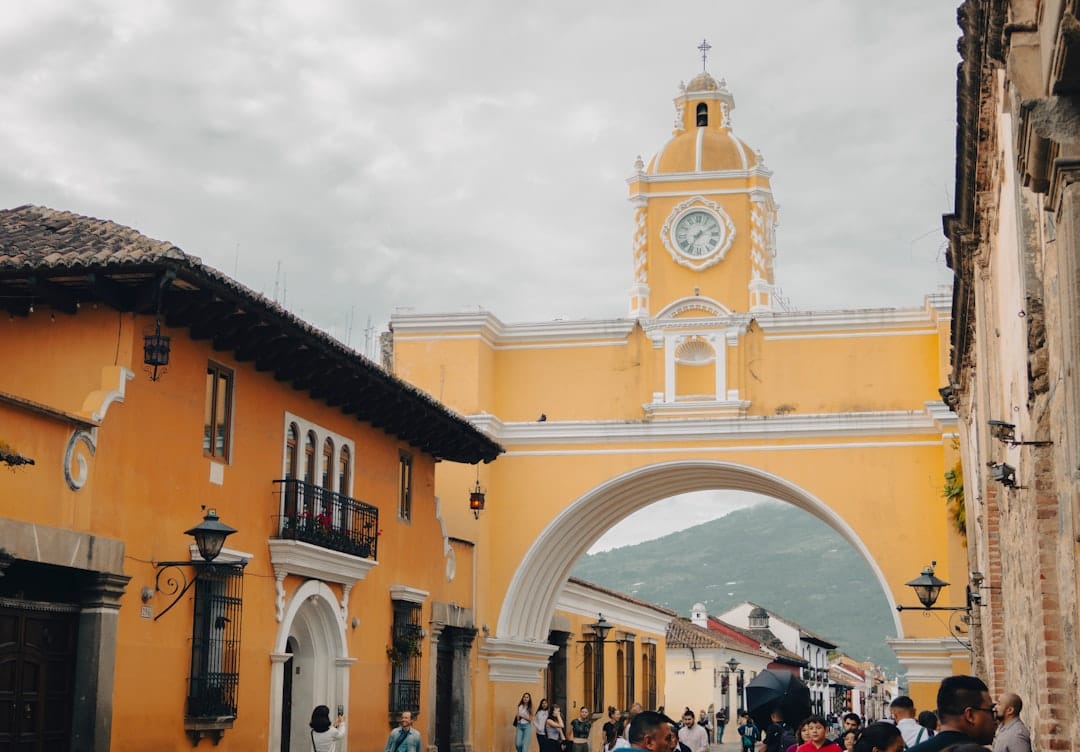
Insider tip: Come at 6:30–7:00 AM. By 9 AM the street fills with tour groups, tuk-tuks, and a vendor or two who will offer to "take your photo" and then ask for quetzales. Early morning also gives you the cleanest view of Agua before cloud builds on the summit, which it reliably does by late morning. Shoot from the middle of the street looking south, and step aside when a car comes — traffic still runs under the arch.
Cerro de la Cruz
This hilltop viewpoint at the north edge of town delivers the postcard: the entire terracotta-roofed grid laid out below you with Volcán de Agua rising straight behind it. There's a stone cross at the top (hence the name) and a paved plaza to sit on. The walk up takes 20–30 minutes from the trailhead near the corner of 1a Calle Oriente and Avenida de la Santa Cruz.
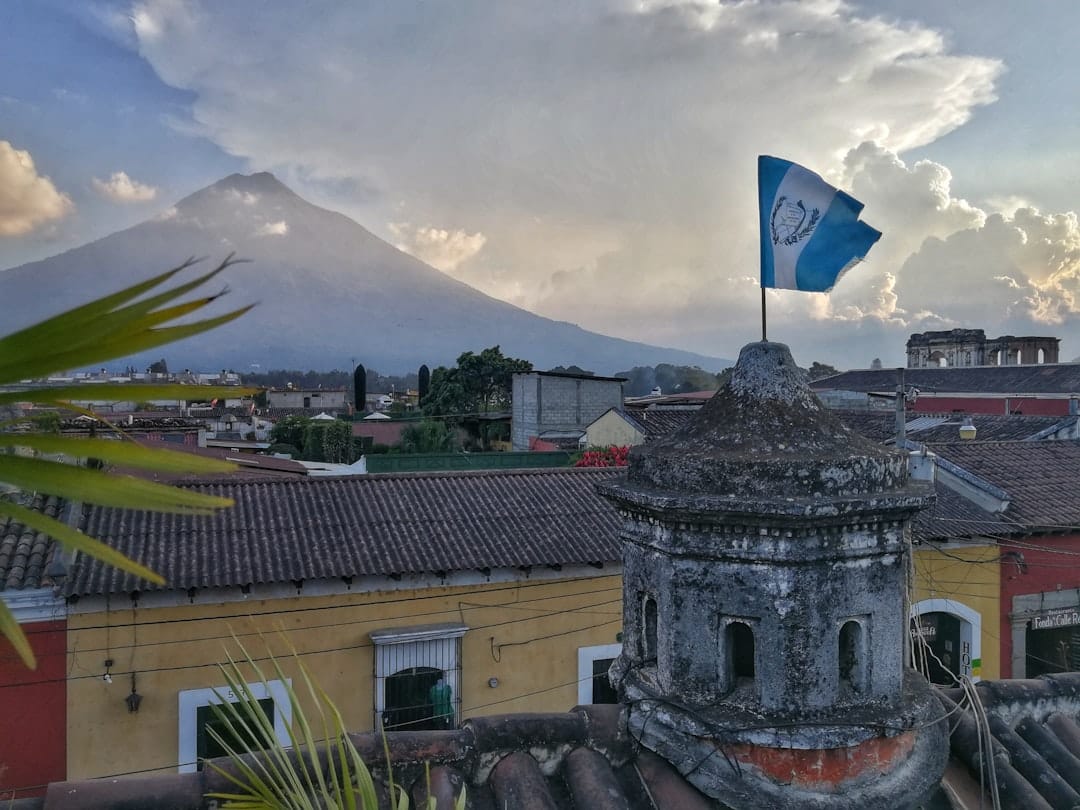
Insider tip: Tourist police (POLITUR) post guards on the trail during opening hours, roughly 8 AM to 5 PM — walk up within those hours, ideally with other people around, as isolated robberies on the path have been reported over the years when hikers went early, alone, or after dark. It's free. Go for sunrise light if you can get there right at opening, or late afternoon when the volcano catches gold before the clouds close in.
Iglesia y Convento de La Merced
The single most beautiful facade in Antigua — an intensely yellow baroque wall crusted with white plasterwork that looks like piped icing. It survived the 1773 quake better than most because it was deliberately built low and squat to ride out earthquakes, a style locals call "earthquake baroque." The church nave is free and still in use.
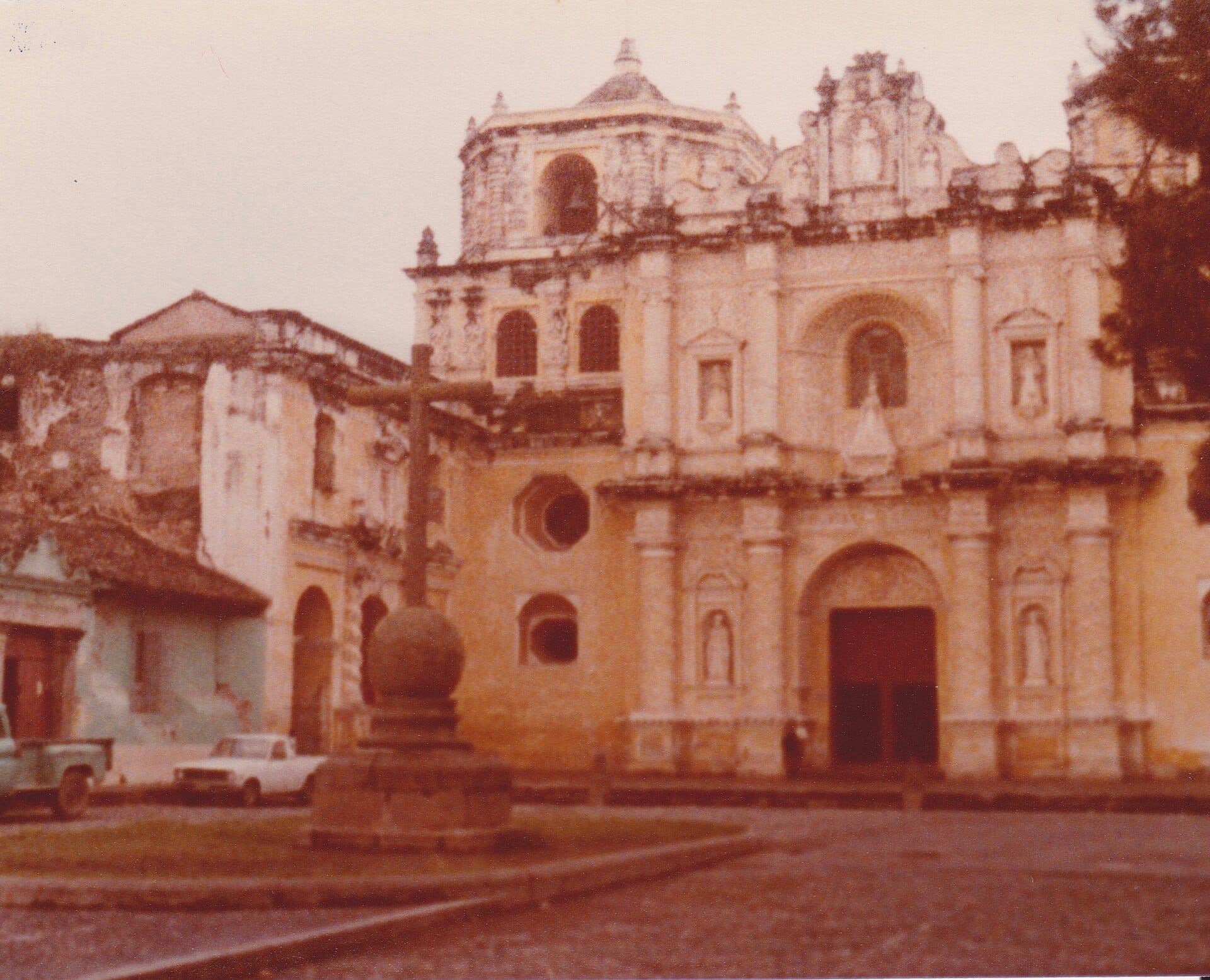
Insider tip: Pay the small entry (around Q10–15, roughly US$2 / €1.80) to go behind the church into the ruined cloister, where you'll find one of the largest colonial fountains in the Americas — a 27-meter basin shaped like a water lily. Almost nobody bothers, so you often get it to yourself. Climb to the upper walkway for a rooftop-level look back at the yellow towers.
Convento de las Capuchinas
The best-preserved convent ruin in town and the most atmospheric place to understand how these communities actually lived. Founded in 1736 by nuns from Madrid, its standout feature is the "Torre de Retiro" — a unique circular tower ringed by 18 tiny cells around a central courtyard, built for solitude and, some say, for storing produce in the cool interior.
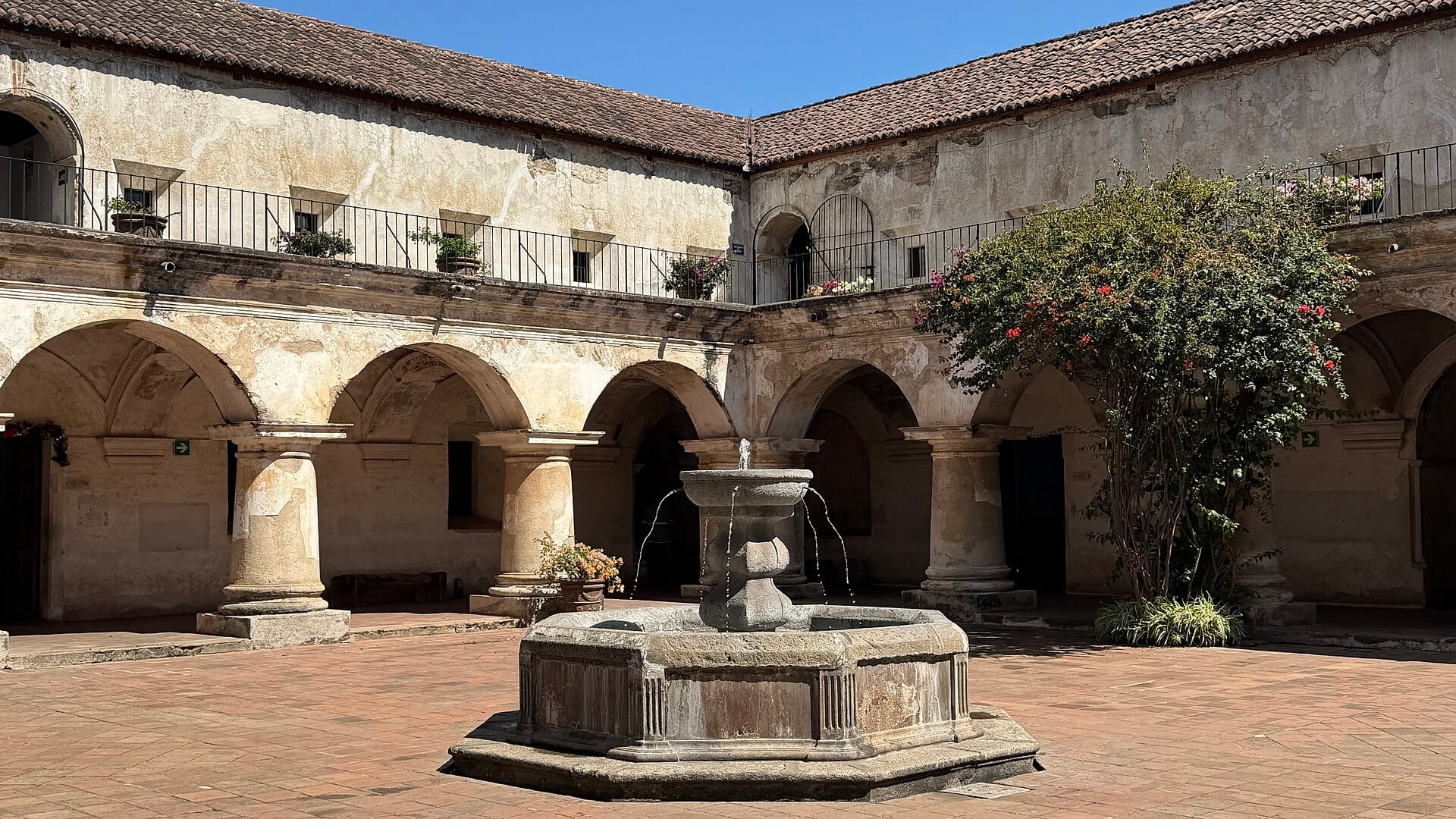
Insider tip: Entry is Q40 (about US$5 / €4.60). Head straight down to the cellar level beneath the circular tower — the acoustics are extraordinary, and it stays cold and quiet while everyone else photographs the courtyard fountain upstairs. Allow an hour; it's larger inside than it looks from the street.
Casa Santo Domingo
A 16th-century Dominican monastery, wrecked in 1773, now rebuilt as a five-star hotel that doubles as the most rewarding museum complex in Antigua. You walk through candlelit tunnels, past an excavated crypt with a preserved mural, and into a set of small museums covering colonial art, pre-Columbian pieces, and a glass-and-silver collection. Peacocks wander the gardens.
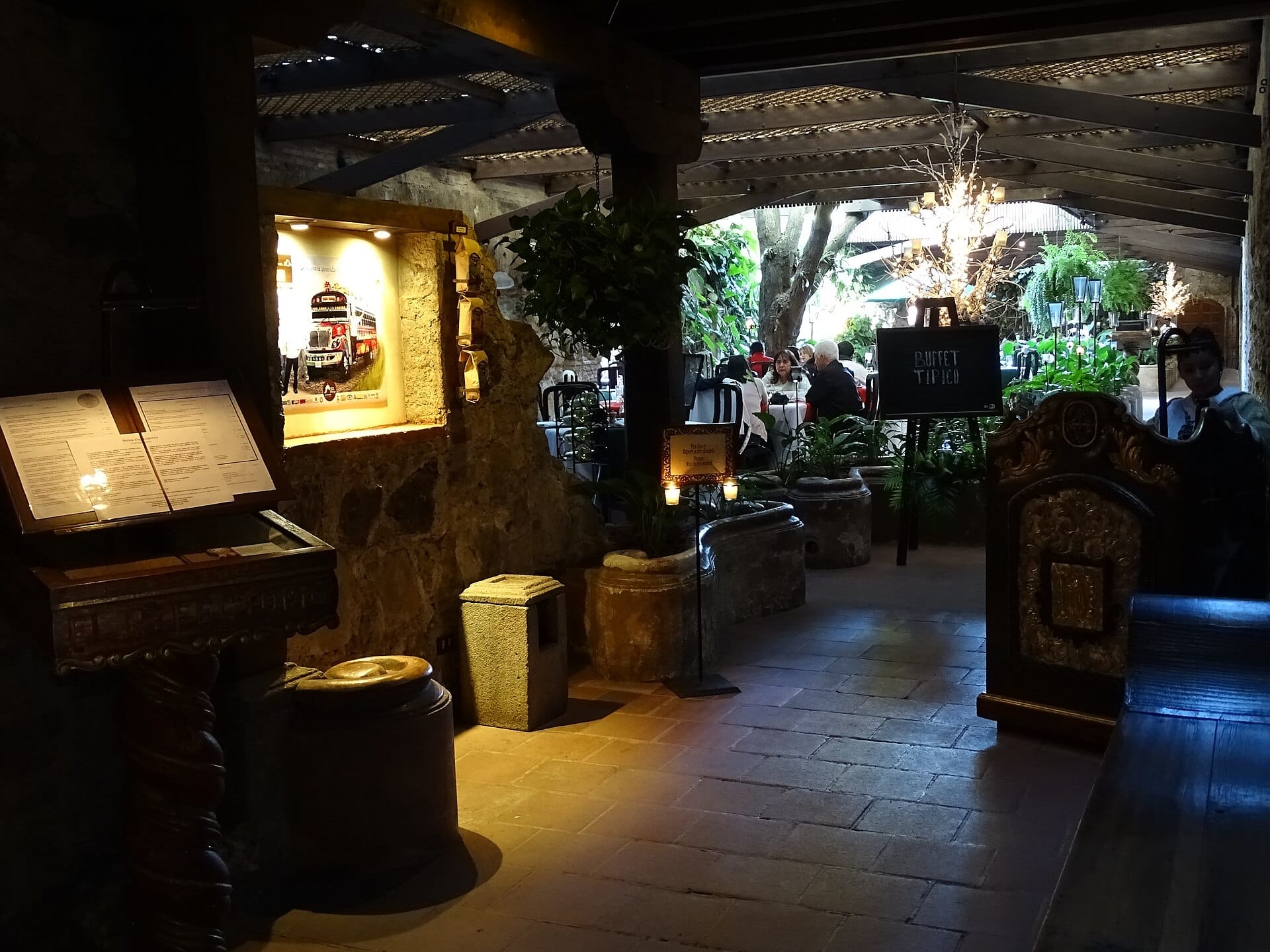
Insider tip: The museum pass is Q60 (about US$8 / €7.30) and you don't need to be a hotel guest. Go late afternoon, then stay for a drink on the terrace as the sun drops behind Acatenango — it's one of the few spots where you can watch Fuego smoke over a valley without hiking anywhere. Their "Santo Domingo del Cerro" sculpture park up the hill is free and connected by a shuttle.
Catedral de San José & Parque Central
The main square is the social engine of Antigua: shoeshiners, marimba players, ice-cream carts, and a fountain of mermaids that has been the town's meeting point for centuries. The cathedral on the east side is the real draw. The active parish out front is small, but the doorway to its left leads to the vast roofless ruins of the original Cathedral of Santiago, destroyed in 1773 and left as a forest of broken brick arches open to the sky.
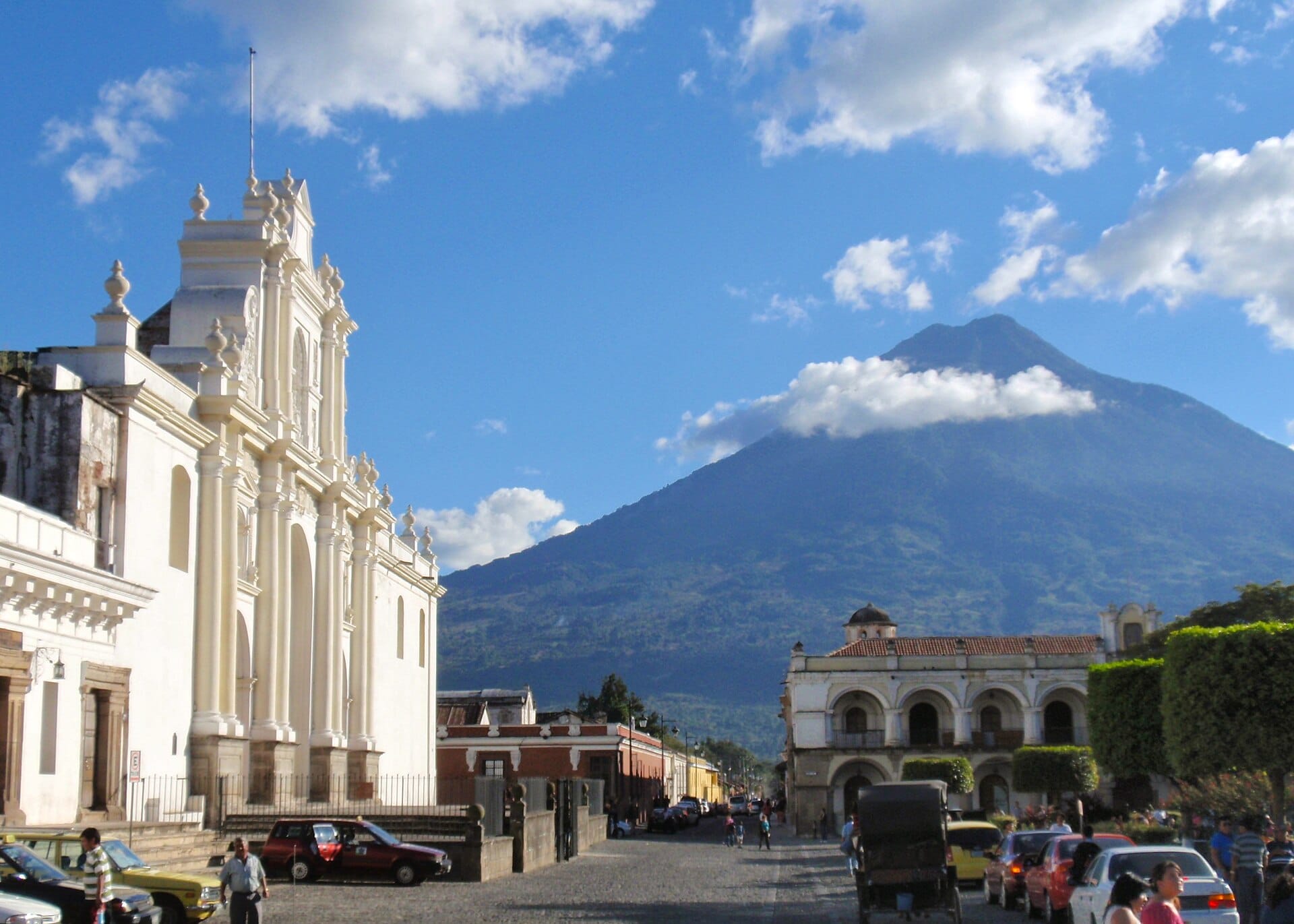
Insider tip: The parish church is free; the ruins behind cost Q20 for foreigners (about US$2.50 / €2.30) and are open daily 9 AM to 5 PM. Buy the ticket at the ruins' own entrance, not inside the church. Descend into the crypt beneath the far end — it's dark, damp, and usually empty, and it's where the conquistador Pedro de Alvarado is believed to be buried.
Pacaya Volcano
The easy volcano. Pacaya is an active cone about 1.5 hours from Antigua, and the standard half-day tour gets you onto hardened black lava fields where, depending on current activity, you can feel heat venting from the rock and roast marshmallows over it (guides sell the sticks). It's a real, moderate hike — roughly two hours up through pine forest — but doable for anyone reasonably fit, unlike its big brothers.
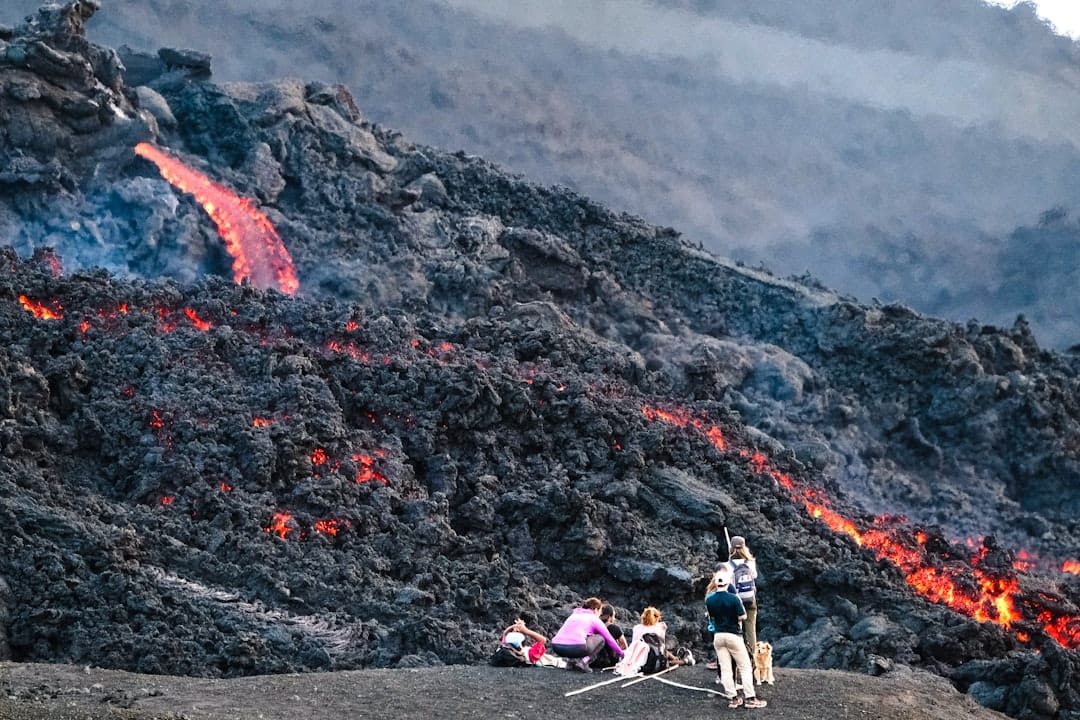
Insider tip: Tours run US$20–35 (€18–32) door to door, 5–6 hours total, and the park entrance fee (Q100) is sometimes separate — confirm when you book. Take the earliest departure (usually around 6 AM); afternoon clouds routinely swallow the summit. Horses ("taxi") wait at the trailhead if the climb defeats you, for about US$15 extra.
Acatenango Overnight Hike
The one people talk about forever. You climb Acatenango — a dormant 3,976-meter (13,045 ft) volcano — to a base camp around 3,750 meters, spend the night on the ridge, and watch Volcán de Fuego erupt against the dark from close range. It is genuinely hard: roughly 1,500 meters of ascent over steep volcanic scree, and the base camp is cold enough for a hat and gloves even in the dry season.
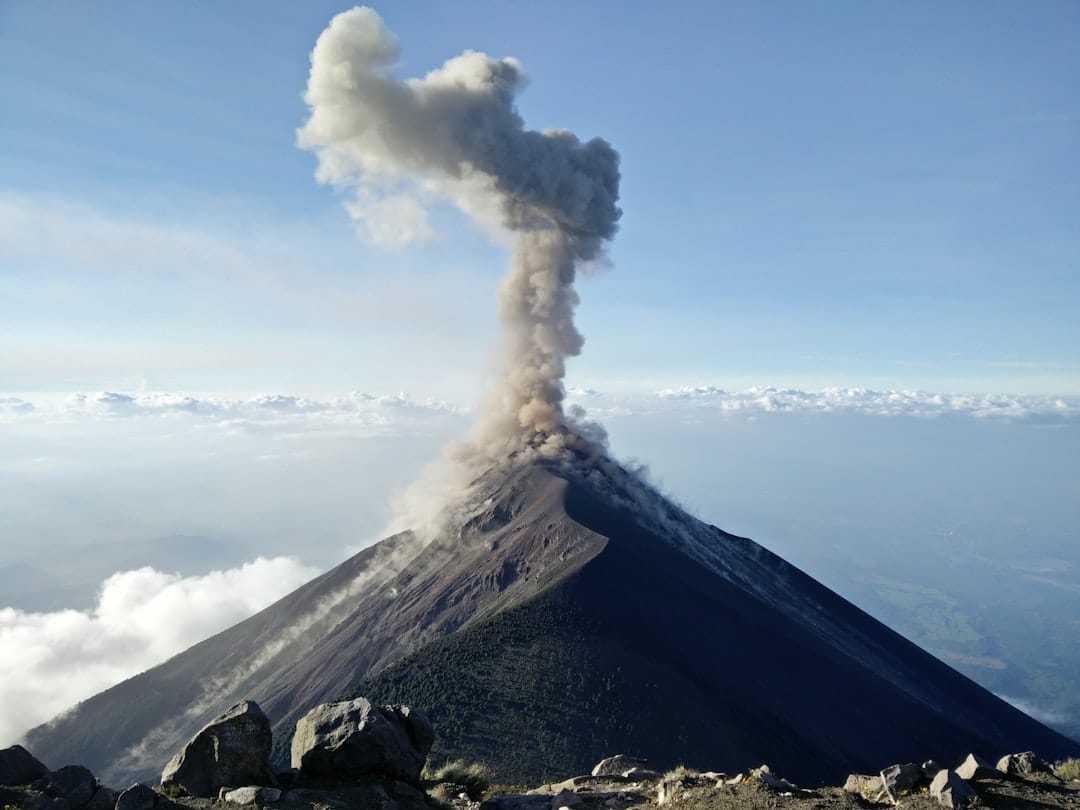
Insider tip: Basic overnight tours run US$45–90 (€41–82) and include transport from Antigua, a guide, park fees, meals, and sleeping gear; premium packages with better tents and food run higher. Book with an established operator (OX Expeditions, Wicho & Charlie's, Tropicana) rather than a street tout — the mountain is exposed and guide quality matters. Tours leave from the village of La Soledad, about an hour out. Pay the extra US$13–32 for the optional evening hike out to the Fuego ridge if your legs allow; that's the view that ends up as everyone's screensaver. Fuego is unpredictable, so treat a big eruption as a bonus, not a guarantee.
🗓️ A 3-Day Itinerary
Day 1 — The colonial core on foot
Antigua is entirely walkable, so leave the wheels alone today. Start at 6:45 AM under the Arco de Santa Catalina for the empty-street photo, then walk five minutes north to La Merced (free church; Q10–15 for the cloister and fountain). Breakfast at a café along 5a Avenida Norte — eggs, black beans, plantain and tortillas run about Q40–60 (US$5–8). Mid-morning, cross to Convento de las Capuchinas (Q40), then loop down to Parque Central and the Cathedral ruins (Q20). Lunch on the square. In the afternoon, tuk-tuk or walk to Casa Santo Domingo (Q60 museum pass) and stay for sunset drinks on the terrace. Total spend beyond meals: roughly US$14 / €13 in entries.
Day 2 — Coffee, chocolate, and the viewpoint
Book a morning coffee farm tour at Finca Filadelfia in Jocotenango, ten minutes north (US$25–50 / €23–46, 2–3 hours, bean-to-cup with tastings). Back in town, do a two-hour bean-to-bar workshop at ChocoMuseo on 5a Avenida Norte (US$25 / €23; children under 12, US$16) — you grind cacao and pour your own bars. Late afternoon, walk up to Cerro de la Cruz (free, within the 8 AM–5 PM guarded window) for the golden-hour panorama. Dinner: order pepián, Guatemala's national stew, at La Fonda de la Calle Real. Reserve your Acatenango tour tonight for tomorrow.
Day 3 — A volcano
Pick your intensity. For a full-day option, take the early Pacaya tour (US$20–35 / €18–32) and be back by mid-afternoon for one last rooftop dinner at Cafe Sky with Fuego smoking on the horizon. For the headline experience, commit to the Acatenango overnight (US$45–90 / €41–82): you'll leave around 8–9 AM, reach base camp by mid-afternoon, watch Fuego erupt through the night, summit for sunrise, and roll back into Antigua exhausted and grinning by early afternoon on day four. If you choose Acatenango, add a buffer night to your stay.
🧠 Essential Tips
When to go
The dry season runs roughly November to April, with clear mornings and daytime highs of 24–28°C (75–82°F) — Antigua sits at 1,500 meters, so evenings are cool year-round and you'll want a layer. March and April are the driest and clearest, but they collide with the year's biggest event: Semana Santa (Holy Week), which in 2026 runs March 29 to April 5. Hotel prices double or triple and rooms sell out months ahead, but if you can get in, the alfombras (elaborate carpets of dyed sawdust and flowers laid across the streets) and the massive robed processions on Good Friday, April 3, are unlike anything else in the Americas. The rainy season (May–October) brings green hillsides and cheaper rooms, with showers that mostly fall in the late afternoon — mornings are often fine for hiking.
Getting there and around
You'll fly into Guatemala City's La Aurora airport (GUA), 40 km away, then cover the last 1–1.5 hours by road. A pre-booked shared shuttle is the sweet spot at US$16–23 (€15–21) per person; a private transfer runs about US$50 (€46); Uber works from the airport and quotes roughly Q320 (US$41). Skip the public chicken bus on arrival — it's Q15 but involves a walk to a transfer point with your luggage. Uber operates in Antigua itself with 5–15 minute waits, and it's the cleanest way to settle a fare. For short hops, tuk-tuks charge Q10–20 (US$1.30–2.60) within the center — agree the price before you climb in. Otherwise, walk: the historic grid is nine by nine blocks, and streets are numbered as avenidas and calles running north/south and east/west from Parque Central. Wear real shoes; the cobblestones are ankle-turners.
Money and safety
The currency is the quetzal (about Q7.6 to US$1 in 2026). Use ATMs attached to actual banks (there's a cluster around Parque Central) rather than the poor-rate counters at the airport, and carry small bills — market stalls and tuk-tuks won't break a Q200 note. Antigua is one of the safest towns in Guatemala, but petty theft is the real risk: phone-snatching from café tables and bag theft happen on the quieter streets north and east of the square, especially at dusk. Keep your phone off the table, use a cross-body bag, and take a tuk-tuk or Uber rather than walking those streets late. On volcano tours, book a named operator, not the cheapest sticker in a hostel window — safety standards vary widely.
What to eat
Pepián is the dish to try first: a dark, spiced stew of meat with pumpkin and sesame seeds, best at La Fonda de la Calle Real (5a Avenida Norte #12, established 1975; mains Q150–200). For Maya home cooking simmered in clay pots, La Cuevita de los Urquizú (2 Calle Oriente #9) does hearty plates around Q80. Chase either with rellenitos — mashed plantain stuffed with sweet black beans and fried — from a street cart or the Mercado Municipal west of town, where a full comedor lunch costs a few dollars. For a rooftop with a Fuego view, Cafe Sky (1a Avenida Sur 15) mixes Guatemalan and international plates around Q50–100. And since Antigua sits in one of the world's premier coffee regions, drink the local single-origin everywhere — it's better than the flat whites back home and a fraction of the price.
🏨 Accommodation Guide
Because Antigua's whole historic center is walkable, "where to stay" is really a question of how many blocks from Parque Central you want to be and how much noise you'll tolerate — the streets around the arch and the square are lively at night, while the north and east edges near La Merced and San Sebastián are quieter.
Budget (US$12–45 / €11–41): Hostels cluster inside the grid. Tropicana is the party option with a rooftop pool and bar; Maya Papaya and Somos are more relaxed, with dorms and a few private rooms. Expect roughly US$12–20 for a dorm bed and US$30–45 for a basic private room or family-run guesthouse.
Mid-range (US$60–140 / €55–128): This is Antigua's sweet spot, full of restored colonial houses built around flowering courtyards. Look at Hotel Casa Rustica, Hotel Las Farolas, or Selah Hotel & Coffee — expect a fountain, a rooftop with a volcano view, and thick walls that keep the night quiet.
Luxury (US$180–400+ / €165–365+): Casa Santo Domingo puts you inside the 16th-century monastery and its museums; El Convento and Los Pasos Boutique Hotel & Spa offer the same colonial grandeur at a smaller, quieter scale. Rates climb sharply around Semana Santa and Christmas, so book those windows early.
🎭 Beyond the Tourist Trail
Ride a tuk-tuk 15 minutes up the skirt of Volcán de Agua to San Juan del Obispo, a village most day-trippers never reach. It holds the restored 16th-century palace of Guatemala's first bishop, Francisco Marroquín, and a few family workshops still making chocolate and marzipan by hand — knock, and someone will usually sell you a bar. In San Miguel Escobar, on the Ciudad Vieja side, the De la Gente cooperative (US$35–50 / €32–46) runs coffee tours led by the farmers themselves, on their own smallholdings — a sharp contrast to the polished estate tours and a more honest look at how the crop actually gets grown and processed.
For a dated event worth planning around, the Barriletes Gigantes (Giant Kite Festival) fills the cemeteries of Sumpango and Santiago Sacatepéquez, both under an hour from Antigua, every November 1 — enormous, hand-built paper kites up to 20 meters across, flown to carry messages to the dead on the Day of the Dead. It's loud, crowded, and genuinely spectacular, and shuttles run from Antigua for the day. Closer to town, December 7 brings La Quema del Diablo ("Burning of the Devil"), when neighborhoods light bonfires at dusk to clear out the old year's bad spirits before Christmas.
❤️ Make Antigua Yours
Antigua packs an improbable amount into nine square blocks — colonial ruins, a live volcano, world-class coffee, and street food you'll still be thinking about on the plane home. But timing is everything here: the arch at 7 AM versus 10 AM, the dry-season clarity versus the Semana Santa crowds, the Acatenango night that needs a buffer day you didn't budget for. Getting those details right is the difference between a good trip and one you'll describe for years.
That's where VoyaBear comes in. Tell us how many days you have, what you're into — volcanoes and adrenaline, or courtyards and coffee — and we'll build you a personalized Antigua itinerary with the right tours booked at the right hours, hotels matched to your budget and your tolerance for late-night marimba, and a plan that flexes if Fuego decides to put on a show. Start planning your Guatemala trip with VoyaBear today, and spend your mornings under the arch instead of buried in browser tabs.