VoyaBear


Chengdu doesn't rush, and that's the whole point. The capital of Sichuan is the city where the giant panda is a civic mascot rather than a novelty, where locals spend entire afternoons in a park nursing a 15-yuan pot of jasmine tea, and where the numbing burn of the Sichuan peppercorn (huajiao) is engineered into nearly everything worth eating. In 2010 UNESCO named it Asia's first City of Gastronomy, and it has spent the years since living up to it. This is a city of 21 million people with an 18-line metro, a UNESCO-listed irrigation system that's still working after 2,200 years, and a slower rhythm than any megacity has a right to have. Here's how to spend three days there in 2026 without wasting a single meal.
🐼 Essential Experiences
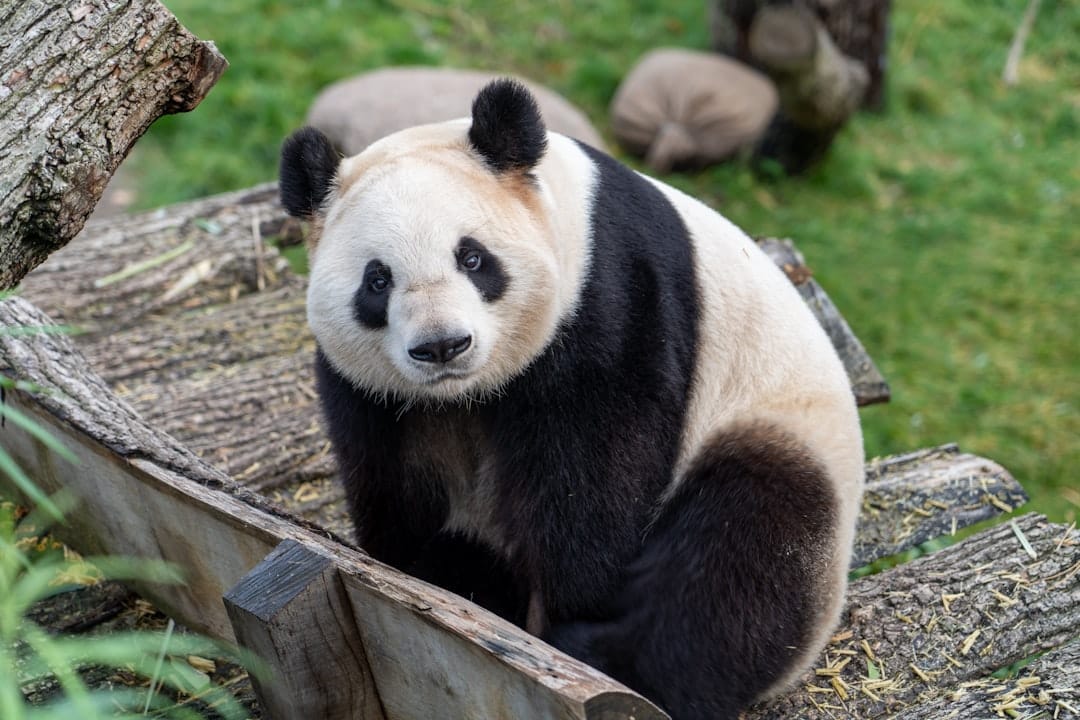
Chengdu Research Base of Giant Panda Breeding
This is the reason most people book a flight to Chengdu, and unlike a lot of headline attractions, it earns it. The base is a working conservation and breeding facility on the northern edge of the city, not a zoo, so the enclosures are large and the pandas behave like pandas. Entry is 55 yuan (about $8 / €7). The single most important tip: get here for the 7:30 a.m. opening (8:00 a.m. from November to February). Pandas are most active in the cool of the early morning, roughly 7:30 to 9:30 a.m., when they're actually eating and moving; by 11 a.m. they've mostly flopped over to sleep and you're photographing a furry boulder through a crowd three deep.
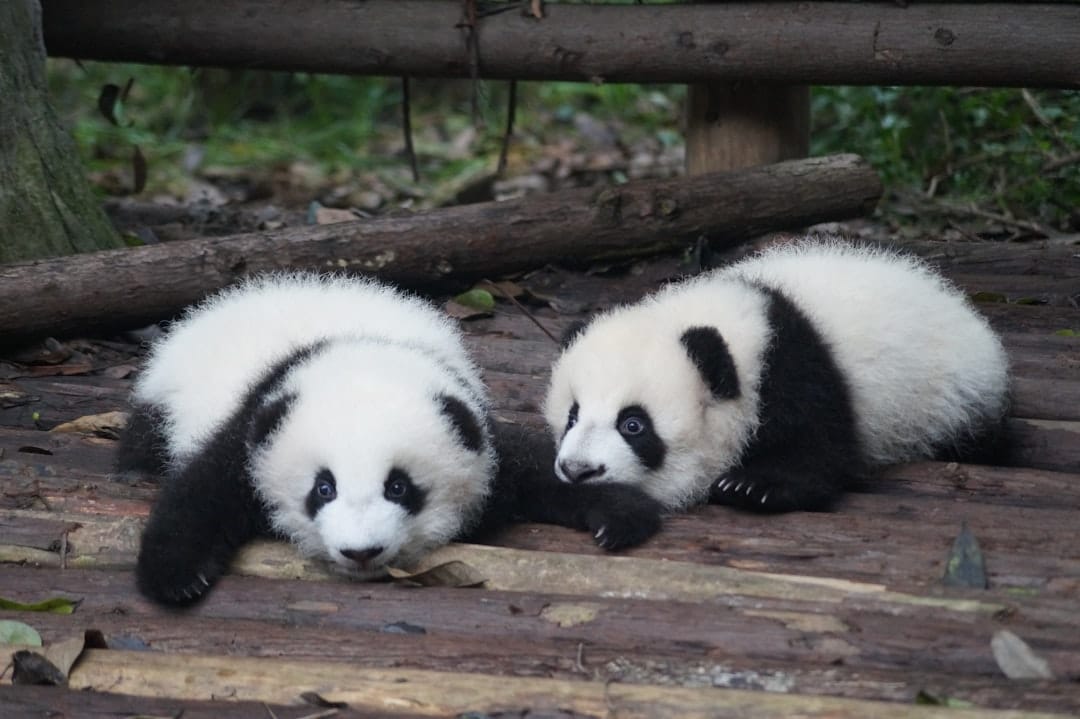
Take Metro Line 3 to Junqu Zongyiyuan station for the West Gate (about 35 minutes from the center, roughly 4–5 yuan), which puts you nearer the nursery and the young cubs. Skip the internal sightseeing cart unless mobility is an issue — the walking paths are pleasant and you'll see more. Give yourself two to three hours.
Wuhou Shrine & Jinli Ancient Street
The Wuhou Shrine (Wuhou Ci) is China's most important memorial to the figures of the Three Kingdoms era, centered on the statesman Zhuge Liang and the ruler Liu Bei, whose tomb is on the grounds. Entry is around 50 yuan ($7 / €6.5), and it's open 8:30 a.m. to 6:30 p.m. (last admission 5:30 p.m.). Even if third-century Chinese history isn't your thing, the red walls, the bamboo-lined corridors, and the calligraphy tablets are genuinely handsome.
The reason to time your visit for late afternoon is that Jinli Ancient Street sits directly next door and it's free. Jinli is a reconstructed Qing-dynasty-style lane, so it's unapologetically touristy, but it comes alive after dark with food stalls — try the san da pao (glutinous rice balls) and skewered spicy rabbit. Do the shrine before it closes, then roll straight into Jinli for dinner as the lanterns come on.
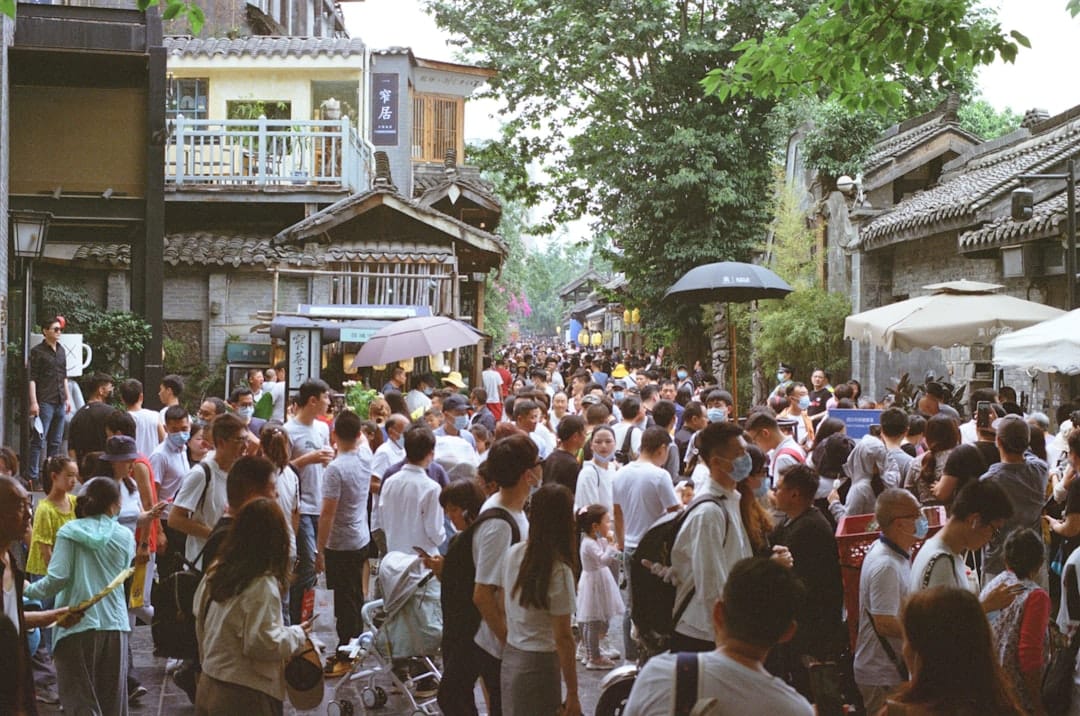
Kuanzhai Alley (The Wide and Narrow Alleys)
Three parallel restored lanes — Wide Alley, Narrow Alley, and Well Alley — make up Kuanzhai Xiangzi, and entry is free. Wide Alley leans into old-Chengdu courtyard architecture and teahouses; Narrow Alley is where the boutiques, coffee, and bars concentrate. Yes, it's polished for visitors, but it's also where you can duck into a courtyard for a tea-and-zhua-er (a traditional shoulder massage) session and watch a shadow-puppet demonstration. Come mid-morning on a weekday if you want photos without a wall of people; weekend evenings are shoulder-to-shoulder.
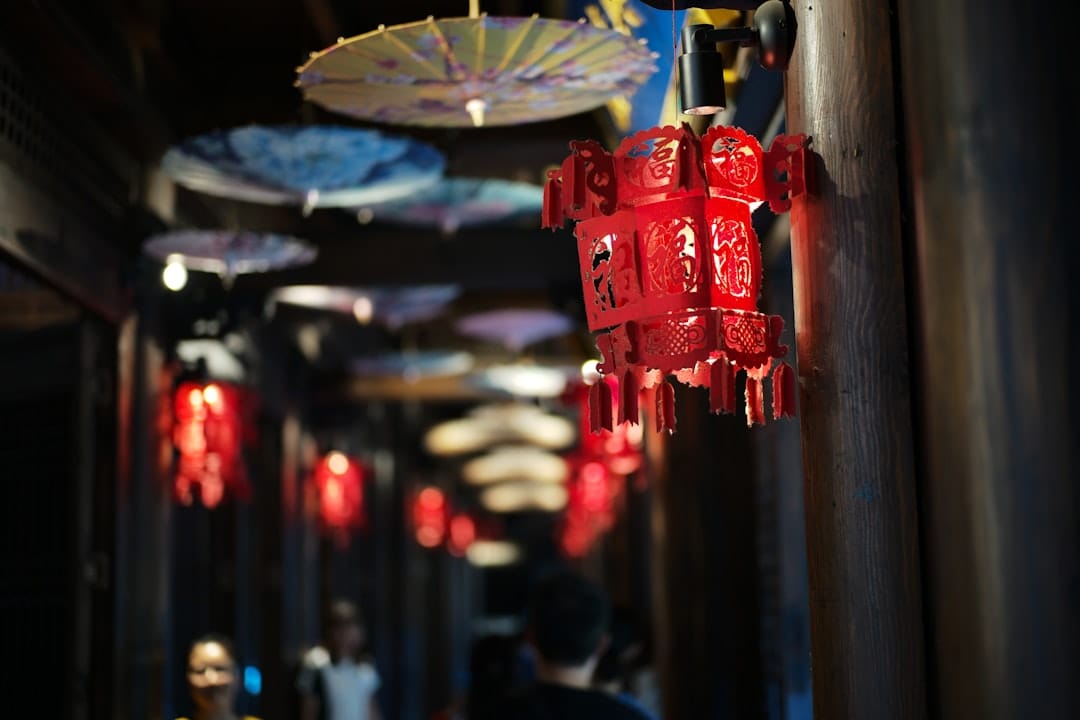
People's Park & the Heming Teahouse
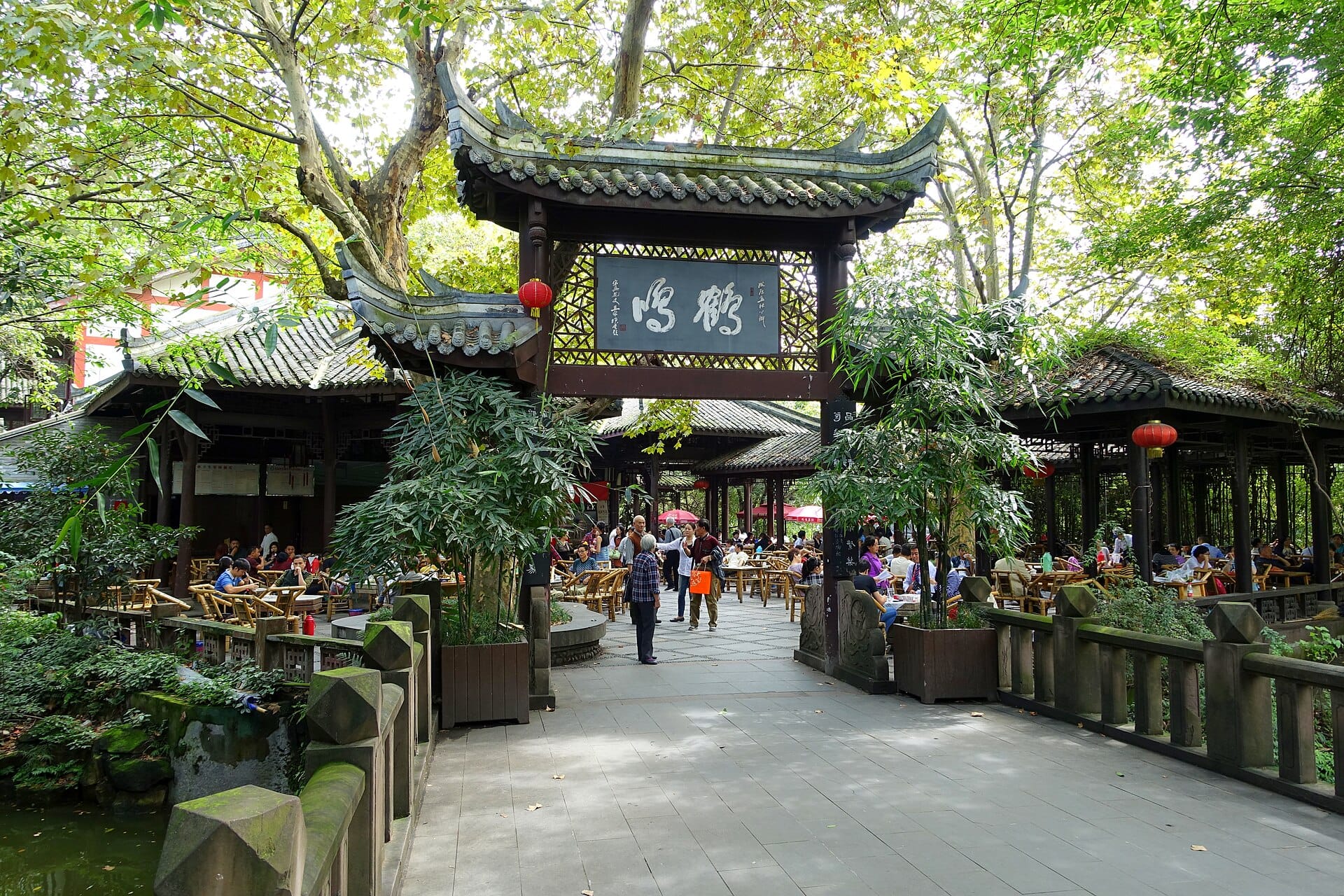
If you do one thing that explains Chengdu, do this. People's Park (Renmin Gongyuan) is free, and inside it the century-old Heming Teahouse is the living room of the city. Grab a bamboo chair by the lake, and a server will bring a covered cup and a thermos for topping up — a pot runs about 10 to 30 yuan ($1.50–4 / €1.30–3.70) and buys you the chair for as long as you want it. This is where you get the famous ear cleaning (cai er duo): a technician with a small arsenal of picks and a tuning-fork tool works on your ears for 30–50 yuan ($4–7 / €4–6.50). It's bizarre, it's a little unnerving, and it's one of the most Chengdu things you can do. The soundtrack is mahjong tiles, vendors selling dried fruit, and retirees playing cards.
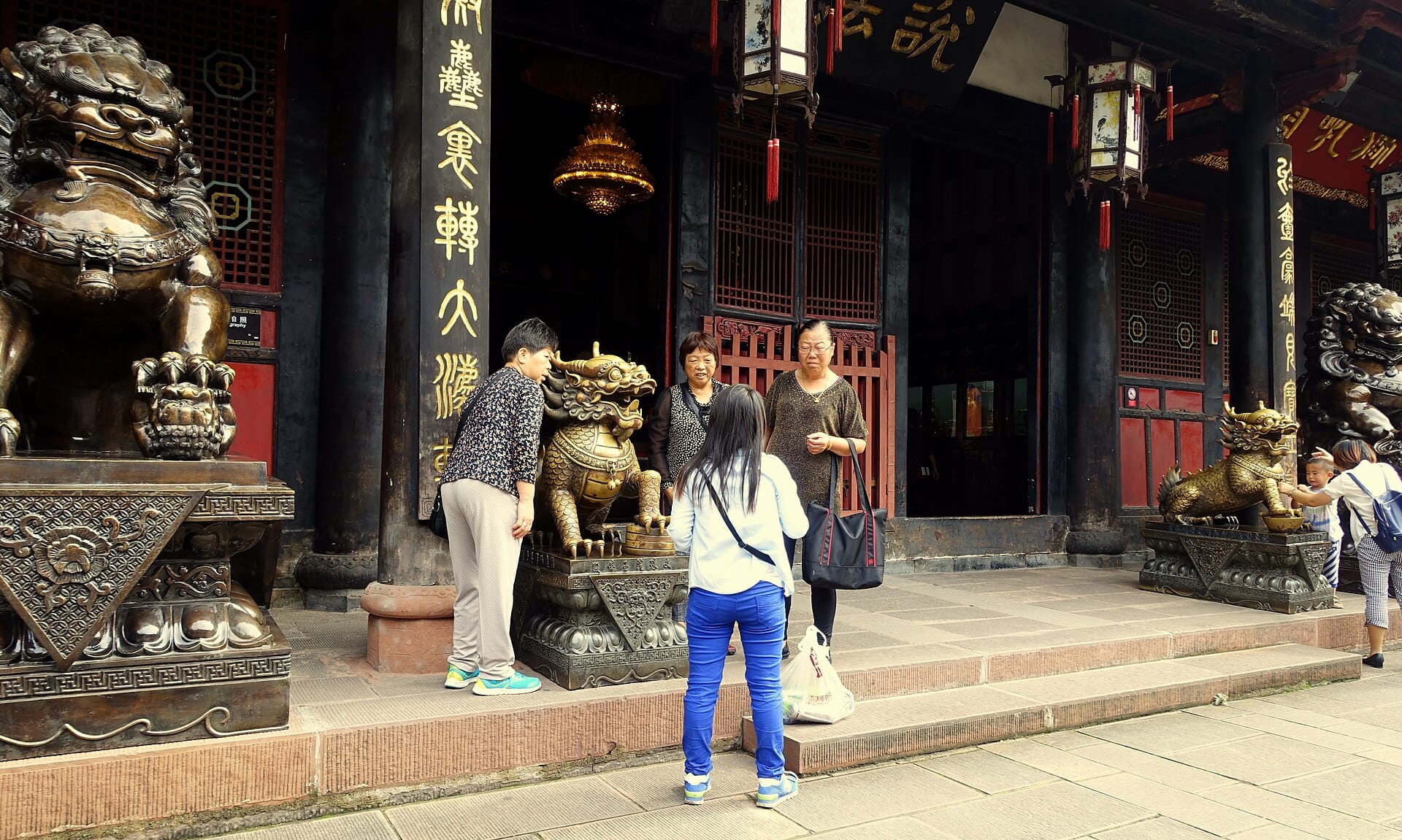
Wenshu Monastery
Chengdu's best-preserved Buddhist temple is also, refreshingly, free to enter (open 8:00 a.m. to 5:00 p.m., last admission 4:30 p.m.). Wenshu is an active Chan (Zen) monastery, so you'll see monks and worshippers rather than just tour groups, and the incense-and-ginkgo atmosphere is the real thing. The insider move here is lunch: the on-site vegetarian restaurant, Xiangzhai Hall, does mock-meat Sichuan dishes that are good enough to convert skeptics, and the temple's own teahouse in the garden is calmer and cheaper than anywhere in the tourist alleys.
Sichuan Opera & the Face-Changing Show
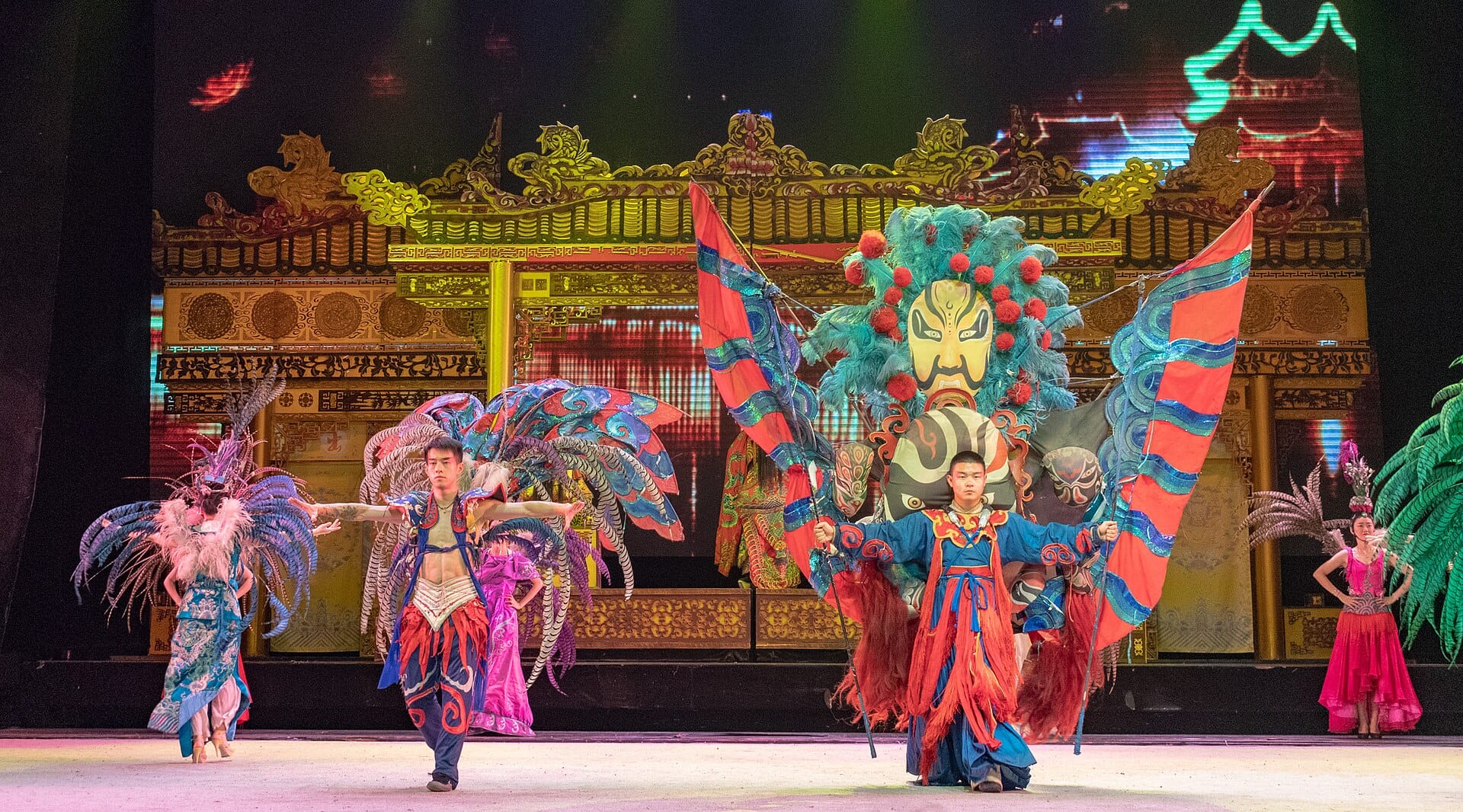
The signature act of Sichuan opera is bian lian — "face-changing" — in which performers flip through a series of painted silk masks in a fraction of a second, and to this day the mechanism is a closely guarded state secret. The most reliable place to see it is Shufeng Yayun, in the Culture Park (Wenhua Gongyuan) at 132 Qintai Road in Qingyang District. The variety show runs 8:00 to about 9:30 p.m. (roughly 80 minutes) and bundles face-changing with hand-shadow puppetry, fire-spitting, and comedy. Tickets run 148–228 yuan ($21–32 / €19–29) depending on how close you sit. Book a day or two ahead in high season; front rows sell out.
Taikoo Li, Daci Temple & Chunxi Road
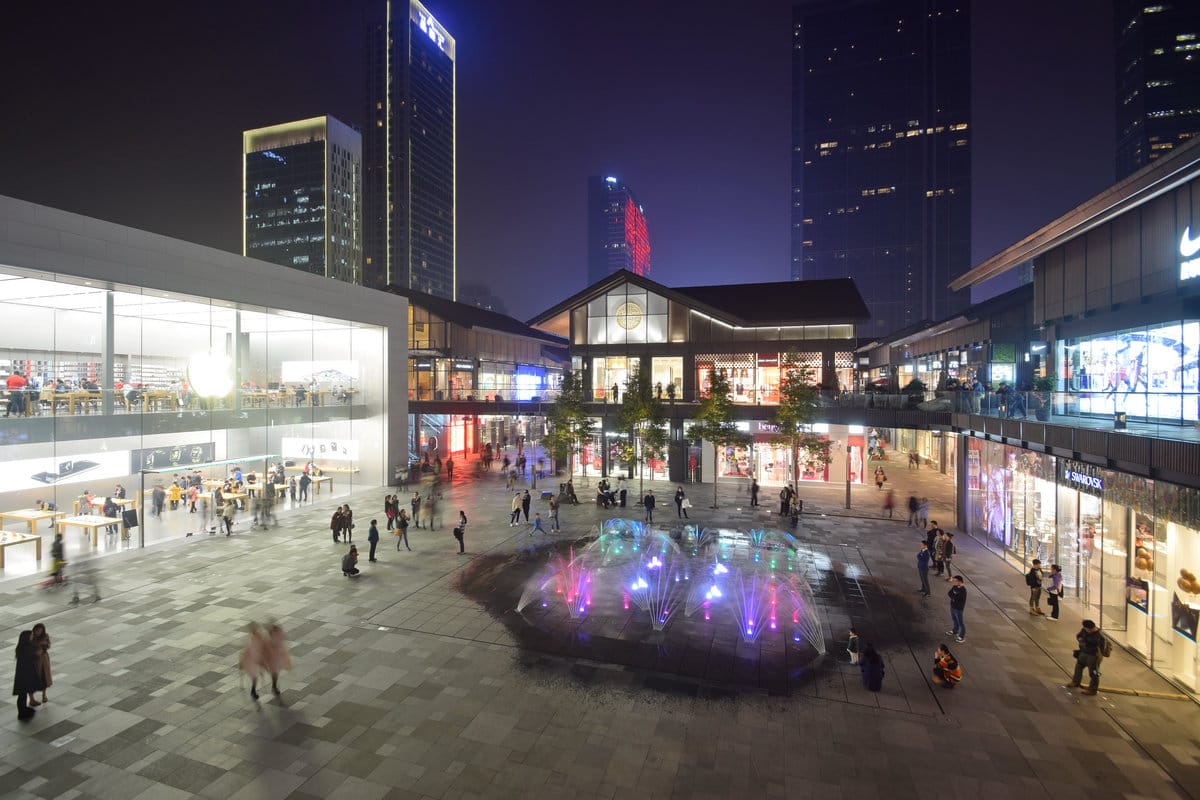
For the modern half of the city, head to the downtown core around Chunxi Road. Sino-Ocean Taikoo Li is an open-plan luxury shopping district built around the 1,600-year-old Daci Temple — a genuinely striking case of Hermès and a working Buddhist monastery sharing a block. It's free to walk through. Nearby, on the corner of the IFS mall, is the city's most photographed piece of public art: a giant panda sculpture ("I Am Here") climbing over the building's edge, its rear end hanging off the roof. It costs nothing to gawk at, and it's the fastest way to understand Chengdu's sense of humor about its own mascot.
Leshan Giant Buddha (Day Trip)
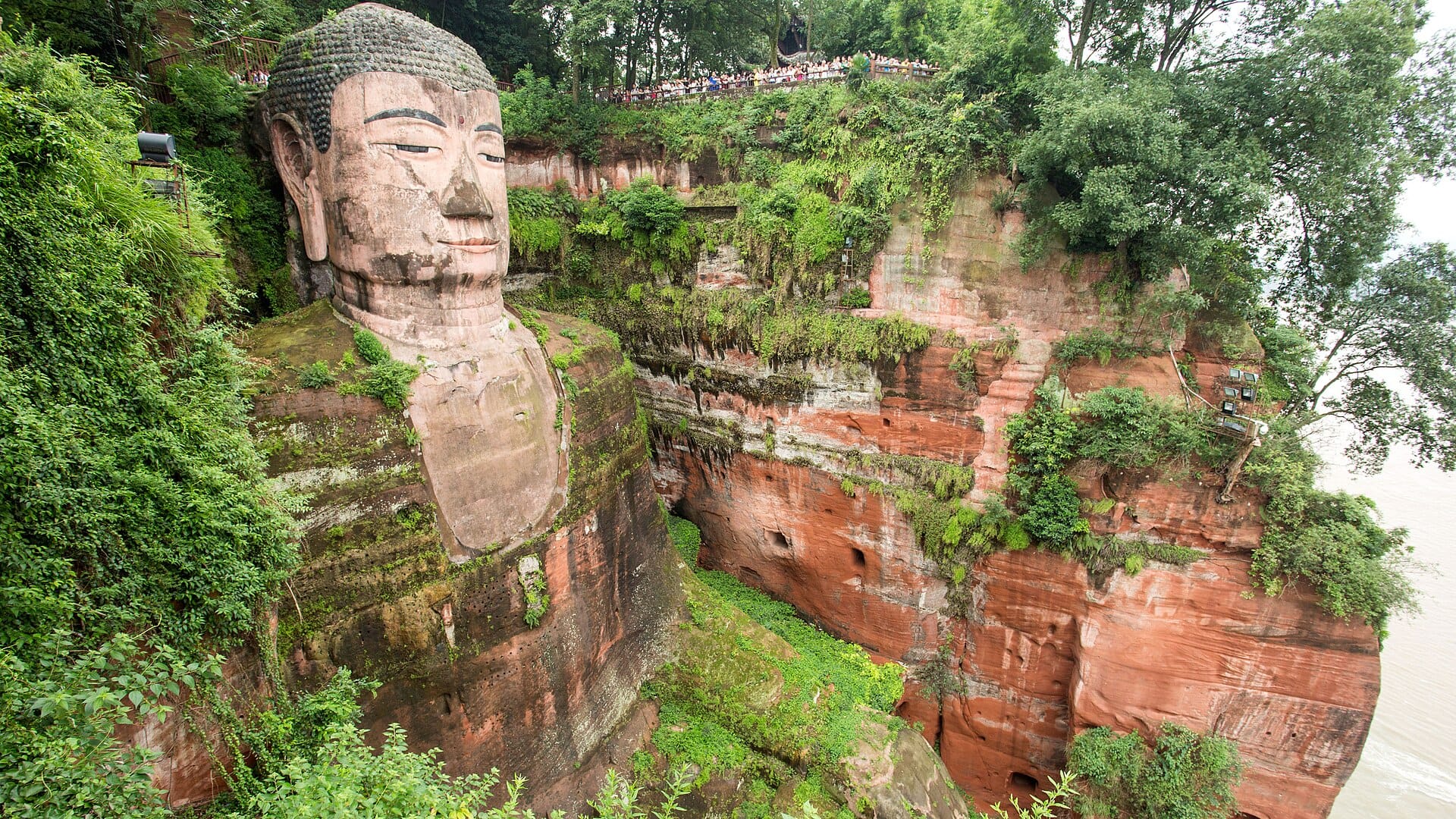
At 71 meters, the Leshan Giant Buddha is the largest stone Buddha in the world, carved into a river cliff in the 8th century where three rivers meet. Entry is 80 yuan ($11 / €10), and in peak season (April 1 to October 7) it's open 7:30 a.m. to 6:30 p.m. The bullet train from Chengdu East Railway Station takes about an hour — the fastest C-series services do it in 46 minutes — with second-class seats running roughly 54–90 yuan each way. The catch: the staircase down the cliff beside the Buddha (the "Nine-Turn Plank Road") is where everyone queues, sometimes for an hour or more. Go early, or consider the boat option on the river, which gives you the full head-to-toe view without the line.
🗓️ A 3-Day Itinerary
Day 1 — Pandas and Old Chengdu
Be at the Panda Base for the 7:30 a.m. opening (Metro Line 3, ~5 yuan) and spend the morning while the pandas are awake. Head back into town for a hotpot or chuan chuan (skewers) lunch. In the afternoon, visit the Wuhou Shrine (50 yuan) and cross straight into Jinli Ancient Street (free) for street food as it gets dark. Cap the night with the face-changing show at Shufeng Yayun (148–228 yuan, 8 p.m.). Rough spend: ~250–330 yuan / $35–46 / €32–42 per person including dinner.
Day 2 — Teahouses and Temples
Start slow at People's Park with tea at the Heming Teahouse and, if you're brave, an ear cleaning. Walk 20 minutes (or one metro stop) to Kuanzhai Alley for lunch and coffee. In the afternoon, go to Wenshu Monastery (free) and eat vegetarian at Xiangzhai Hall. Finish downtown at Taikoo Li and Daci Temple, snap the IFS rooftop panda, and have dinner around Chunxi Road. Rough spend: ~150–250 yuan / $21–35 / €19–32 including two meals and tea.
Day 3 — Day Trip
Pick one. Leshan Giant Buddha is the crowd-pleaser: bullet train from Chengdu East (~1 hour), 80 yuan entry, back by evening. Alternatively, the Dujiangyan Irrigation System — a 2,200-year-old engineering marvel and UNESCO site — pairs with the Taoist holy mountain Mount Qingcheng; the high-speed train from Xibu station (a cross-platform transfer from Metro Line 2) takes 35–50 minutes and 10–22 yuan, arriving at Lidui Park station right by the irrigation gate. Each site is 80 yuan. Back in Chengdu, spend your last evening in the Yulin neighborhood (see below). Rough spend for Leshan: ~250 yuan / $35 / €32 including train and entry.
🧠 Essential Tips
Best Months to Visit
Aim for March to May or September to November. Spring brings mild temperatures and cherry and rapeseed blossoms with mostly light, nighttime drizzle; autumn is drier still, with daytime highs dropping under 30°C by mid-September and rare rainfall through October and November, plus fall foliage. Avoid July and August: temperatures push past 35°C with high humidity and heavy rain, the domestic summer holiday packs every attraction, and pandas retreat indoors to air-conditioning in the heat. Also dodge the national holiday weeks — the October 1–7 Golden Week, May Day, and Chinese New Year — when prices spike and crowds are punishing.
Getting Around
Chengdu's metro is fast, cheap, and signed in English. The base fare is 2 yuan, and most central trips cost 2–5 yuan. From Tianfu International Airport (TFU), Metro Line 18 reaches the city in about 40 minutes for 2–10 yuan; the older Shuangliu Airport (CTU) is on Line 10. To pay, link a foreign Visa or Mastercard to Alipay or WeChat Pay and scan the transit QR at the gates — as of June 2026 you can also tap a foreign contactless card directly. Buy a physical Tianfu Tong card at any station counter as a backup for when your phone dies. For taxis, use DiDi (China's Uber); for walking and transit directions, Amap (Gaode) is far more accurate here than Google Maps, which doesn't work well in China.
Visa note: many nationalities can enter under China's 240-hour (10-day) visa-free transit, and both Chengdu airports qualify. You'll need an onward ticket to a third country within the window, and the policy lets you move among 11 Sichuan cities including Leshan and Dujiangyan — convenient if you're combining Chengdu with the day trips above.
Safety and Scams
Chengdu is very safe by any big-city standard, and violent crime against tourists is rare. The realistic risks are minor: the standard "tea ceremony" scam that operates in tourist zones elsewhere in China (a friendly English-speaker invites you to tea, then hands over a wildly inflated bill) — if a stranger is unusually eager to practice English and steer you somewhere, be polite and decline. Around the busiest stretches of Jinli and Chunxi Road, keep an eye on your phone and wallet in the crush. And insist on the meter or a metered app fare with taxis rather than negotiating a flat rate at the airport or train station.
What to Eat
Chengdu is a UNESCO City of Gastronomy, and the burn here is the tingly, aromatic ma la — numbing (ma) plus spicy (la) — from Sichuan peppercorns, not just raw chili heat. Don't leave without mapo tofu (the dish was invented here; the historic Chen Mapo Tofu, founded in 1862, is where to try the original), dan dan noodles, twice-cooked pork (hui guo rou), kung pao chicken (gong bao ji ding), and tea-smoked duck. For hotpot — the local obsession — Huangcheng Laoma (established 1986) is a reliable upscale option, while the Yulin district is thick with rowdier neighborhood joints. Street-food targets: sweet water noodles (tian shui mian), and, for the adventurous, the beloved Chengdu spicy rabbit head (tu tou). Order the tingle at "little spicy" (wei la) first if you're new to it.
🏨 Accommodation Guide
Budget (roughly $10–35 / €9–32 a night): The area around Wenshu Monastery has the city's best cluster of foreigner-friendly hostels with English-speaking staff, and it's calmer than the downtown core. Kuanzhai Alley also has well-known backpacker spots. Expect dorm beds from about $8–15 and simple private rooms from $25–35.
Mid-range (roughly $45–100 / €40–90 a night): Base yourself around Chunxi Road / Taikoo Li for the best transport links and walkable dining. Reliable domestic chains like Atour and Ji Hotel put clean, modern rooms in the thick of it at this price.
Luxury ($180–400+ / €165–370+ a night): The Temple House, part of the Taikoo Li development, wraps a restored Qing-dynasty courtyard into a sleek modern hotel and is the design-lover's pick. The Niccolo Chengdu, high in the IFS tower, and The Ritz-Carlton near Tianfu Square cover the polished-international end.
🎭 Beyond the Tourist Trail
Skip a night in the reconstructed alleys and go to Yulin instead, the residential neighborhood south of the center that Chengdu locals actually drink in. This is the district immortalized in Zhao Lei's 2016 hit song "Chengdu," whose lyrics name-check Yulin Road and the Little Bar (Xiao Jiuguan, 小酒馆) — the indie music venue that launched a chunk of the country's rock scene and is still going. Around Yulin West Road and Baiyun Street, hotpot joints, skewer stalls, and small taverns run late, and side lanes like Caihong Street have quietly filled with murals, cafes, and boutiques without turning into a themed attraction. Come around 3:30–8:30 p.m. to catch it shifting from daylight errands to tavern lights. It's the closest thing to seeing how the city lives when no one's performing for visitors.
❤️ Plan Your Chengdu Trip with VoyaBear
Three days is enough to fall for Chengdu, but the city rewards the traveler who knows which morning to be at the panda gate, which teahouse chair catches the afternoon sun, and how to combine Leshan and Dujiangyan without doubling back. VoyaBear builds personalized, day-by-day itineraries around exactly how you like to travel — your pace, your spice tolerance, your budget — so you spend your time eating and wandering instead of second-guessing train schedules. Start planning your Chengdu trip with VoyaBear today.